

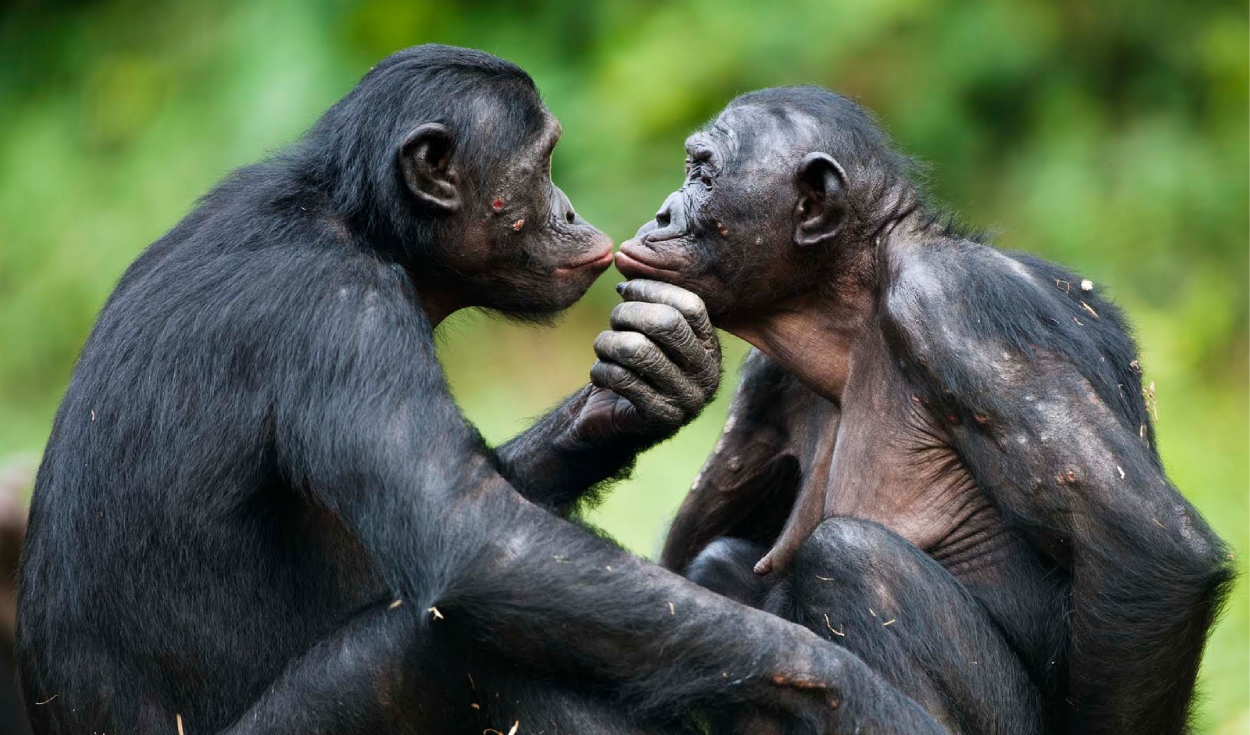
Chimpanzees and bonobos can recognize former companions after decades of separation, according to a study led by researchers at Johns Hopkins University.
The findings show that humans' closest evolutionary relatives possess a long-lasting social memory capable of retaining recognition of past group members across major portions of their lives.
In one notable case, a 46-year-old female bonobo named Louise recognized photographs of her sister and nephew after 26 years apart.
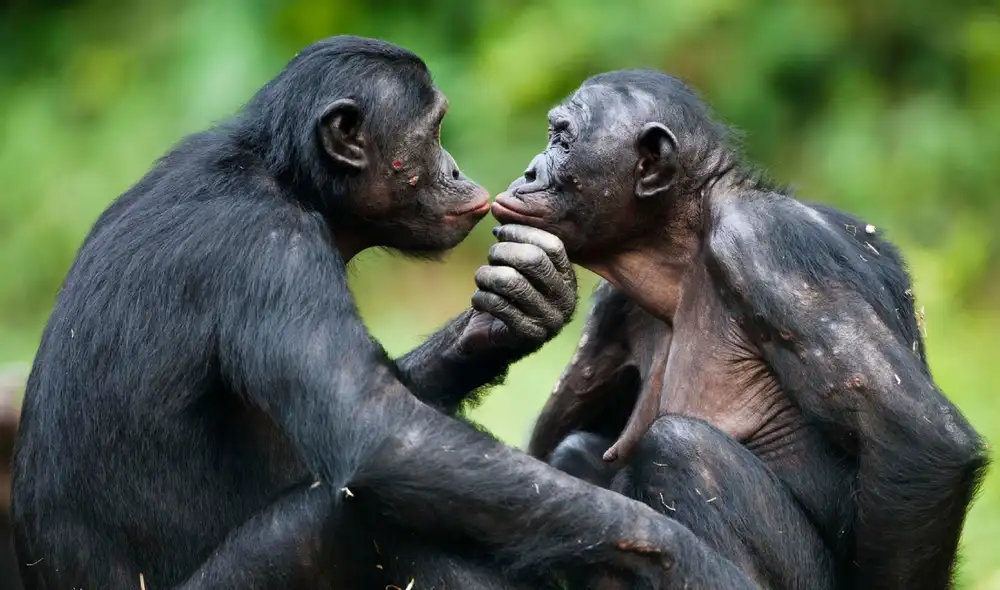
The research, published in the peer-reviewed journal Proceedings of the National Academy of Sciences, examined visual attention in 26 chimpanzees and bonobos housed across zoos and sanctuaries.
Comparative psychologist Christopher Krupenye led the research team alongside lead author Laura Simone Lewis, using non-invasive infrared eye-tracking cameras to measure how long the apes looked at different faces.
Testing primate memory with eye-tracking cameras
During the experiment, researchers presented each primate with paired photographs showing the face of a former group companion alongside the face of a stranger of the same species.
The eye-tracking cameras recorded the exact direction of the animals' gaze for three seconds during each test.
Across the study group, primates consistently spent between 11 percent and 14 percent more time looking at the faces of former companions than at unfamiliar individuals.
The heightened attention occurred even when the animals had been separated from their former group members for decades.
Louise, who was transferred from the San Diego Zoo in California to the Kumamoto Sanctuary in Japan in 1992, demonstrated particularly strong recognition.
The case of Louise and her long-separated family
Before her transfer to Japan, Louise had lived alongside her sister Loretta and her nephew Erin at the San Diego facility.
In 2019, Lewis and her colleagues presented Louise with photographs of Loretta, Erin, and unfamiliar bonobos across eight separate testing trials.
Louise concentrated her attention on the faces of her sister and nephew while spending less attention on the unknown individuals.
The authors reported that her gaze pattern was consistent with active recognition of familiar individuals after more than two decades of separation.
Both chimpanzees and bonobos are great apes belonging to the genus Pan, sharing approximately 99 percent of their DNA with humans and living up to 40 to 60 years in captivity.
Social relationships beyond family ties
The researchers found that long-term social memory in primates was not limited to immediate family members.
Chimpanzees and bonobos showed greater interest in individuals with whom they had maintained positive social relationships, such as grooming sessions or periods of resting in close proximity.
The strength of those past social bonds appeared directly associated with the amount of time the primates spent looking at the photographs.
According to the authors, this pattern suggests that great apes store lasting information about an individual's identity and the nature of their past relationship.
These findings align with long-standing observations from primatologists who have noted apes displaying recognition when researchers return to sanctuaries and zoos after years away.
Implications for animal welfare and ape transfers
Because captive chimpanzees and bonobos frequently live between 40 and 60 years, a social memory that persists for decades can span a major share of an ape's lifespan.
The study team noted that the findings carry important implications for animal welfare practices across zoological institutions and rescue centers.
If primates retain memories of family members and social partners over many years, separations between bonded individuals could have lasting consequences.
The authors concluded that such potential impacts should be taken into consideration when planning transfers of animals between institutions, sanctuaries, and breeding programs.



