Orthodox Christians in Russia and around the world celebrate the Feast of the Dormition of the Most Holy Theotokos on August 28.
The annual holy day, one of the twelve Great Feasts of the Orthodox Church, commemorates the peaceful earthly death of the Virgin Mary and her bodily ascension into heaven.
In Church Slavonic, the word dormition translates to peaceful death or sleep. Church teaching emphasizes that the death of the Virgin Mary, the mother of Jesus Christ, was not a tragic loss but a blessed transition into the Heavenly Kingdom.
Stakhiy Kolotvin, an Orthodox missionary, blogger, and priest, said that for any saint, the primary feast day is the day of their death. He explained that passing from earth marks the beginning of eternal life free from worldly sorrow and filled with endless joy in unity with God.
The feast is observed every year on August 28 under the Gregorian calendar, corresponding to August 15 under the Julian calendar. Roman Catholics commemorate the feast on August 15.

History of the Dormition
The history of the feast traces back to early Christian antiquity, with the earliest written mentions appearing in the fourth and fifth centuries. The holiday relies on early oral tradition and apocryphal works, including the Account of the Dormition of the Mother of God, attributed to Saint John the Theologian.
According to Church tradition, the Virgin Mary lived in Jerusalem under the care of Apostle John the Theologian following the crucifixion and resurrection of Jesus Christ. Her daily life was devoted to constant prayer, service, and supporting the early Christian community.
Archangel Gabriel appeared to Mary to announce that she would pass to the Lord in three days. She welcomed the message with joy and began preparing for her transition to eternal life.
Kolotvin noted that all the apostles except Apostle Thomas managed to return to Jerusalem from their missionary preaching across various countries in time to bid her farewell.
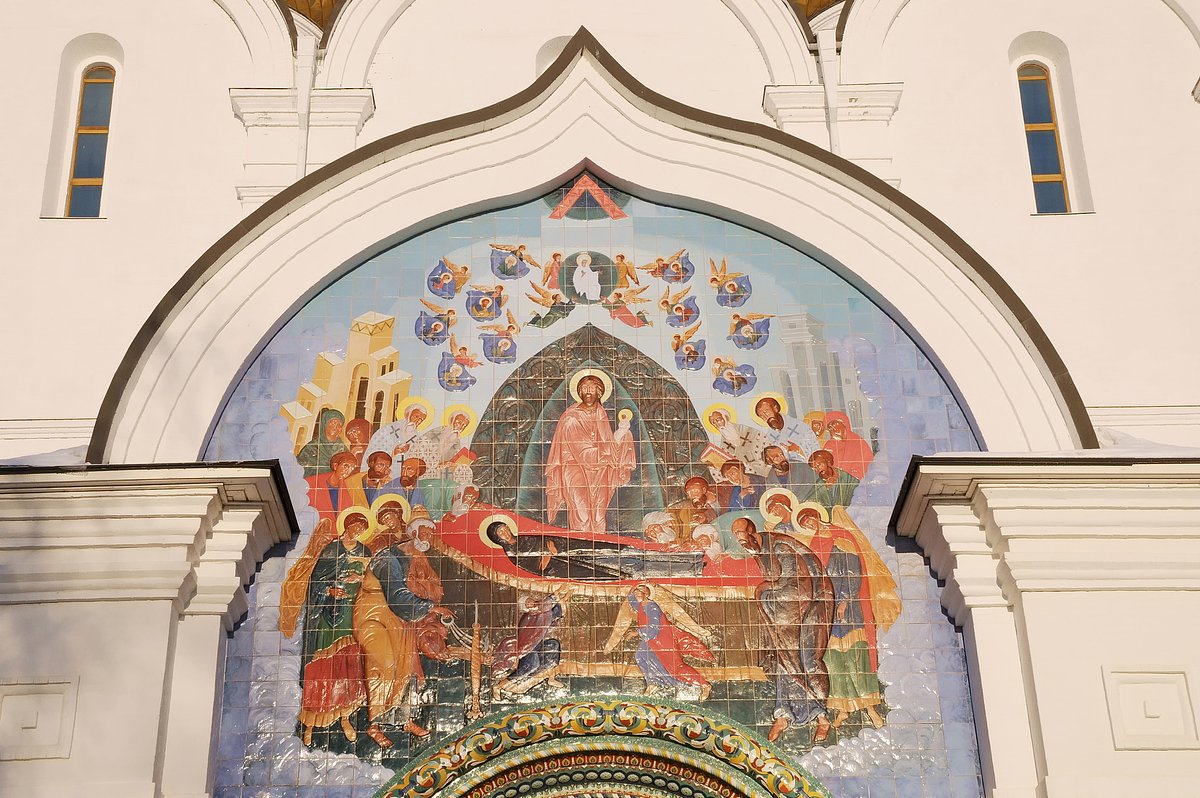
The exact date of Mary's passing is unrecorded, though tradition places the event in the first century AD, roughly 10 to 20 years after the ascension of Christ, between AD 43 and 63. Historical estimates suggest she was between 60 and 70 years old.
Mary died peacefully in Jerusalem surrounded by the apostles. Church tradition holds that a brilliant light filled the room and Jesus Christ appeared with a host of angels to receive her soul.
Her body was interred in a tomb in Gethsemane Cave. Three days later, when the apostles opened the tomb to venerate her remains, they discovered only her burial shrouds, as her body had been taken into heaven.
Formal celebration across the Christian Church expanded in the sixth century under Byzantine Emperor Maurice, who ruled from 582 to 602 and designated August 15 on the Julian calendar as the official holiday.
Kolotvin said that the feast gained special significance in Russia due to long-standing veneration of the Mother of God. More than 2,000 churches across Russia are dedicated to her, with the majority honoring the Dormition, including the Patriarchal Cathedral of the Russian Orthodox Church and the Dormition Cathedral in the Moscow Kremlin.
Church and Folk Traditions
A two-week period of fasting known as the Dormition Fast precedes the feast from August 14 to August 27. The fast matches Great Lent in strictness, requiring believers to abstain from meat and dairy products while focusing on spiritual purification, prayer, and repentance.
Liturgical celebrations begin on the eve of the holiday with an All-Night Vigil and the reading of the feast canon. On August 28, churches hold a solemn Divine Liturgy, and congregations sometimes sing an Akathist to the Mother of God.
Some churches, particularly in Jerusalem, observe a special rite known as the Burial of the Mother of God. During the ceremony, clergy carry a painted shroud depicting the Dormition to symbolize her death and ascension.
In Russian folk tradition, the holiday coincided with the end of summer and the completion of harvest work. Popularly known as Ospozhinki or Dozhinki, the day marked the end of reaping.
Villagers held communal feasts featuring dishes made from the new harvest, including porridges, pies, and fresh vegetables, accompanied by festive fairs and outdoor rituals to bid farewell to summer.
Guidelines for Believers
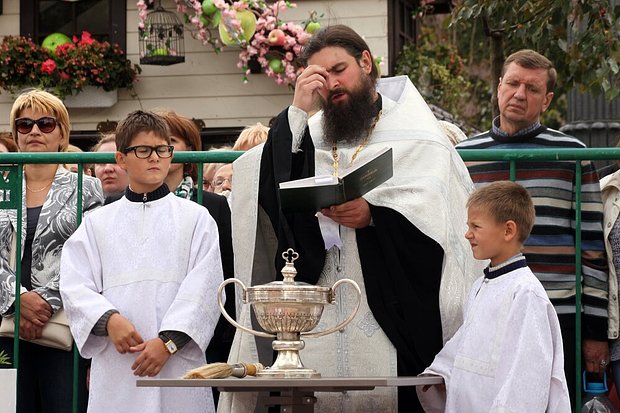
Church guidance encourages believers to spend the day in prayer, attend Divine Liturgy, and seek the intercession of the Virgin Mary. Those who completed the two-week fast may break it in moderation while maintaining spiritual mindfulness.
Faithful are urged to perform charitable acts, including helping people in need and visiting the sick or lonely.
To maintain spiritual purity, traditional rules prohibit putting routine work ahead of prayer and family. Believers who cannot attend church services due to work duties are expected to pray at home.
Quarreling, bad language, and personal conflicts are forbidden on the holiday, which centers on reconciliation and mutual forgiveness. Holding boisterous parties or spending the day in noisy entertainment is considered contrary to the religious meaning of the event.
Veneration of the Icon
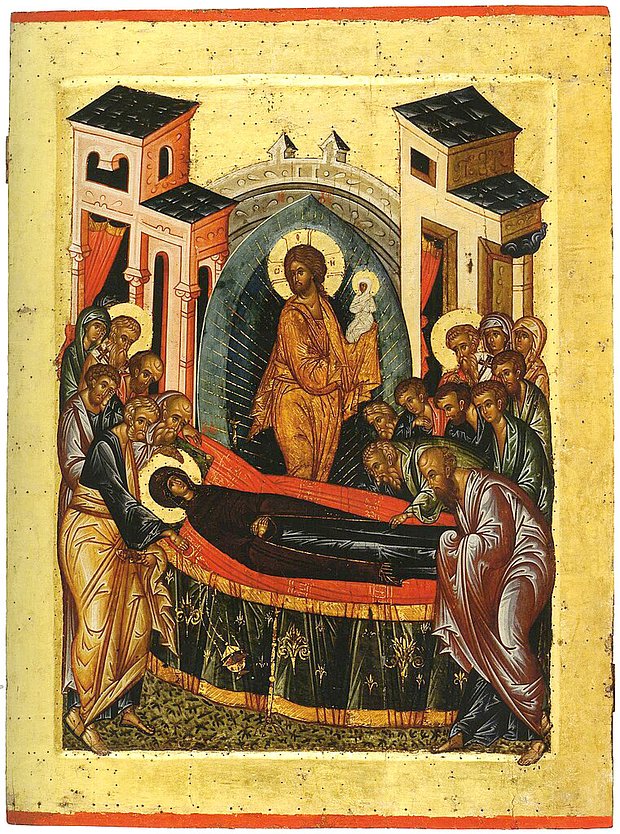
The Icon of the Dormition is among the most revered images in Orthodox Christianity. It depicts the Virgin Mary lying on her deathbed surrounded by the apostles, while Jesus Christ stands above holding her soul, represented as an infant wrapped in white swaddling clothes, under angels symbolizing her heavenly ascension.
Believers pray before the icon seeking intercession, protection, physical and spiritual healing, and family harmony. Prayers also ask for the protection of children, the strengthening of marriage, inner peace against temptation, and a peaceful, righteous death.
Common prayers read on the feast day include It is Truly Meet and the feast troparion, which proclaims that Mary preserved her virginity in childbirth and did not abandon the world in her dormition.
Harvest Omens and Weather Beliefs
While the Church discourages superstition, traditional folk omens linked to the late-August harvest period remain widespread. Reapers customarily left final stalks of grain in the field and wove a symbolic sheaf with bread inside, throwing sickles over their heads to predict the future.
A popular folk saying instructs people to pickle cucumbers on Dormition and chop cabbage on the Feast of Saint Sergius on October 8. Walking barefoot is avoided under the belief that the earth is resting on its name day.
Folk weather predictions hold that clear skies on August 28 signify a warm autumn, whereas an overcast sky indicates a rainy and prolonged autumn. A cold morning points to early frosts, and rain forecasts a snowy, mild winter.
Abundant spiderwebs are said to foretell a freezing winter, while calm waters without surface ripples predict a quiet autumn and a winter free of blizzards.