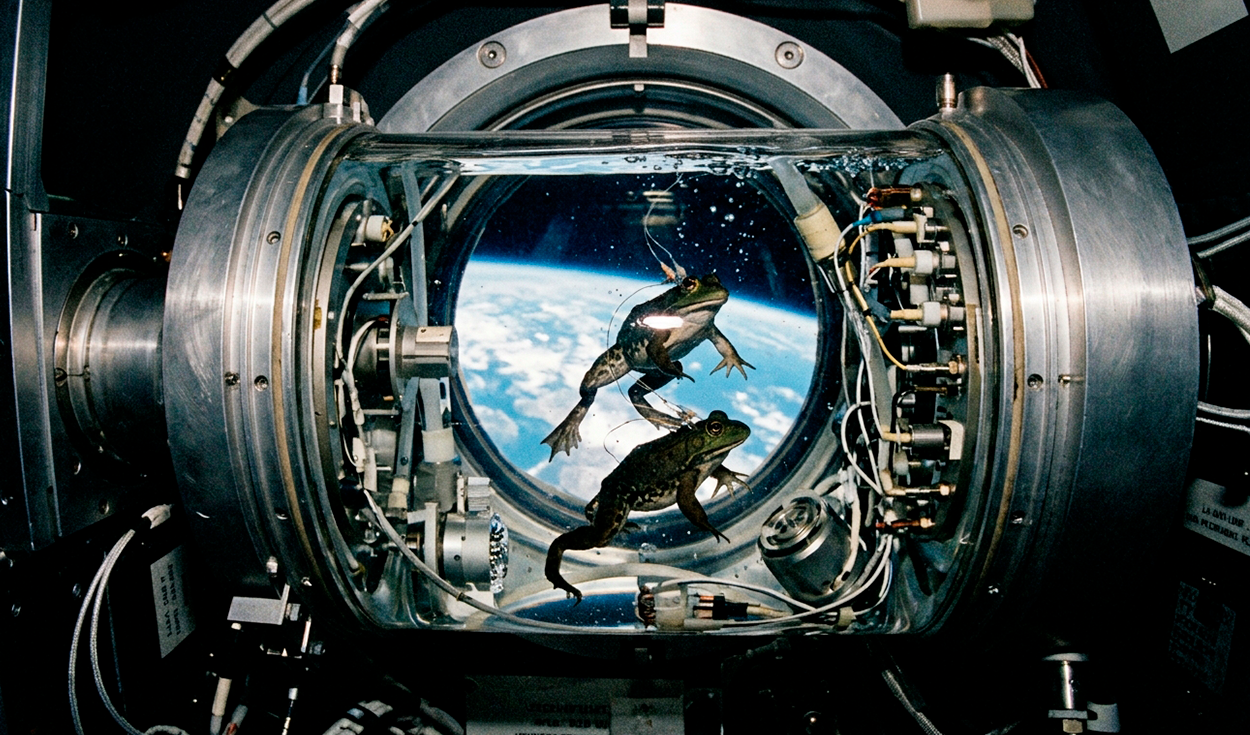
The US space agency sent two bullfrogs into orbit in 1970 to understand how weightlessness affects the sense of balance.
The mission, known as Orbiting Frog Otolith or OFO-A, launched from Wallops Island, Virginia, on November 9 that year.
A Scout rocket carried the two amphibians, named Pierre and Tee-Nom, into space inside a pressurised canister filled with water.
Wallops Island is a flight facility located on the eastern shore of Virginia, and the Scout was a solid fuel launch vehicle used by the agency to place small payloads into space.
Researchers used the flight to monitor space sickness and observe how the nervous system adapts when a gravitational reference disappears for a prolonged period.
NASA scientists recorded 139 hours of data during the animals' more than six days in zero gravity.
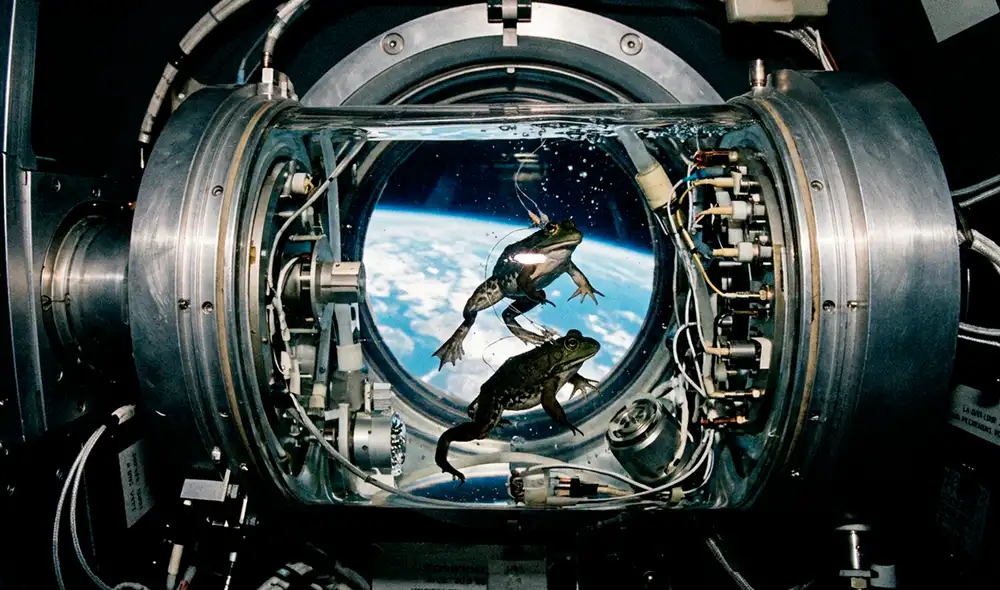
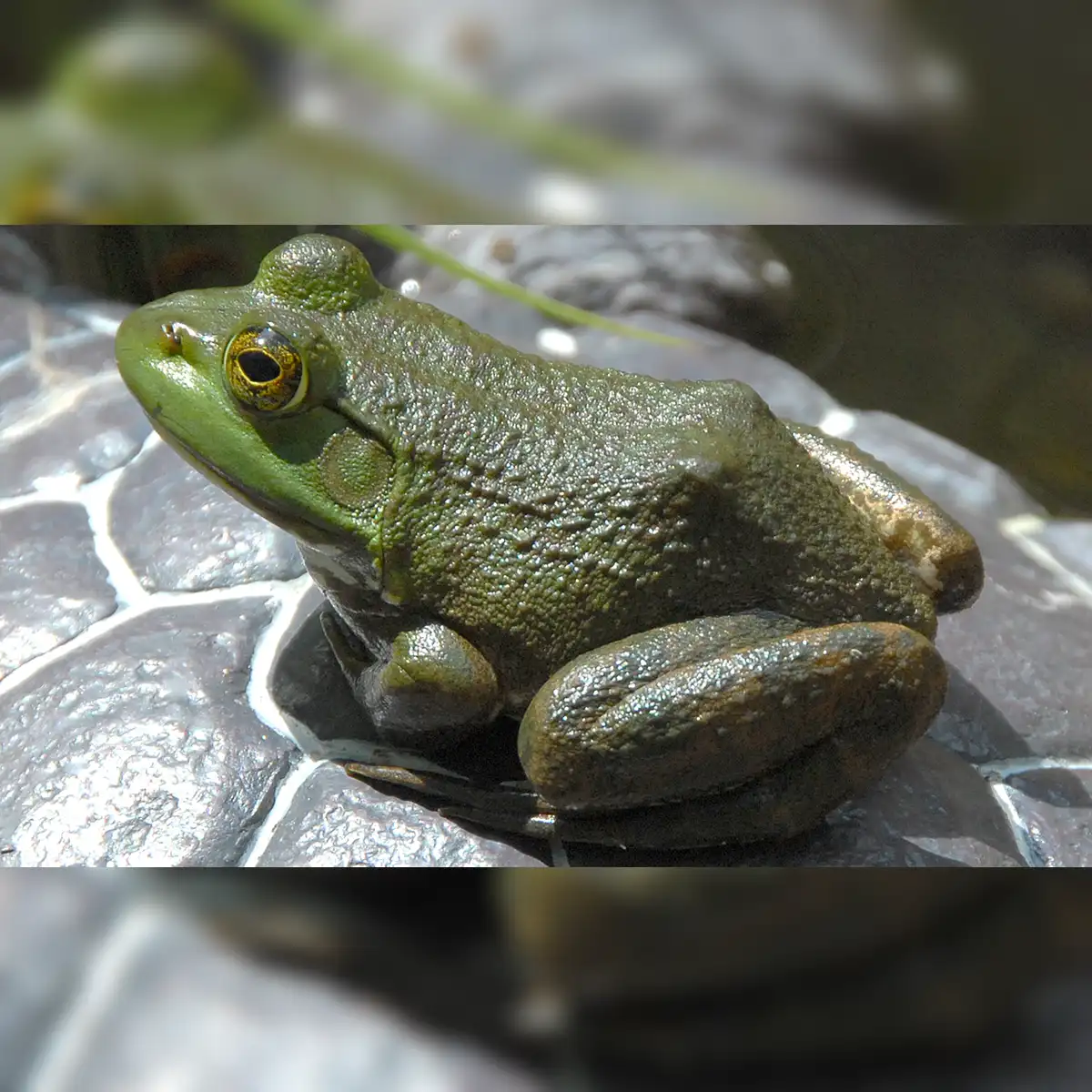
The space agency selected bullfrogs because their inner ear organs function in a very similar way to those of humans.
The inner ear is a complex structure that manages both hearing and balance in humans and other vertebrates.
Otolithic organs inside the ear detect linear movements and changes related to gravity, helping the body determine its position and control balance on Earth.
Space sickness affects many astronauts during their first few days in orbit as their brains receive conflicting signals from their eyes and their inner ear.
By sending the frogs into space, researchers removed the gravitational reference entirely to observe how the nervous system would respond to the new environment.
Louisiana frog capital
The space agency sourced the amphibians from Rayne, a city in Louisiana that is widely known as the Frog Capital of the World.
Rayne is located in Acadia Parish and has celebrated its amphibian heritage for over a century.
A local business dedicated to supplying the animals provided a batch of 20 frogs for the project.
Mission managers selected four finalists from the initial group before choosing Pierre and Tee-Nom for the actual spaceflight.
The two frogs travelled in a specially designed water container built to maintain suitable conditions throughout the journey.
Scientists implanted microelectrodes to capture the activity of the frogs' vestibular nerve fibres while they were in orbit.
The system also included a small centrifuge device capable of generating stimuli similar to those produced by Earth's gravity.
Temperature drop in orbit
The mission did experience some technical problems during the flight, including a temporary increase in pressure inside the canister.
A malfunction also caused the internal temperature to drop to about 13 degrees Celsius for nine hours.
Researchers later reproduced these exact conditions during control experiments on the ground to check for any impact on the data.
They concluded that the temperature and pressure anomalies had little influence on the scientific results of the mission.
The experiment returned a considerable volume of information about vestibular activity during spaceflight.
Recordings showed noticeable changes during the early stages of the frogs' time in orbit.
As the days passed, some of the frogs' responses gradually returned toward the values observed before the flight.
Researchers interpreted this behaviour as the nervous system adapting to the microgravity environment.
The mission provided a foundation for decades of subsequent research into how spaceflight affects astronaut balance.
Later studies have confirmed that travelling in space can temporarily alter postural control and other functions linked to the vestibular system.