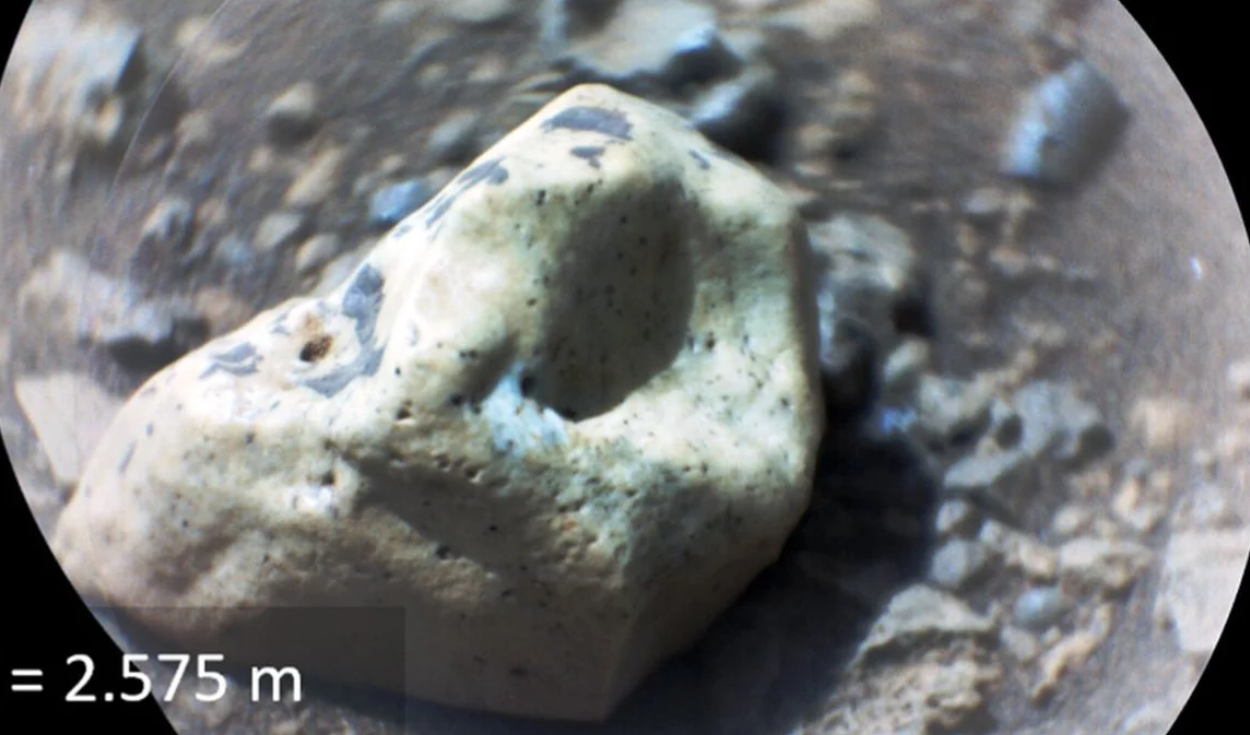
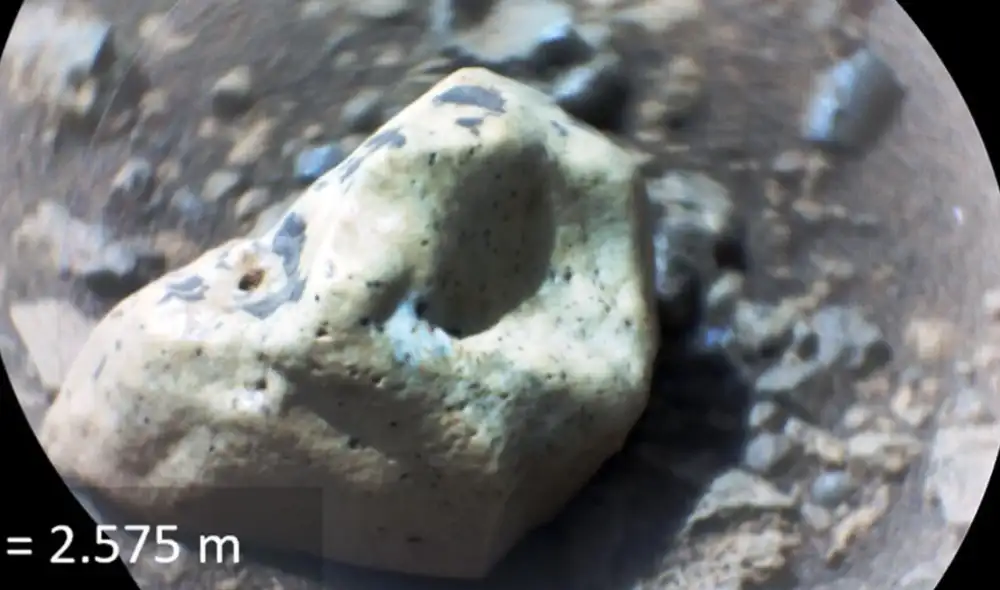
NASA's Perseverance rover has detected corundum, the mineral that forms rubies and sapphires, inside pale rocks on the rim of Mars's Jezero Crater.
Scientists identified the gemstone mineral alongside traces of chromium during spectroscopic scans conducted in March, April, and July 2025. Chromium is the chemical element responsible for imparting the deep red hue to terrestrial rubies.
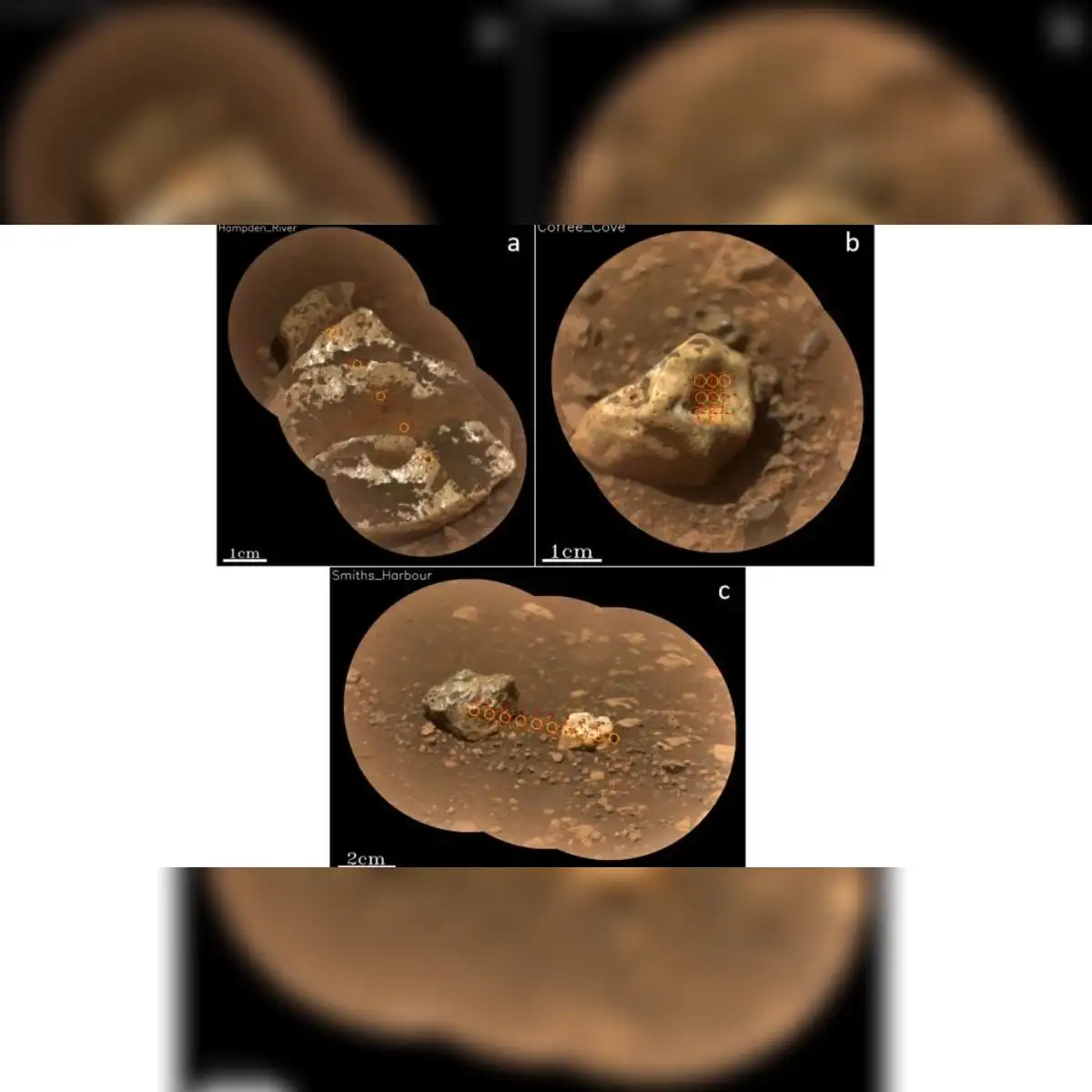
The finding does not involve large gemstones lying scattered across the Martian surface. Instead, the data reveals microscopic mineral grains embedded within three pale boulders that researchers named Hampden River, Coffee Cove, and Smiths Harbour.
Perseverance is a car-sized robotic rover deployed by NASA to explore Jezero Crater, a 28-mile-wide basin that scientists believe harbored a lake and river delta billions of years ago. The mission searches for indications of ancient microbial life while examining the red planet's geological composition.
Spectroscopic analysis of Jezero rocks
The three samples were categorized as float rocks, which are loose boulders that have detached from their original formation and drifted from elsewhere. To analyze their composition, Perseverance fired laser pulses at the stones using its SuperCam mast instrument.
Researchers examined the return signals using time-resolved luminescence spectroscopy. This specialized laboratory technique uses laser energy to excite atoms within a sample, allowing scientists to identify specific minerals by measuring the precise wavelength of light emitted afterward.
All three rock targets produced matching spectral readings with two distinct luminescence peaks at 692.7 and 694.1 nanometers. These double emission peaks occur when chromium atoms replace aluminum inside the crystal lattice of corundum, matching the exact spectral signature seen in rubies on Earth.
Ann Ollila, a geochemist at Los Alamos National Laboratory in New Mexico, explained that the discovery was unexpected because corundum formation requires unusual environmental conditions. She noted that creating the mineral typically requires rocks rich in aluminum but low in silicon, exposed to intense heat or tectonic forces.
Ollila added that discovering corundum in typical Martian rocks was therefore surprising to the science team, as the planet lacks active plate tectonics like those found on Earth.
Geological origin of Martian gemstones
The presence of corundum presents a geological puzzle because the three rocks are dominated by plagioclase. Plagioclase is a common feldspar mineral that contains high levels of silicon alongside aluminum, creating a chemical environment where corundum does not normally form.
Scientists have proposed several potential mechanisms to explain how the mineral developed. One theory suggests magmatic processes operating deep underground, while another involves hot fluids interacting with rock layers over extended periods.
A third major possibility points to the cataclysmic meteor impact that created Jezero Crater billions of years ago. Such an event would have generated extreme pressures and temperatures capable of altering local minerals.
Supporting the impact hypothesis, the corundum-bearing float rocks were located near formations interpreted as impact breccias, which are shattered rock fragments fused together by high-energy collisions. Jezero Crater also displays physical evidence of ancient hydrothermal activity, where superheated mineral-rich water circulated through fractures in the crust.
Future Earth lab analysis
Because the three analyzed boulders are detached float rocks, researchers cannot yet pinpoint their precise parent bedrock. Scientists must locate the original outcrop where the stones originated to fully reconstruct the geological events that created them.
Ollila and her colleagues stated that securing a drill core sample from the parent outcrop and transporting it back to Earth would allow scientists to perform advanced laboratory testing. They noted that sophisticated terrestrial equipment could conclusively solve how corundum formed on Mars.