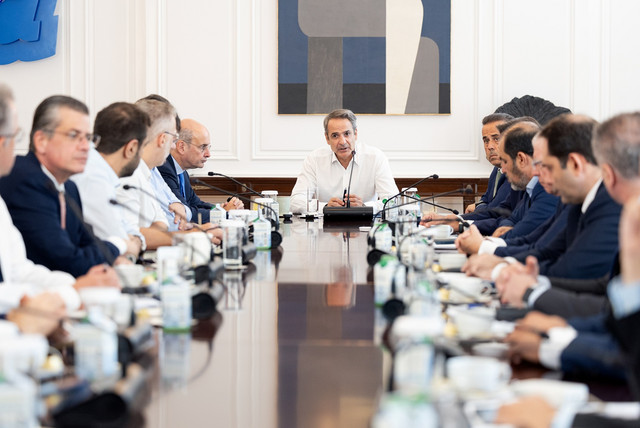
Greek Prime Minister Kyriakos Mitsotakis is weighing a final cabinet reshuffle as his administration moves toward national elections scheduled for spring 2027.
Discussions regarding potential ministerial changes are gaining momentum at Maximos Palace, the official seat of the Greek government in Athens. If Mitsotakis proceeds with recommendations to modify his governing team, new appointments will focus heavily on candidate electoral strength in key voting districts.
Mitsotakis, who has led the center-right New Democracy party since 2016 and served as prime minister since 2019, aims to select figures capable of reinforcing the party in their home regions. The strategy targets politicians who can mobilize local party members and effectively communicate government initiatives directly to voters outside the capital.
Focus on Electoral Performance
The proposed reorganization would serve primarily as an electoral adjustment rather than a shift in central policy. Government planning remains unchanged, with main policy goals set, individual ministry deliverables established, and implementation timetables already fixed. Official analysis indicates that extensive ministerial turnover would require unnecessary adaptation time without altering policy targets.
Adjustments to top ministerial positions would occur only if required by unexpected developments. In previous months, legal proceedings surrounding the financial scandal at OPEKEPE forced ministers implicated in the matter to step down pending judicial resolution. OPEKEPE operates as Greece's payment and control agency responsible for distributing European Union agricultural subsidies to farmers.
Without similar emergency circumstances, the upcoming reshuffle will stand as the administration's final major personnel adjustment before the 2027 polls. Strategic focus will center on lawmakers who hold strong connections in their local prefectures, active channels to professional and social groups, and the ability to defend the government's broader legislative record.
Advisers at New Democracy headquarters emphasize that overall electoral victory will depend on regional contests. Party strategists aim to minimize voter losses and recover political ground in competitive provincial districts.
Role of Deputy Ministers
The greatest flexibility for cabinet changes exists within deputy minister positions. Appointing new parliamentary members to deputy posts enables the prime minister to balance regional representation and increase the number of active campaign figures without disrupting core cabinet operations.
A deputy minister with strong local roots can showcase regional infrastructure projects, interact directly with commercial groups, and relay provincial grievances back to decision-makers in Athens.
Limited cabinet changes executed in June demonstrated this strategy in practice. Giorgos Kotsiras was appointed Alternate Minister of Transport, Dimitris Markopoulos assumed the Tax Policy portfolio, Tasos Chatzivasileiou took charge of European Affairs, and Marilena Soukouli became Deputy Minister of Environment and Energy.
These appointments integrated experienced lawmakers with distinct constituency ties across West Attica, Piraeus B, Serres, and Corinthia into the government framework. The adjustments widened regional representation while keeping the core administrative structure intact.
Government members have received clear instructions to align with this localized focus. Ministers must master and defend the administration's complete record, make frequent appearances on regional media outlets, and highlight completed or ongoing public works. Strategists stressed that the upcoming campaign will be decided in provincial cities and prefectures rather than Athenian broadcast studios.
Timing and Party Balance
Determining the exact timing of the cabinet reshuffle remains a complex problem for government strategists. Executive advisers note that executing changes too early, such as immediately following the Thessaloniki International Fair, risks exhausting political momentum long before the spring 2027 election date.
The annual Thessaloniki International Fair, held each September in northern Greece, serves as the country's primary forum for executive policy announcements. Conversely, delaying cabinet adjustments would leave incoming ministers with insufficient time to demonstrate results or establish public visibility.
Officials at Maximos Palace plan to evaluate upcoming public opinion polls, voter reception to announcements at the fair, and overall progress on government commitments before finalizing a timeline.
Mitsotakis must also balance internal party expectations. Every cabinet opening creates ambition among lawmakers but risks causing dissatisfaction among those passed over. Recommendations caution that appointments must be justified by individual experience, administrative effectiveness, and political utility to prevent accusations that cabinet seats are being distributed as election rewards.
Potential Ministerial Returns
Three former government members may return to executive posts following the archiving of judicial cases related to the OPEKEPE agricultural subsidy scandal.
Giannis Kefalogiannis, who previously resigned from the Ministry of Climate Crisis and Civil Protection, is among those eligible for a return. Former Minister of Agricultural Development Kostas Tsiaras may also re-enter the administration alongside Dimitris Vartzopoulos, whose former position as Deputy Minister of Health has remained vacant since his departure.