

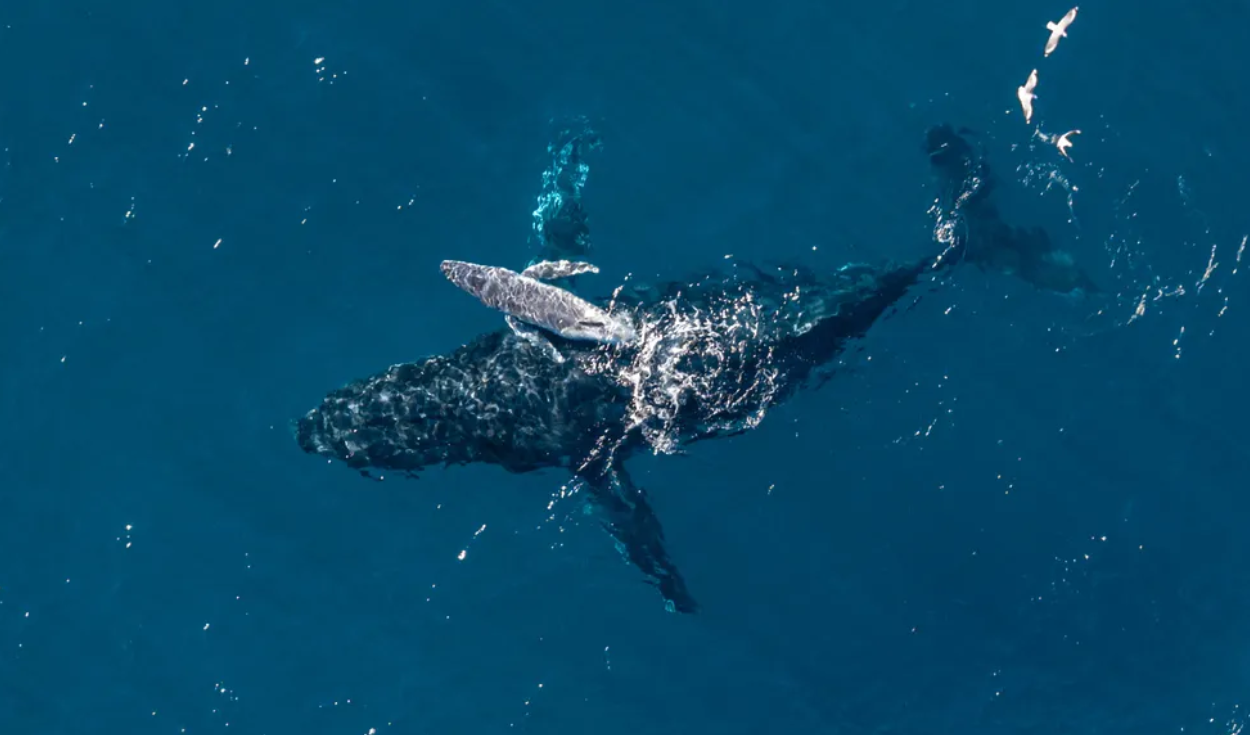
A commercial drone pilot has captured footage of a female humpback whale giving birth off the coast of New South Wales in Australia, in what researchers believe is the first complete drone recording of a live humpback birth in the wild.
The aerial recording was made on July 28 during a routine monitoring survey of marine mammals roughly 700 metres off the coast of Kingscliff, in northeastern New South Wales.
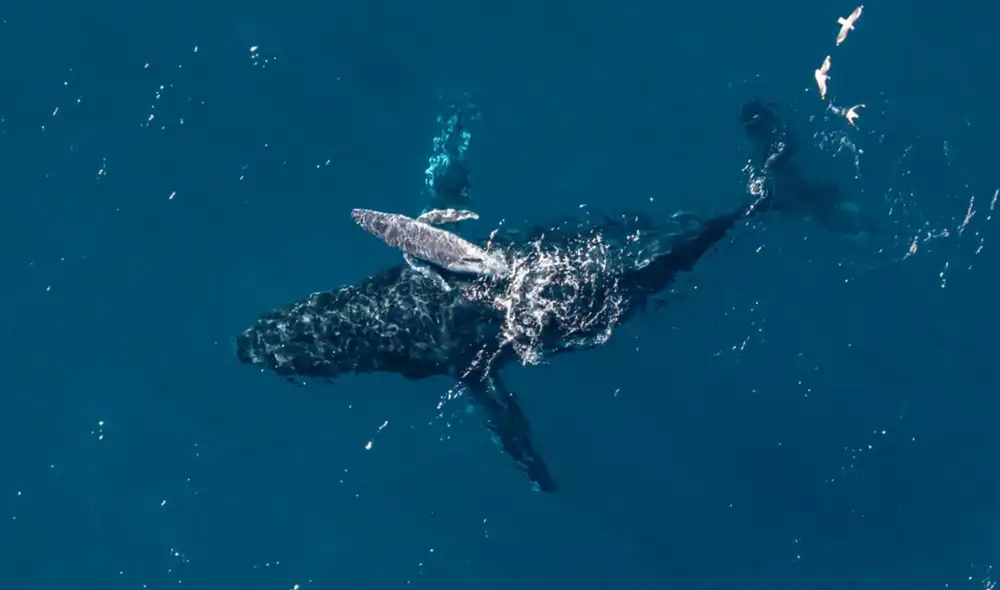
Alexander Forrest, a commercial drone pilot operating for the Organisation for the Rescue and Research of Cetaceans in Australia, noticed that the whale was swimming behind her pod at a noticeably slower pace than usual shortly before the delivery began.
As the drone camera recorded from above, a column of blood appeared in the water beneath the female before a small newborn calf surfaced to take its first breath of air. The mother then turned around to join her offspring in the water.
First complete drone recording of a live birth
Forrest told Live Science that witnessing such a moment in the ocean was exceptionally rare and an encounter that had seldom been documented. He said the recording allowed scientists to observe crucial moments in the early life of the calf and provided fresh insights into mother and newborn behavior.
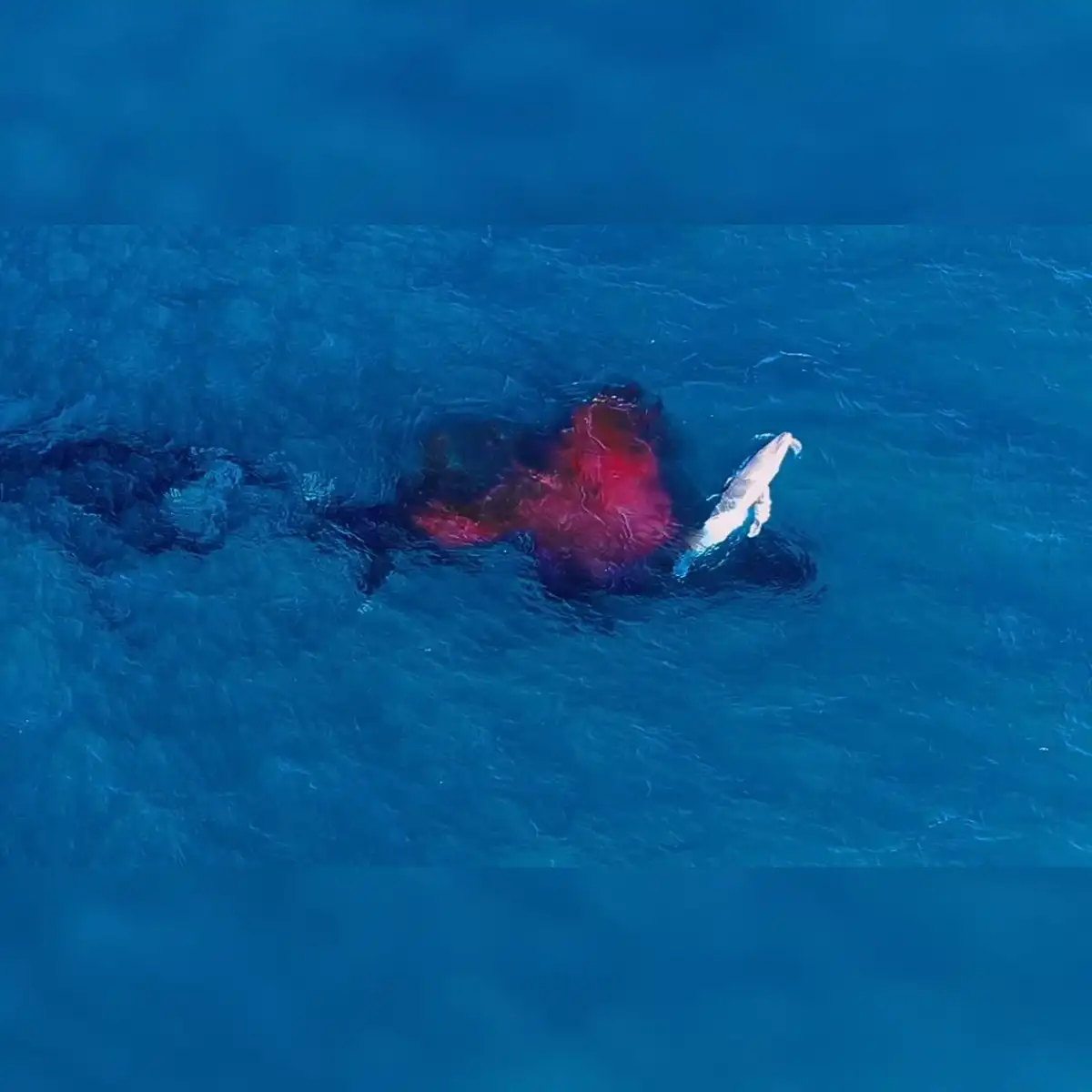
A spokesperson for the non-profit marine conservation organisation said the recording is believed to be only the fourth time a humpback whale birth has ever been filmed. Births of other cetaceans, including grey whales and sperm whales, have been documented in the past.
The footage has sparked widespread interest among marine scientists and conservationists due to its value in documenting the immediate post-birth moments of humpback whales, known scientifically as Megaptera novaeangliae.
Scientific review and mother-calf behavior
The video material will now undergo detailed scientific analysis before being submitted for peer review and eventual publication in an academic journal.
Biologists plan to focus on why the female stayed separate from her pod during the birth, comparing her actions with other documented cetacean deliveries to evaluate maternal routines.
Forrest noted that the newborn calf represents a success story for global marine conservation efforts, which helped humpback whale populations along the New South Wales coast recover from near extinction to approximately 50,000 animals.
Calf growth and oceanic migration
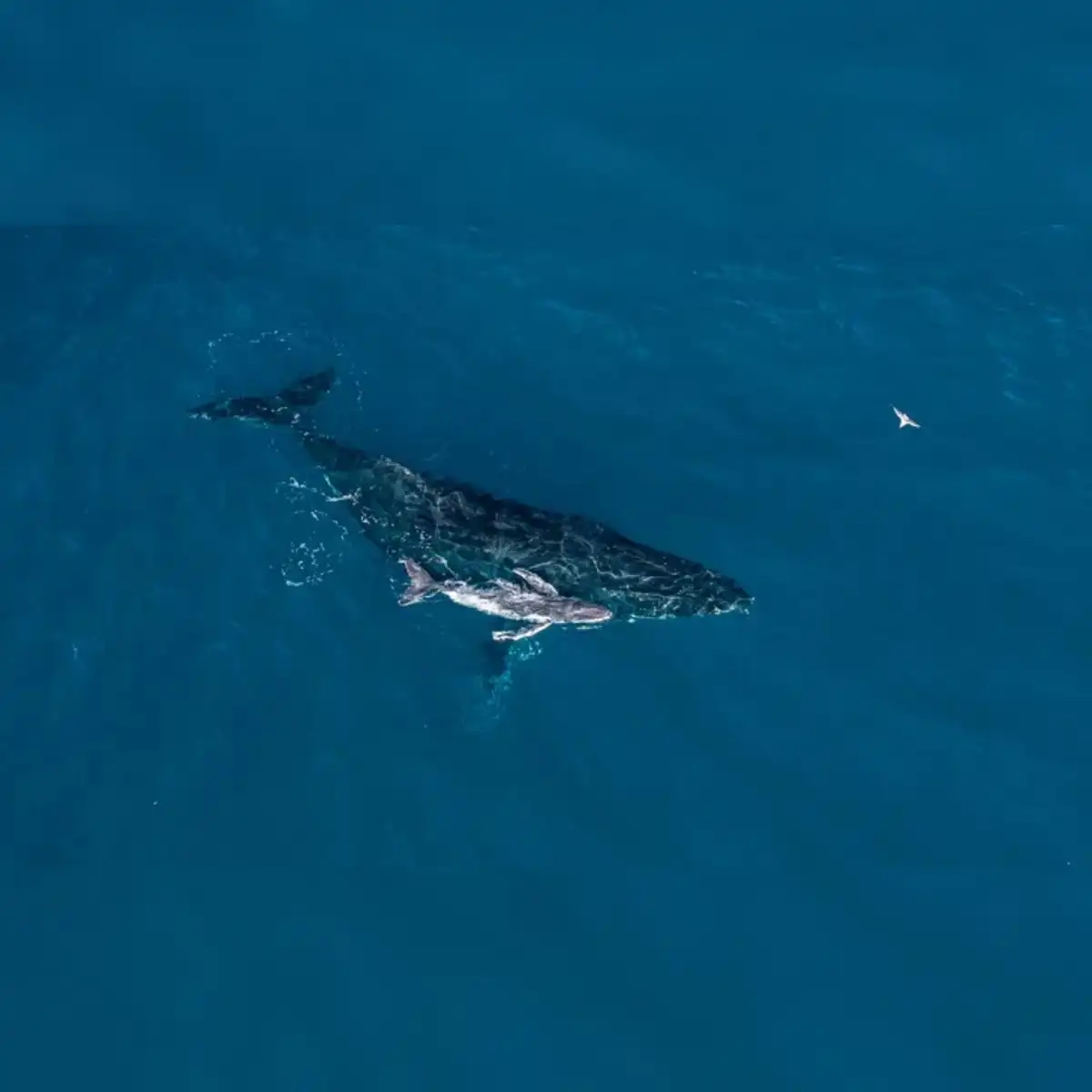
Forrest explained that humpback whales share a remarkably strong maternal bond. During their first few weeks, calves stay in close proximity to their mothers to master vital behaviors, including surfacing for air.
Calves nurse on milk rich in nutrients for approximately 11 months until they mature into juveniles capable of surviving on their own. At birth, humpback calves weigh between 900 and 1,360 kilograms and measure between 3 and 5 metres in length.
The newborn cetaceans can gain up to 45 kilograms per day before undertaking migrations of up to 8,000 kilometres between cold polar waters and tropical breeding grounds.



