A humanoid robot malfunctioned during an autonomous gymnastics routine at the World Humanoid Robot Games in Beijing, performing an accidental ballet after losing balance.
The machine raised its arms above its head, swayed its feet, and spun around uncontrollably on the floor during the afternoon of August 24. Event staff attempted to step in and stop the robot, but the unit kept moving across the stage despite their intervention.
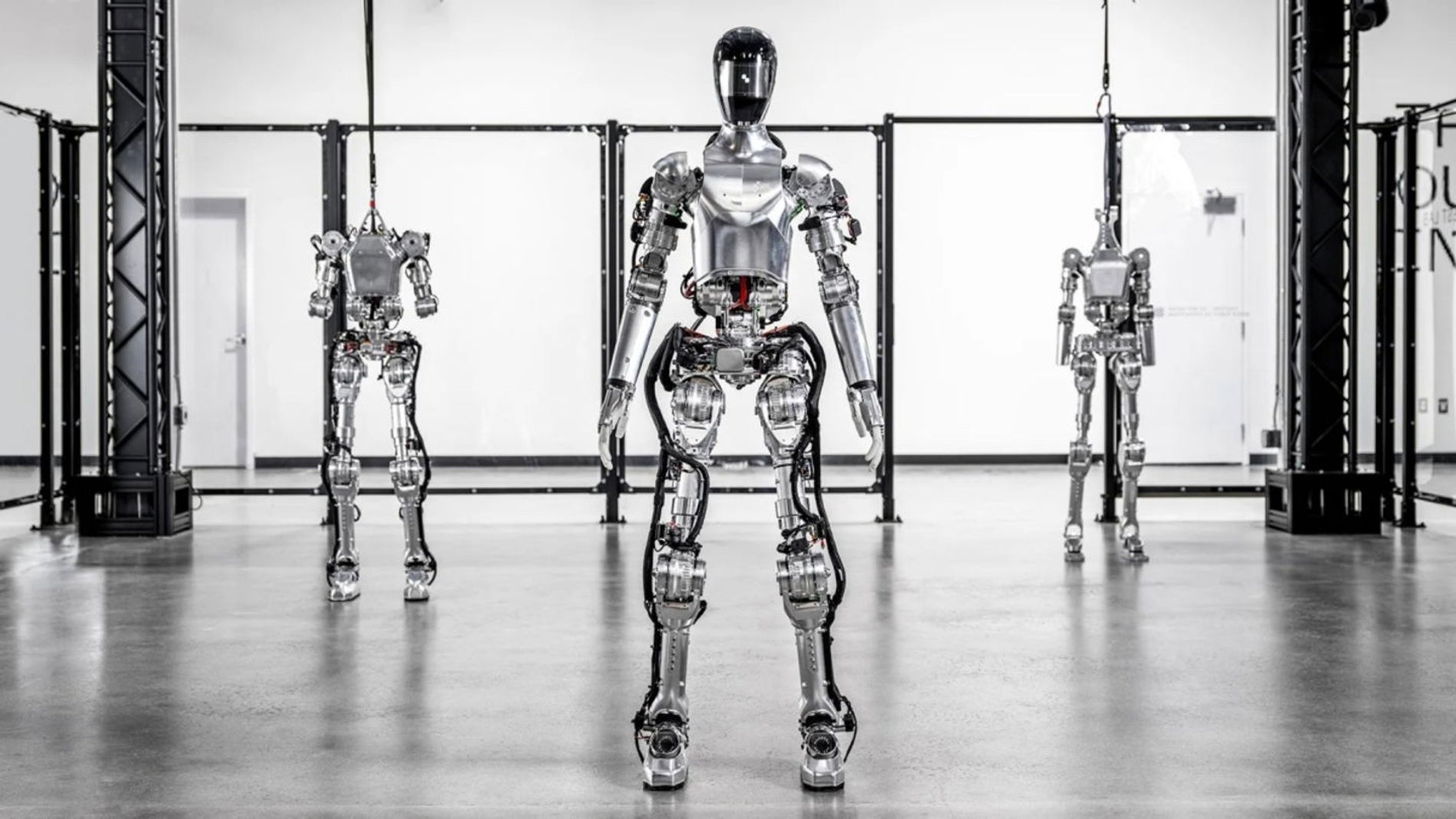
State news outlet Shanghai Daily released video footage of the malfunction on August 25, showing the unscripted performance unfold without background music. The robot kept its arms elevated while pivoting and taking side steps, creating an improvised sequence caused entirely by a system error. Coverage noted that the machine was not executing any planned portion of its scheduled routine when the glitch occurred.
Autonomous competition rules
Strict regulation governed the gymnastics event, requiring participating machines to operate with complete autonomy. Unlike other disciplines at the Games, such as the long jump or kickboxing where human operators may use remote controls, gymnastics and dance categories strictly forbid external intervention or real-time manual correction.
Footage of the incident spread rapidly across Chinese social media platforms, where viewers posted jokes regarding the robot's unexpected artistic capability. Technical experts note that the glitch underscores ongoing challenges with balance control in bipedal robotics, a problem previously seen during controlled testing environments where machines suffered unexpected falls.
Humanoid robots are engineered with joints and bipedal structures designed to mirror human movement. While human athletes can quickly adjust their footing or abort a movement when losing balance, robotic systems rely entirely on onboard sensors, inertial units, and software algorithms to interpret physical feedback. When unexpected shifts in terrain or momentum occur, current systems possess limited capacity to self-correct during complex motion sequences.
Growth of the Beijing Games
The incident occurred during the second edition of the World Humanoid Robot Games, held in Beijing from August 22 to August 26. The international tournament expanded significantly compared to its inaugural gathering, attracting 2,056 robots from 666 teams representing 16 countries.
The scale of the competition has grown rapidly since 2025, when the inaugural event hosted 280 teams and just over 500 robots. Organisers expanded the 2026 program to feature 51 events across competitive sports and real-world application scenarios, up from 26 disciplines in the previous year.
New events and speed records
The expanded lineup introduced several new competitive categories to test robotic hardware. New disciplines included weightlifting, table tennis, tug of war, street dance, and sports dance.
Competitors also participated in pitch-pot, a traditional Chinese game known locally as touhu, which requires players to throw arrows into a narrow container from a distance. The tradition dates back centuries as a domestic banquet game, serving in the tournament as a benchmark for robotic aiming and trajectory calculations.
Beyond the gymnastics malfunction, the 2026 Games highlighted substantial technical progress in athletic performance. In the 100-meter sprint, two robots completed the race in under ten seconds, demonstrating a dramatic increase in speed compared to the inaugural tournament.
Robot sprinter Tiangong Ultra recorded the fastest time at 9.39 seconds, closely followed by Lightning with a time of 9.47 seconds. Both machines easily surpassed the winning time from the 2025 competition, where the top sprinter completed the 100-meter distance in 21.50 seconds.