

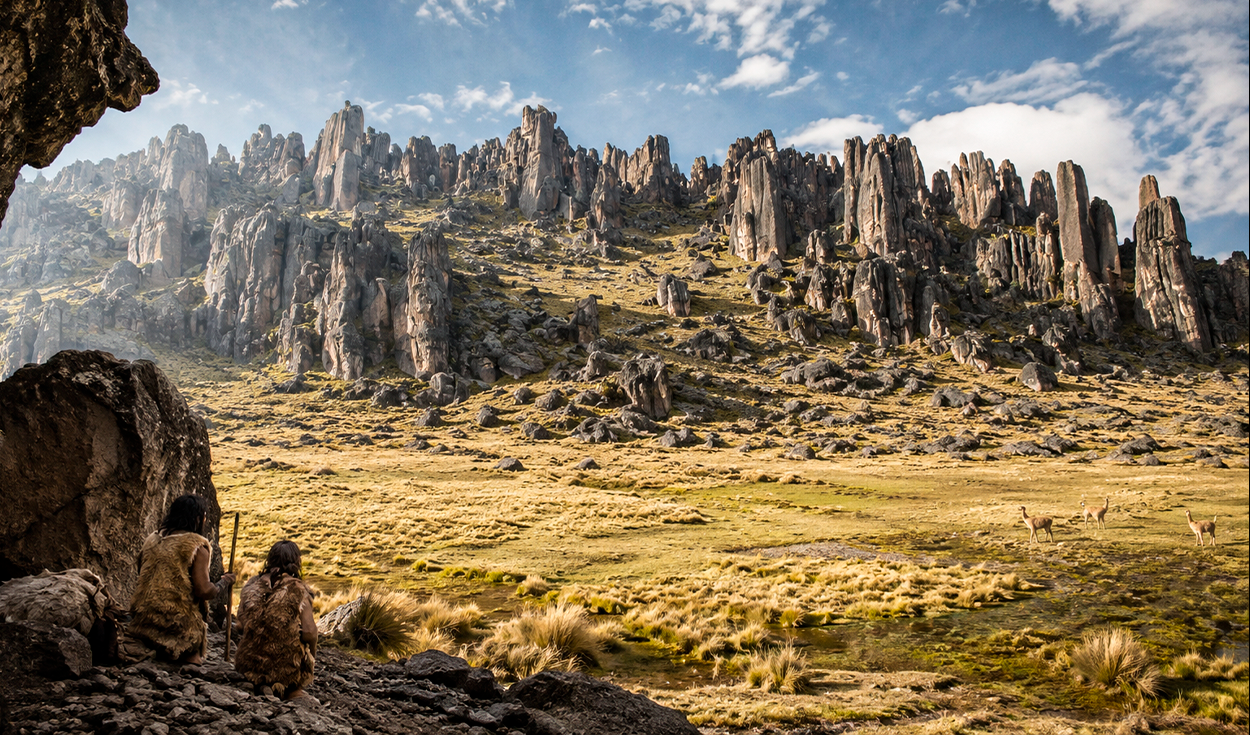
The Huayllay National Sanctuary in the Pasco region of Peru sheltered the first Andean hunters who lived in the high puna 10,000 years ago. According to the National Service of Natural Areas Protected by the State, known as Sernanp, the 6,815-hectare area was established on August 7, 1974, to conserve the geological formations of the Stone Forest along with its native flora and fauna.
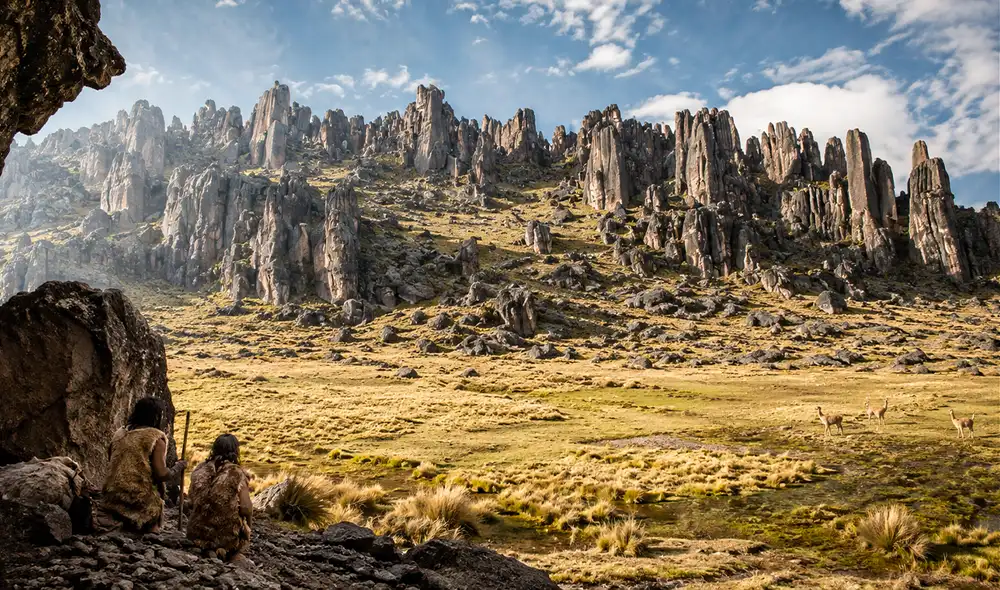
Located in the district and province of Huayllay in the central Andes of Peru, the sanctuary lies between 4,100 and 4,546 meters above sea level. Colossal stone structures emerge among wetlands, high-altitude grasslands, hot springs, and lagoons. Sernanp reported that about 90 percent of the rock architecture is of volcanic origin. Wind and climate carved columns, cavities, and cliffs across the Bombón plateau, creating an open-air geological museum with stone figures that resemble elephants, cobras, condors, and turtles.
Archaeological legacy and cave art
The sanctuary preserves an invaluable archaeological legacy spread across rock cavities and stone walls. Researchers have identified more than 500 cave paintings that document ancestral human occupation, with several portraying camelids. According to records from Sernanp and the inventory of the Ministry of Foreign Trade and Tourism, visitors walking along the trails can view famous rock sculptures including the angel, the tourist, and the human face.
Rock shelters and natural springs provided essential conditions for life, giving early hunter-gatherer communities temporary refuge from freezing winds, precipitation, and extreme puna temperatures more than ten millennia ago. Easy access to water sources combined with an abundance of vicuñas transformed the area into a strategic site for survival through hunting and gathering. According to the tourism promotion portal Y tú qué planes, parietal art recorded the evolving relationship between humans and animals over time.
The portal noted that these records place the start of llama and alpaca domestication around 6000 BC and their later use for freight transport around 4500 BC. Sernanp highlighted that these archaeological remains serve as key evidence to analyze the historical transition from nomadic bands to pastoral societies in deep Peru.
Geological history and scientific research
The scientific importance of the sanctuary extends beyond its surface features. A guide published by the Geological, Mining and Metallurgical Institute, known as Ingemmet, documents volcanic rocks, sedimentary materials, traces of ancient marine environments, and landforms produced by glacial, glaciofluvial, and fluvial processes. Ingemmet stated that this natural heritage aids in reconstructing the geotectonic history of the central mountain range, prehistoric human settlement, and the adaptation of biodiversity in extreme high-altitude ecosystems.



