

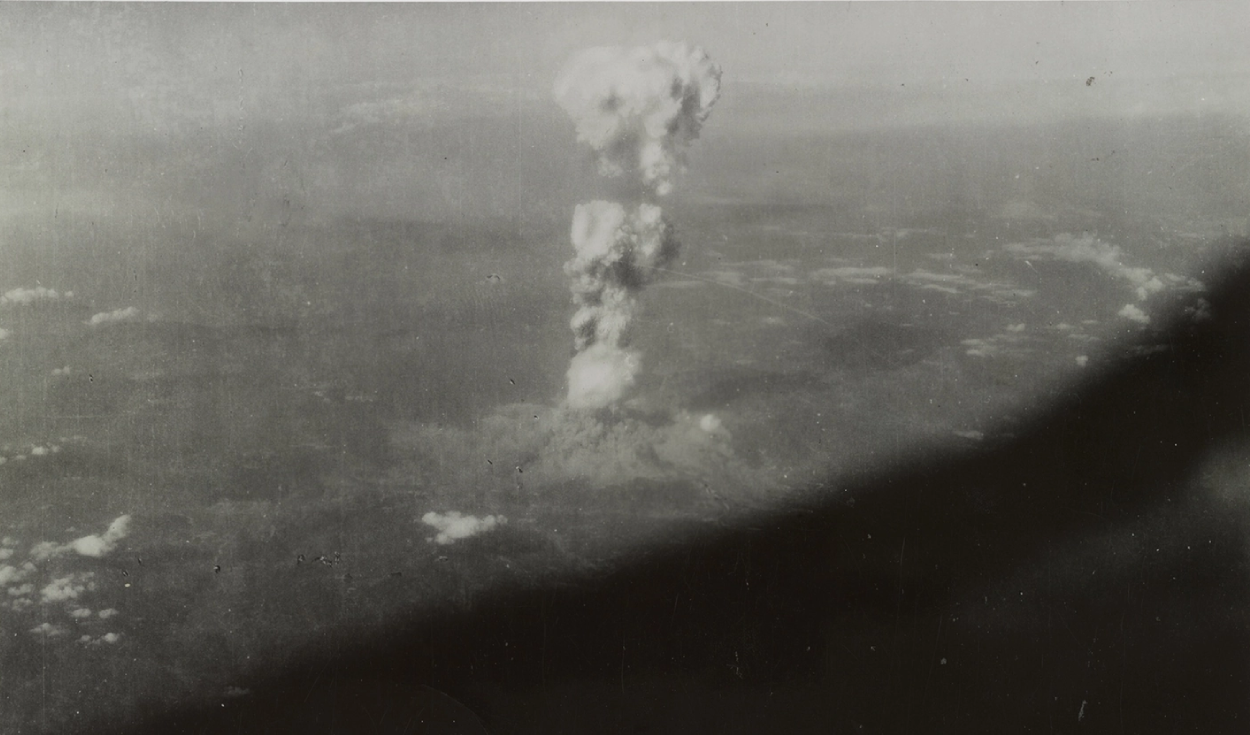
Scientists have discovered a previously unknown metallic material forged during the 1945 atomic explosion in Hiroshima, revealing that nuclear detonations can produce complex chemical compounds impossible to form under normal Earth conditions.
The discovery was made by an international team of researchers from the Università degli Studi di Firenze in Italy, led by Professor Luca Bindi of the Department of Earth Sciences.
Analyzing sediment fragments preserved in the sands of Hiroshima Bay in Japan, the research team identified a complex multicomponent alloy that had never been documented in nature or created in laboratories, which scientists have designated as hiroshimaite.
On August 6, 1945, during World War II, the United States dropped an atomic bomb over Hiroshima, a historic event that led to the surrender of the Empire of Japan.
The nuclear weapon detonated in the air above the city, producing within seconds a searing fireball with temperatures exceeding 7,000 degrees Celsius.
That intense thermal energy vaporized widespread urban infrastructure and surrounding natural terrain, pulling buildings, soil, industrial metals, glass, and water into a turbulent plasma cloud.
Following the detonation, a phase of rapid cooling allowed portions of the vaporized matter to condense, preserving tiny fragments within the sands of Hiroshima Bay.
Extreme conditions and natural parallels
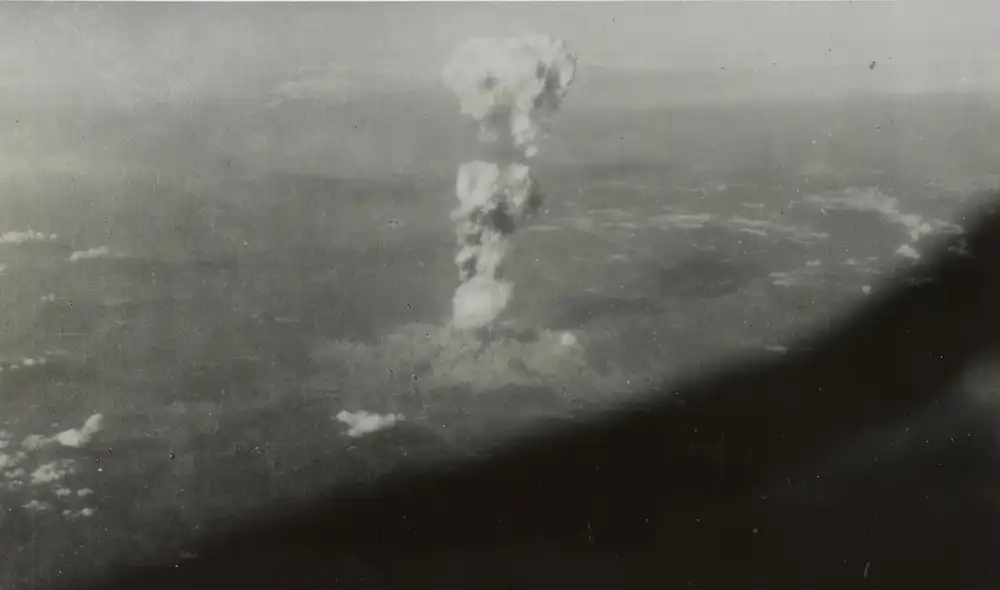
According to the study authors, events of this magnitude generate short-lived physical and chemical environments characterized by extremely high temperatures, rapid pressure fluctuations, and accelerated vaporization of diverse substances.
The researchers explained that the detonation produced a fireball that reached temperatures over 7,000 degrees Celsius in seconds, incorporating and vaporizing building materials, soils, metals, glass, and water into a turbulent plasma cloud.
The scientists noted that these man-made extreme environments are comparable in their fundamental physical nature to high-energy natural phenomena, such as high-velocity planetary collisions, meteorite impacts, and lightning strikes.
Prior to this investigation, earlier scientific studies of the Hiroshima debris had identified nuclear-created glass materials formed by the blast.
Those previously discovered glass samples were composed primarily of calcium, aluminum, and silicon, along with minor amounts of minerals such as mullite and anorthite.
Mullite is a rare silicate mineral that forms under high temperatures, while anorthite is a calcium-rich member of the feldspar mineral group.
Characteristics of those glass formations indicated that they had condensed at temperatures exceeding 1,800 degrees Celsius.
Formation of the hiroshimaite alloy
Professor Bindi and his research team hypothesized that the exact same extreme blast conditions capable of creating those glasses could also force vaporized metals into complex chemical phases.
The atomic explosion vaporized widespread industrial metals present across Hiroshima, including structural steels, aluminum alloys, and copper-bearing components.
Under those extreme plasma conditions, different metallic elements mixed rapidly before undergoing immediate cooling and solidifying.
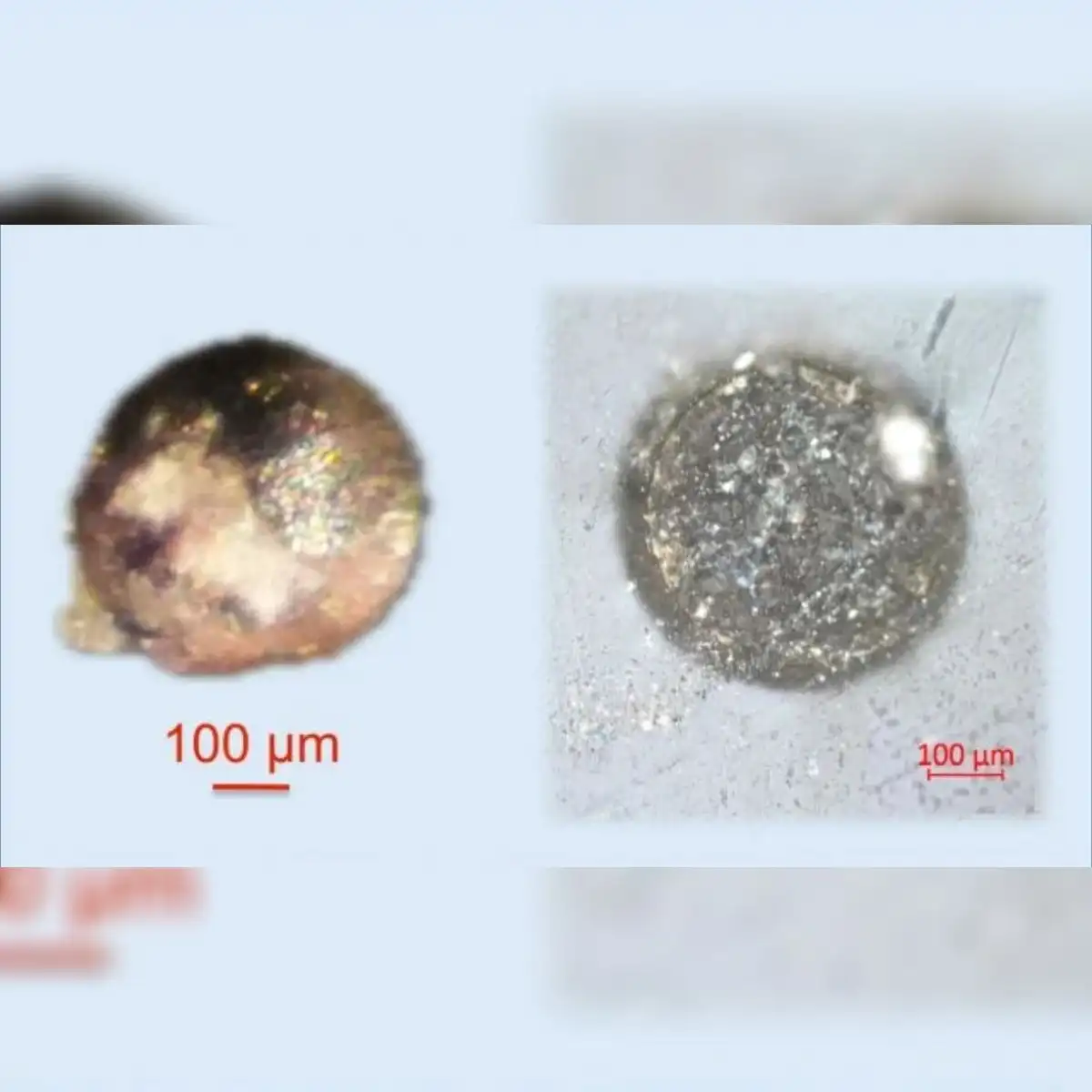
To test their hypothesis, the scientists examined multiple samples of materials known as hiroshimaite, a term used by researchers to describe these unique nuclear blast-formed substances.
Inside one of the spherical samples, the team detected numerous metallic fragments measuring only a few micrometres in size.
Initial chemical screening showed that the metallic fragments were composed mainly of iron and chromium.
A more detailed microscopic inspection allowed the team to identify a specific particle containing a multicomponent metal alloy with a composition never before recorded in scientific literature.
Microscopic analysis of blast debris
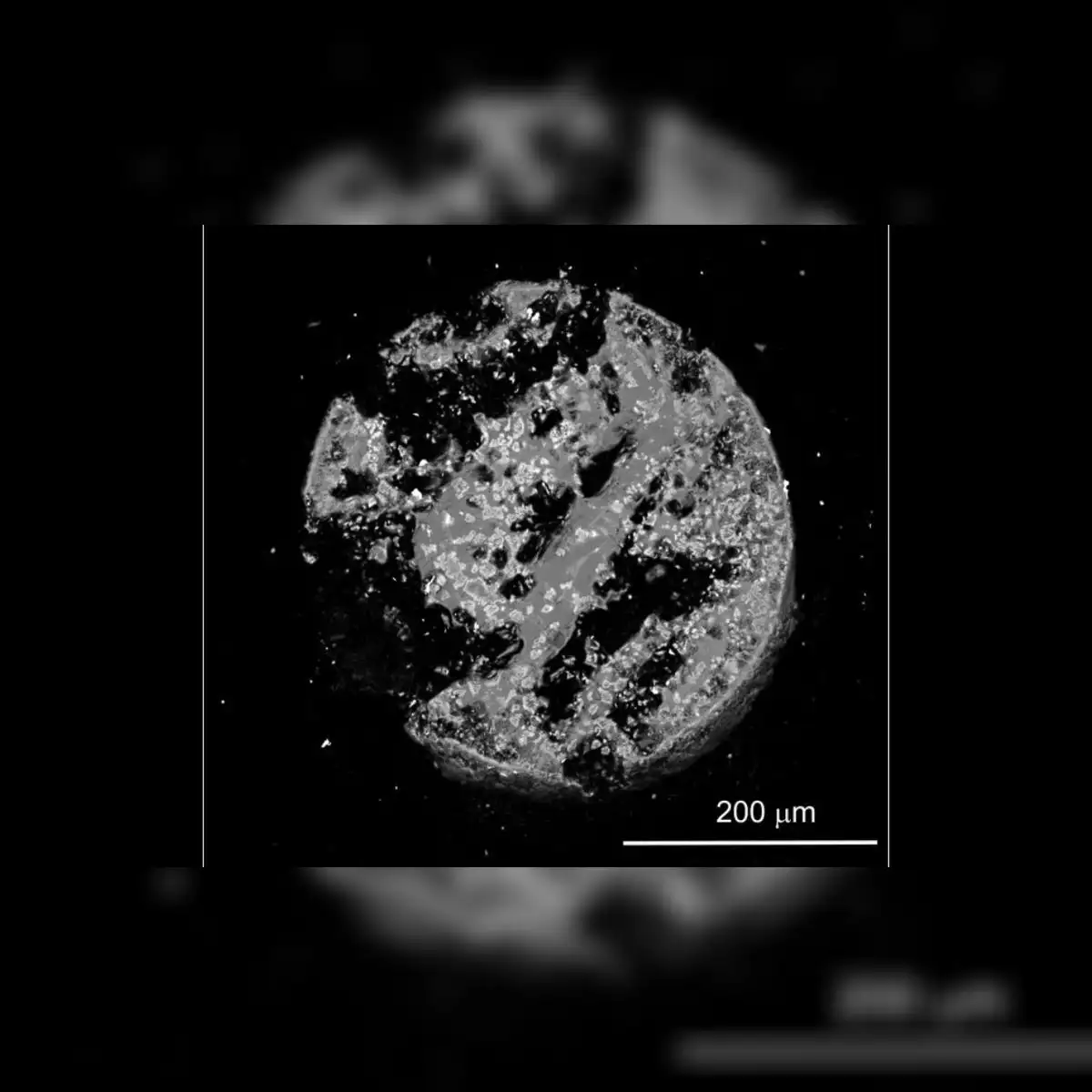
The researchers conducted detailed cross-sectional analysis of the material using scanning electron microscopy, which revealed metallic material dispersed throughout the surrounding glass matrix of the complete hiroshimaite spherule.
Scanning electron microscopy is an advanced imaging technique that uses a focused beam of electrons to map microscopic structures and determine their precise elemental composition.
The microscopic features and elemental makeup of the particle are consistent with rapid condensation and sudden quenching from a multi-element metallic vapor cloud.
The newly identified alloy was recovered from the exact same sedimentary layers in Hiroshima Bay where silicate condensates had been located during earlier scientific surveys.
Scientific implications and future research
The research team published their complete findings in the peer-reviewed scientific journal Science Advances.
Science Advances is a high-profile open-access journal published by the American Association for the Advancement of Science.
The study authors stated that their discovery broadens the recognized spectrum of materials created by nuclear explosions, proving that human-made plasma events can produce complex metallic phases that remain preserved in natural environments over decades.
The findings also provide scientists with a valuable model for understanding how novel materials might form during high-energy celestial events elsewhere in the universe.
The researchers noted that the Hiroshima site provides a unique natural laboratory to study the rapid nucleation of alloys under extreme non-equilibrium conditions.
By confirming that complex metallic alloys can condense directly from nuclear plasma, the study provides new insights into material behavior under extreme energy discharges.



