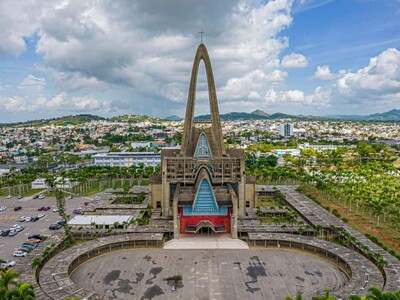
Higüey, a municipality in the Dominican Republic's La Altagracia province, is losing its historic capacity for collective action amid growing social and institutional fragmentation, opinion writer Paul Beswick argued in a column published by Diario Libre.
Beswick wrote that Higüey's history was built on solidarity, faith, hospitality and its ranching heritage, with generations of families, communities and business sectors learning that moving forward together was a necessity rather than a choice. He said something had nonetheless been breaking down: the ability of Higüey's people to act as a single body.
Institutions Competing Instead of Cooperating
According to Beswick, Higüey's social fracturing shows up first in a proliferation of institutions pursuing similar goals that, instead of unifying their criteria, compete against each other for recognition, resources and prominence. He said organisations working in the same field often pursue practically identical aims but with separate agendas, which he argued weakens institutional cohesion and the community's collective ability to influence outcomes and deliver results.
Political and Business Divisions
Beswick said the fragmentation had also reached local politics, where legitimate differences of opinion have frequently hardened into personal trenches. He wrote that partisan interest ends up overriding territorial interest, and that a political rival, whether from inside or outside one's own camp, stops being seen as a fellow citizen with a different view and becomes someone to be destroyed or neutralised.
He made a similar argument about the business community, saying it has failed to build a shared agenda to defend Higüey's development. Political interest, cliquishness, familiarity and personal loyalty, he wrote, tend to outweigh competence, experience and results. In community life, he added, leaderships and organisations often multiply while competing for perks and visibility rather than coordinating their efforts.
Confusing Leadership With Visibility
The deeper problem, Beswick argued, is cultural: Higüey has begun to confuse leadership with self-promotion. He said public exposure has become an end in itself across every sector, with photographs, statements, awards and a presence on social media at risk of replacing what should actually measure a leader, namely competence, experience, ethical conduct, concrete proposals and results.
A Structural Weakness
Beswick described this as compounding a structural weakness, writing that Higüey cannot depend solely on individual, short-term or improvised initiatives. A society that does not collectively decide where it wants to go, he argued, ends up being led by those least capable, or by whoever has the greatest access to resources, exposure or pressure.
The challenge, he wrote, is not to create another institution, another movement or another leadership structure. Instead, he said, Higüey needs to learn to identify and contain the rise of what he called pseudo-leaderships, to give opportunities to the most competent people, and to unify criteria across sectors. The municipality, he argued, needs fewer isolated factions, less self-promotion and more shared purpose, along with less competition for the microphone and greater willingness to sit around the same table and agree on a common strategy.
Beswick concluded that Higüey's greatness lies not in multiplying leaderships but in allowing genuine leaders to stand out, so that society across La Altagracia province learns to build consensus and move in a single direction.