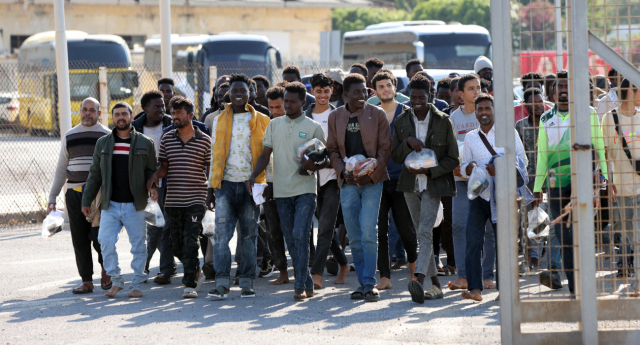
Germany, Austria, Denmark, Greece, and the Netherlands have entered a decisive phase in negotiations to build return hubs in Africa for rejected asylum seekers.
The proposed offshore facilities would house irregular migrants who no longer hold a legal right to remain in European Union member states, including individuals whose asylum applications have received final rejections.
The Danish Ministry of Migration confirmed that the five participating nations have jointly launched the initiative to implement the deportation centers and that preparations have now moved into an active stage.
Negotiations with Uganda and Rwanda
Talks are focusing primarily on African partner countries to host the deportation facilities. A report published by the Greek newspaper Kathimerini indicates that discussions have progressed furthest with Uganda.
Under the proposed arrangement with Uganda, the East African nation would receive financial compensation in exchange for hosting the hub. The five European governments aim to make the first facility operational by 2027.
Technical delegations representing the five member states are scheduled to travel to Africa before the end of August to continue negotiations on the ground.
At the same time, information published by protothema.gr indicates that Rwanda has also emerged as a strong candidate in the negotiations. European officials consider Rwanda a serious option due to its established infrastructure and previous experience in housing displaced populations.
Rwandan Infrastructure and Previous Experience
Rwanda currently operates a temporary reception facility under the Emergency Transit Mechanism in partnership with the United Nations High Commissioner for Refugees. Since 2019, the country has received more than 3,000 refugees and asylum seekers evacuated from Libya, most of whom were later resettled in third countries.
The capital of Rwanda, Kigali, also holds specialized housing infrastructure created under a previous asylum agreement with the United Kingdom before the government in London canceled that program.
Reporting from InfoMigrants confirmed that the Rwandan government has verified ongoing talks with European officials regarding the potential return hub. Rwanda was previously identified in June alongside Uganda, Kenya, and Uzbekistan as potential locations for European deportation centers.
The initial framework plans for a pilot center capable of holding between 5,000 and 10,000 individuals whose asylum claims have been formally denied.
Copenhagen Ministerial Meeting on September 4
The next major milestone in the talks will take place in Copenhagen on September 4. Danish Minister of Migration and Integration Morten Bødskov has invited migration ministers from Germany, Austria, the Netherlands, and Greece to outline the next steps.
An official statement from the Danish government affirmed the goal of finalizing an agreement within 2027. This timeline would allow EU member states to begin transferring individuals without legal stay rights to facilities outside European territory.
Greece and the EU Council Presidency
Athens is actively participating in the core working group alongside Berlin, Vienna, The Hague, and Copenhagen. Greek Minister of Migration and Asylum Thanos Plevris is directing the initiative for Greece.
The 2027 operational target aligns with a key diplomatic milestone for Athens, as Greece is set to hold the rotating presidency of the Council of the European Union in the second half of 2027.
Finalizing the return hub agreement forms a central objective for Plevris, who has enacted stricter domestic migration policies. These measures include a new law built around a doctrine of deportation or imprisonment, alongside international return hubs intended to signal that irregular arrivals will not remain in Europe.