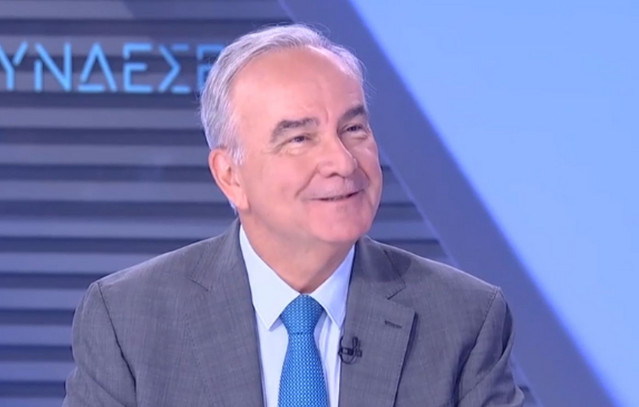
Greek Alternate Minister of National Economy and Finance Nikos Papathanasis announced on Wednesday morning that a package of economic measures exceeding €1 billion will be presented at this year's Thessaloniki International Fair. Speaking on the state television channel ERTnews on August 12, Papathanasis emphasized that final decisions regarding the package rest with the prime minister, with interventions focusing primarily on the middle class, pensioners, families, small and medium-sized enterprises, and young people.
The Thessaloniki International Fair, held annually in September, serves as Greece's traditional venue for the prime minister to outline the government's economic agenda for the upcoming year. Papathanasis explained that the scope of the package is linked to Greece's fiscal trajectory and its request to activate the European fiscal escape clause, which aims to unlock additional fiscal room for energy resilience projects. While this mechanism could yield extra fiscal space over coming years, he clarified that the full amount will not immediately be allocated to 2027 measures, leaving the prime minister to select specific interventions from the available fiscal margin.
Addressing youth support, Papathanasis recalled that last year's tax reform introduced a zero percent tax rate for workers up to 25 years of age and a reduced 9 percent rate for those aged between 25 and 30, measures that he noted successfully boosted disposable income across the demographic.
New National Development Programme
Papathanasis dismissed concerns over an economic slowdown or recession following the conclusion of the European Union Recovery Fund, asserting that the Greek economy will continue to grow at a rate higher than the European average. Official forecasts place Greek economic growth at 2 percent, compared to an average of 0.9 percent across Europe.
Discussing the status of the Recovery Fund, the alternate minister noted that 100 percent of the loan component has been achieved, while the grant component must be finalized by August 31 alongside the completion of required projects. He emphasized that the end of the Recovery Fund does not mean an end to development funding, as the government has structured its next phase through the National Development Programme and complementary European financial tools.
Under the National Development Programme 2026-2030, Greece is mobilizing €23 billion in national resources, a significant increase from the €10 billion allocated in the previous program. Papathanasis presented the program as the core financing engine for the post-Recovery Fund economy, explaining that funds will target projects with a direct impact on the daily lives of citizens. He argued that if development policy is not translated into concrete improvements in everyday life, it carries no value, directly connecting investment policy to employment and entrepreneurship.
Funding will also be drawn from the Social Climate Fund to support vulnerable households and small businesses. The Social Climate Fund is designed to address energy poverty, housing, and transport while enhancing energy resilience and modernizing the economy.
Economic Growth and Labor Market Progress
Responding directly to forecasts predicting a potential downturn once recovery funds wind down, Papathanasis was categorical, stating that there will be no recession. He pointed out that Greece continues to outpace European growth averages while narrowing its long-standing investment gap.
Highlighting labor market improvements, Papathanasis noted that unemployment in Greece has fallen to 8 percent, down from approximately 18 percent in past years, supported by the creation of more than 600,000 new jobs. He added that gains in disposable income stem not merely from government subsidies, but from sustainable job creation, wage increases, and reduced tax burdens.
Housing Interventions and Student Support
To address the ongoing housing crisis, Papathanasis highlighted extensive state interventions, including the construction of more than 8,000 student dormitories across the country, describing it as the largest student housing construction program ever implemented in Greece. In addition, the government has increased student housing allowances, which can reach up to €2,500 per student in cases of cohabitation.
Regarding the My Home 2 housing program, Papathanasis reported that approximately 14,000 residential properties have already benefited from the initiative, with participation expected to expand before the final disbursement date on August 31, 2026. Meanwhile, a separate initiative aimed at renovating closed or vacant homes has recorded around 9,000 applications from property owners seeking to bring unused real estate back into the market.
Papathanasis stressed that the government does not seek to resolve the housing issue through a single measure, but rather by progressively increasing housing supply and expanding options for home seekers across the country.
Small Business Financing and Social Impact
The alternate minister rejected criticism from opposition parties claiming that Recovery Fund resources primarily favored large corporations over small and medium-sized enterprises. He stated that small and medium-sized businesses accounted for approximately 60 percent of the total number of loans issued under the facility's loan branch.
Looking ahead, Papathanasis announced new financing mechanisms through the Hellenic Development Bank aimed at providing small and micro-enterprises with access to low-cost credit. He also defended the tangible social benefits delivered by Recovery Fund investments, citing national programs for preventive health screenings, hospital and health center renovations, school upgrades, and the installation of interactive whiteboards in classrooms.
Major transport infrastructure projects funded through the program include the E65 motorway in central Greece and the BOAK highway in Crete. In healthcare, Papathanasis noted that more than 2 million citizens have participated in preventive health examinations, leading to the early detection of precancerous conditions in more than 30,000 women.
Civil Protection and Long-Term Investment
In response to scrutiny over funding for civil protection, Papathanasis stated that Greece is carrying out the largest civil protection upgrade program in its history. He explained that funding is sourced not only from the Recovery Fund, but also through ESPA, Greece's National Strategic Reference Framework, and national budget allocations.
Projects initiated under the Recovery Fund, such as water supply infrastructure, aerial and ground firefighting assets, and natural environment protection measures, can seamlessly continue to draw financing from other available European and national tools. Papathanasis reiterated that the conclusion of the Recovery Fund marks a transition to a revised mix of financing instruments, with the National Development Programme playing a central role.
He concluded that government economic policy will remain anchored in fostering entrepreneurship and attracting investment, ensuring that broader economic growth translates directly into higher disposable incomes and improved living standards for citizens.