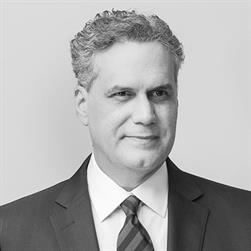
Spanish columnist Francisco Marhuenda has demanded the resignation of Interior Minister Fernando Grande-Marlaska, describing his loss of public credibility as irreversible.
Writing in an opinion column, Marhuenda argued that Grande-Marlaska remains in office due to a desire for popularity and power rather than professional competence. He claimed that the minister has become a political liability for the government.
Grande-Marlaska serves as Spain's Minister of the Interior under Prime Minister Pedro Sánchez. Before entering politics, he worked for years as a magistrate in the Spanish judicial system, including serving on the National Court.
Marhuenda stated that Grande-Marlaska was widely regarded within the legal profession as a mediocre magistrate who had been consistently overrated. He argued that despite public attention surrounding Grande-Marlaska's work in the Basque Country, nothing original had ever come from the minister's legal writing.
Judicial reputation and comparisons
In his column, Marhuenda compared Grande-Marlaska to Cándido Conde-Pumpido, referring to both as magistrates aligned with Sánchez who suffer from widespread discredit in legal circles.
Conde-Pumpido is a prominent Spanish jurist who serves as the President of Spain's Constitutional Court. The Constitutional Court evaluates whether laws align with the nation's constitution, operating separately from the Supreme Court.
Marhuenda contrasted Grande-Marlaska with senior legal figures such as Manuel Marchena and Margarita Robles, describing them as top-tier jurists whose achievements far exceed those of the interior minister.
Manuel Marchena is a senior magistrate who presides over the criminal chamber of Spain's Supreme Court. Margarita Robles, also a former judge, currently serves as Spain's Defense Minister in the cabinet of Prime Minister Sánchez.
According to Marhuenda, Grande-Marlaska has avoided retirement because he lacks both the age requirements and qualifications to sit on the Supreme Court, while also lacking the professional standing required for the Constitutional Court.
Political role in the Sánchez administration
Marhuenda claimed that Prime Minister Sánchez retains Grande-Marlaska in his cabinet because the interior minister absorbs and socialises public criticism on behalf of the government. He added that Grande-Marlaska enjoys support only from pro-government media outlets.
The columnist described Grande-Marlaska as a trickster and meddler, using the Spanish term zascandil. He stated that Grande-Marlaska and other close allies of Sánchez effectively carry the label of traitor, adding that the minister deserved immediate dismissal simply for his habit of greeting the prime minister with kisses on both cheeks.
Marhuenda noted that former Prime Minister Mariano Rajoy had previously resisted pressure from supporters who wanted Grande-Marlaska appointed as Attorney General. He suggested that Rajoy showed lucidity by ignoring those recommendations, preventing similar behavior during his administration.
Defence of intelligence services and Ceuta documents
Marhuenda praised Defense Minister Margarita Robles, stating that she earned public respect by refusing to accept false claims and by defending the work of Spain's National Intelligence Centre.
The National Intelligence Centre, known as the CNI, is Spain's official intelligence agency responsible for providing information to the government regarding national security and foreign threats.
Closing his column, Marhuenda declared that one of the essential duties for opposition leader Alberto Núñez Feijóo will be to declassify official documents related to the events described as an invasion in Ceuta.
Ceuta is a Spanish autonomous city located on the northern coast of Africa, bordering Morocco. Alberto Núñez Feijóo leads the opposition People's Party, the main conservative political force in Spain.
Francisco Marhuenda is a Spanish legal scholar, university professor, and newspaper columnist. He serves as a professor of public law and history of institutions at UNIE University, and holds memberships in the Royal Academy of Jurisprudence and Legislation of Spain, the Royal Academy of Doctors of Spain, and the Royal Academy of History.