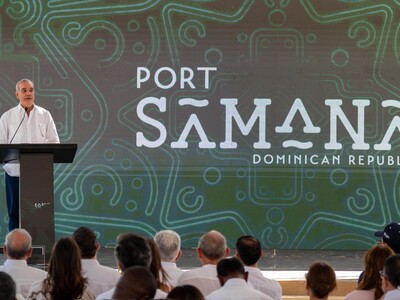
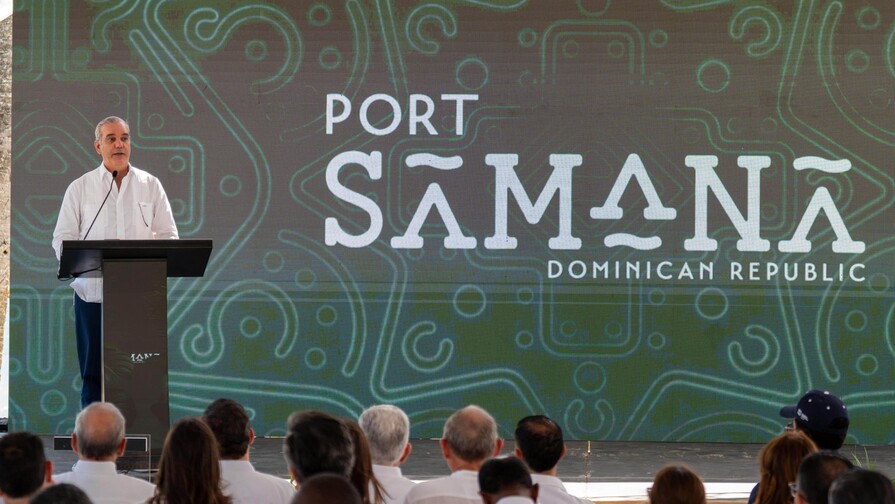
Dominican President Luis Abinader inaugurated Port Samaná on Tuesday, the country's seventh cruise terminal, as the MSC Opera became the first ship to dock there carrying around 2,045 passengers.
The arrival marks a new stage of tourism and economic development for Samaná province, on the northeastern coast of the Dominican Republic, an area long known for its beaches, rainforest scenery and seasonal humpback whale watching.
The terminal is the first infrastructure project awarded under the Dominican Republic's Law 47-20 on public-private partnerships, a 2020 framework that allows private companies to finance, build and operate public infrastructure in exchange for long-term concessions. Port Samaná was built by ITM Group at a cost of roughly $90 million, well above the $68 million originally budgeted.
From old port to modern terminal
The new facility sits on the site of the old Puerto Duarte in Arroyo Barril, which began operations 50 years ago. The project converts that aging port into a modern terminal capable of receiving ships carrying up to 5,800 passengers, along with new shops, restaurants and recreational facilities.
Construction began in June 2025 under a contract signed in September 2023 that hands day-to-day management of the terminal to PDAB Port Investments, a management company linked to ITM Group, for 33 years.
The Dominican Port Authority, known as Apordom, had originally estimated the state would collect net revenue of $1.75 for every cruise passenger passing through the port, plus a monthly fee for each square meter of leased space. Together, those two revenue streams are projected to bring in about $115.6 million over the life of the contract.
Investment and financing
Leonardo Aguilera, chief executive of the state-owned bank Banreservas, said the bank provided $44.4 million in financing for the infrastructure, along with a $1 million credit line for working capital.
Aguilera said the arrival of visitors would boost trade, transport, restaurants and other tourism services, spreading the benefits of the investment to local residents.
Including Port Samaná, Banreservas financing extended to ITM Group for cruise terminal projects, which also include Taíno Bay in Puerto Plata and Port Cabo Rojo in Pedernales, now exceeds $114 million. Aguilera also pointed to the involvement of Fiduciaria Reservas in the project and said the bank's overall tourism-sector loan portfolio exceeds 61 billion Dominican pesos.
Passenger projections and expansion plans
Mauricio Hamui, executive director of ITM Group, said the terminal expects to receive 10,000 cruise passengers for the rest of 2026, about 230,000 in 2027 and 540,000 in 2028, with the goal of reaching one million visitors a year by 2030.
Cruise lines that have already begun confirming operations at the port include Royal Caribbean, Norwegian Cruise Line, Virgin Voyages and MSC Cruceros, among the largest cruise operators serving the Caribbean.
Hamui said some phases of the project are still pending, including a theme park expected to be finished within three to six months. He said the company is also building a "tourist city" in Samaná and Arroyo Barril, connected to the port, where artisans will be able to sell crafts and visitors will find food and other services.
The ITM Group executive added that the company is working to turn Samaná into a homeport, a status that would let cruise passengers begin and end their itineraries in the province rather than simply stopping there. He said the project rests on three pillars: integration with the local community, sustainable development and harmony between the cruise industry and the people of Arroyo Barril.
Regional economic impact
President Abinader highlighted the coordination between government institutions, local authorities and communities needed to bring the project to completion, noting that planning for it began in October 2020.
He said the terminal would become one of the economic engines of the region, pointing to the opportunities it creates for nearby destinations such as the Salto El Limón waterfall, Las Terrenas, Sánchez and Los Haitises National Park.
Tourism Minister David Collado said cruise tourism remains important for continuing to position the Dominican Republic as a regional leader in the industry.
The government estimates the new terminal will generate 1,000 direct jobs and more than 3,000 indirect jobs, with effects reaching local commercial activity.
What happens next
ITM Group plans to finish remaining phases, including a theme park, within three to six months, and expects passenger numbers to rise from 10,000 this year to 540,000 by 2028 on the way to one million by 2030.
Test yourself
Which ship was the first to dock at the newly inaugurated Port Samaná?
Approximately how much did ITM Group invest in Port Samaná?
How many direct jobs does the Dominican government estimate the terminal will create?
Have your say
Should governments rely on public-private partnerships to fund tourism infrastructure like cruise terminals?
Where it happened
Samaná, Dominican Republic