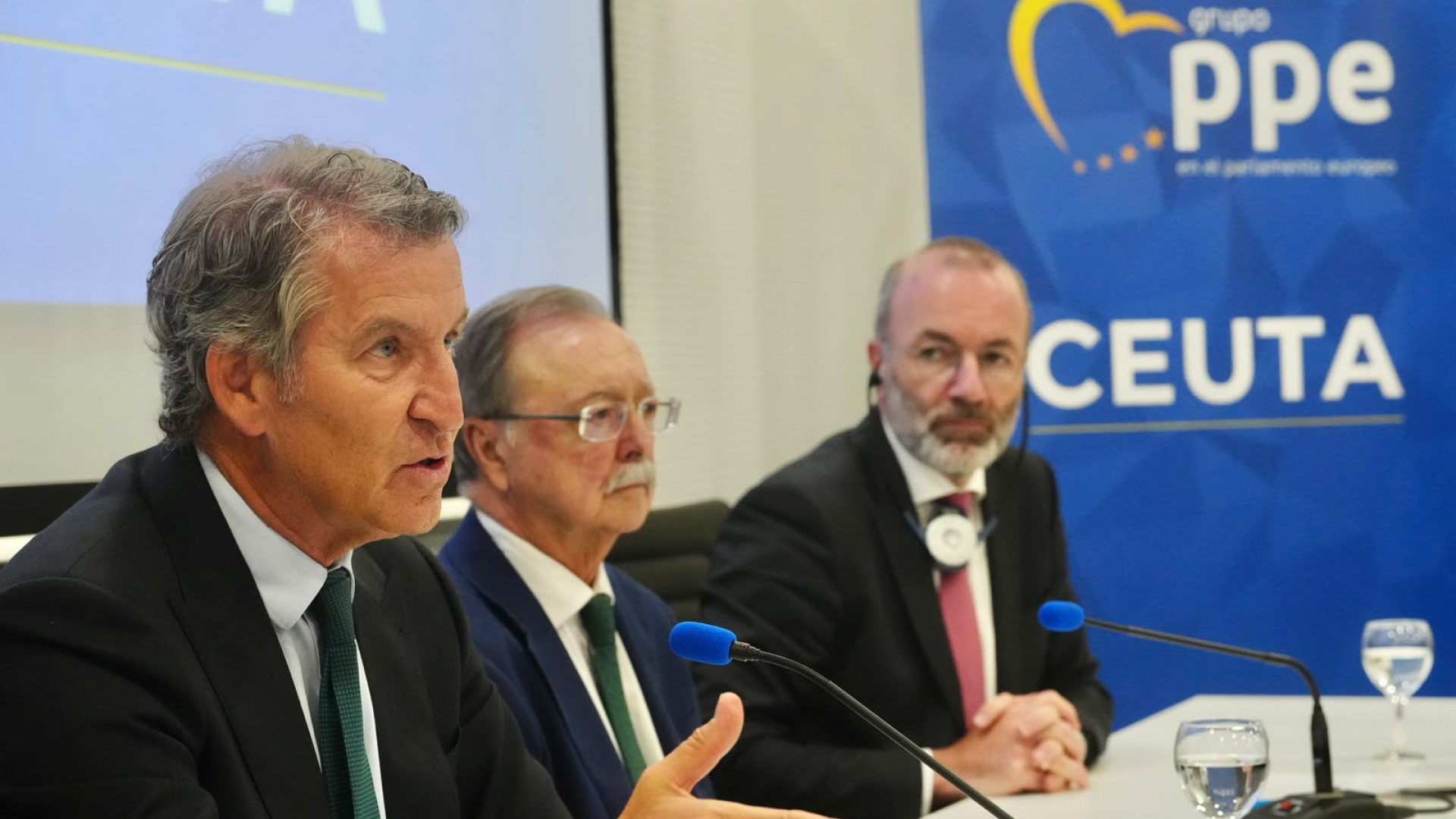
Spanish opposition leader Alberto Núñez Feijóo has accused Prime Minister Pedro Sánchez of seeking to prolong the migration crisis in Ceuta to shift blame onto the autonomous city's president, Juan Vivas.
Making his fourth trip to Ceuta, the Popular Party leader was accompanied by European People's Party president Manfred Weber as both political figures jointly demanded the immediate return of all irregular migrants and a permanent border deployment by European border agency Frontex.
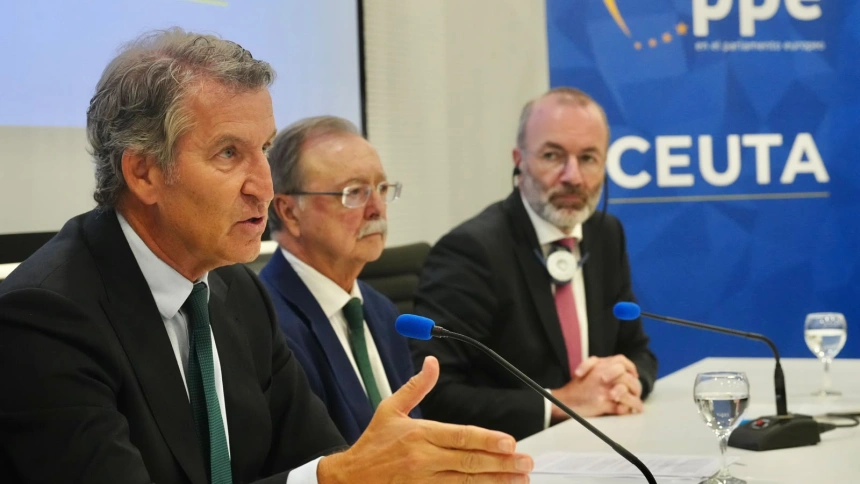
Feijóo criticized the central government's stance, describing its political attacks on Vivas as miserable during an ongoing border emergency. He denounced the central administration's approach as a strategy to turn the situation chronic while avoiding its own responsibilities in managing border security.
Ceuta is a Spanish autonomous city located on the North African coast, sharing a direct land border with Morocco. As one of the European Union's two land borders on the African continent, alongside the nearby Spanish enclave of Melilla, the city is a frequent point of entry for migrants attempting to reach European territory.
Inspection of migrant settlement
During their visit to Ceuta, Feijóo and Weber inspected an informal migrant settlement at El Trampolín. The German politician expressed shock at the conditions inside the improvised encampment, noting that institutional responses would have differed significantly had a similar emergency occurred in another EU member state.
Weber issued a sharp warning regarding international obligations, urging Morocco to fulfill its migration commitments. The European conservative leader declared that obvious consequences would follow if borders along the autonomous city were not properly stabilized.
Feijóo leads Spain's main opposition party, the conservative Popular Party, while Weber heads the European People's Party, the largest political family in the European Parliament. Feijóo has placed the situation in Ceuta at the center of his political agenda in an effort to bring the conflict to the attention of European Union institutions.
Demands for European intervention
The Spanish opposition leader highlighted his efforts within European institutions, where he promoted a resolution supporting the autonomous city. Both Vivas and Weber formally acknowledged Feijóo's initiative in securing European parliamentary backing for Ceuta.
Frontex, the European Border and Coast Guard Agency, coordinates border management across member states to support national security operations. Feijóo, Weber, and Vivas united in demanding that the agency establish a permanent presence in Ceuta to safeguard border security and manage irregular arrivals.
The joint appearance in Ceuta reinforces the opposition's call for immediate federal and European intervention as local authorities face ongoing pressure from border crossings.