


Researchers at the Qreiya 3 site in Egypt's Eastern Desert have uncovered nearly 500 exceptionally preserved marine fossils dating back 62.2 million years.
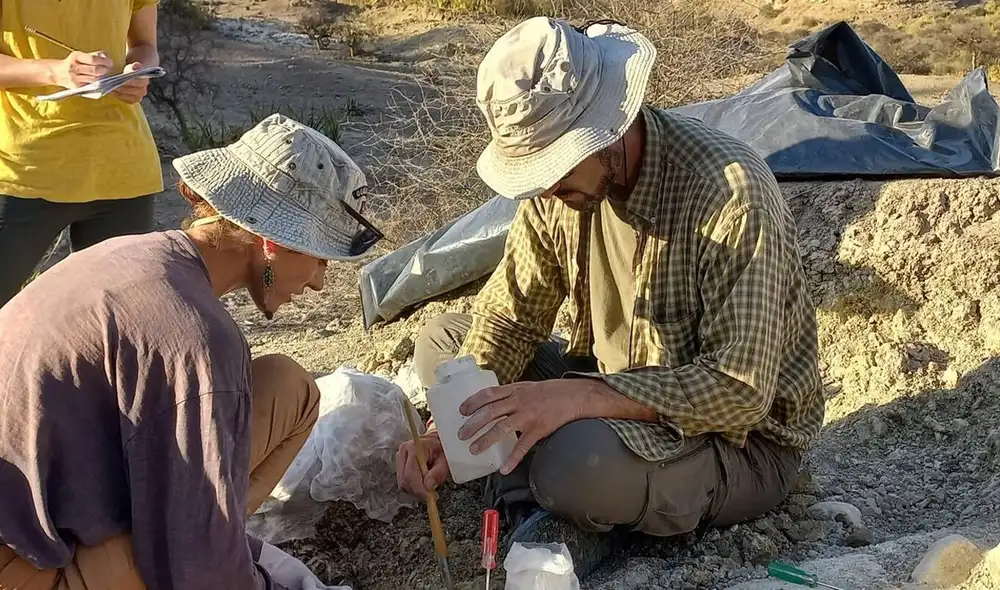
The discoveries at the site reveal that what is now one of North Africa's most arid desert landscapes was once a warm, shallow sea teeming with diverse fish species shortly after the extinction of the dinosaurs.
The Eastern Desert spans the vast geographic region between the Nile River and the Red Sea in northeastern Egypt. Today, the area is known for its hyper-arid climate, rocky mountains, and dry valleys that receive almost no annual rainfall. However, during the early Paleocene epoch, global sea levels flooded large portions of North Africa, creating shallow marine environments across areas that are now hundreds of miles inland.
Fossil Record at Qreiya 3
Field investigators recovered nearly 500 fossil specimens at the Qreiya 3 deposit, describing the level of preservation as extraordinary. A significant portion of the recovered specimens retain fully articulated skeletons, offering rare structural clarity for paleontological research.

The exceptional preservation allows scientists to directly examine fine anatomical details, including the structure of fins, jaw formations, and precise body proportions. In paleontology, articulated fossil skeletons are uncommon because dead organisms usually decompose or get scattered by scavengers, ocean currents, and wave action before sediment can cover them.
Detailed examinations indicate that the specimens represent at least 21 distinct groups of ray-finned fishes spread across nine different taxonomic orders. Ray-finned fishes, known scientifically as Actinopterygii, constitute the largest class of living vertebrates today, comprising over 30,000 species inhabiting ocean and freshwater environments worldwide.
Links to Modern Marine Lineages
The fossil collection at Qreiya 3 includes early anatomical precursors to several major modern fish lineages. Researchers identified fossil shapes connected to families that today include tuna, jacks, mackerels, ocean sunfishes, and pipefishes.

Modern tuna and mackerels are fast-swimming open-ocean predators, while ocean sunfishes are massive pelagic species and pipefishes are slender relatives of seahorses. Finding primitive representatives of these diverse lineages in the same ancient basin demonstrates how early bony fish were filling varied ecological roles.
Alongside the bony fishes, researchers also uncovered fossilized remains of sharks and rays, though these cartilaginous species were found in smaller quantities. Unlike bony fish, sharks and rays possess skeletons made of cartilage, which rarely fossilizes intact except under specific geochemical conditions.
The co-existence of predatory sharks, rays, and numerous bony fish species indicates that a structured marine food chain was already functioning. Scientists noted that the presence of multiple ecological roles confirms that the ancient sea was a fully developed ecosystem rather than a simple habitat.
Ocean Recovery After Mass Extinction
The Qreiya 3 deposit formed approximately four million years after the Cretaceous-Paleogene mass extinction event. That global catastrophe, caused by a massive asteroid impact around 66 million years ago, eliminated non-avian dinosaurs and decimated world oceans, wiping out major marine groups such as ammonites and large marine reptiles.
The collapse of earlier ocean species created open ecological space for surviving groups to diversify. The geological timing of Qreiya 3 makes the site a critical benchmark for studying how marine biodiversity rebuilt itself in the aftermath of mass extinctions.
Understanding how ocean ecosystems recovered following the Cretaceous-Paleogene boundary has long been a key question in evolutionary biology. The wide variety of species found in Egypt demonstrates that marine environments established complex, multi-tiered ecosystems within a relatively short period of geological time following the extinction event.



