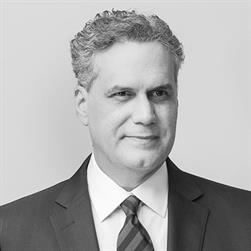
Peruvian economist Fernando Cuadros Luque has urged Congress to reject the government's request for special powers to legislate on labor matters, arguing lawmakers should instead pursue their own five-year legislative agenda to promote quality employment.
In an opinion column, Cuadros Luque said the government's bill asking Congress to delegate legislative authority to the executive branch contained a set of measures contrary to workers' interests, a point he said he had already laid out in a previous column. He said Congress should deny the request and instead advance a jobs-focused agenda through its ordinary legislative channels.
Cuadros Luque is an economist from the Universidad del Pacifico who works as a labor economy consultant and guest professor at the Pontificia Universidad Catolica del Peru (PUCP). He has previously served as Peru's vice minister for employment promotion and as an advisor to the Labor Ministry and the National Labor Council, and has consulted for the Ministry of Economy and Finance, the International Labour Organization and the Friedrich Ebert Foundation, among others.
Central bank mandate and tax reform
Cuadros Luque proposed amending the organic law of the Central Reserve Bank of Peru (BCRP) to add formal employment targets to its monetary policy mandate, pointing to the approach used by the United States Federal Reserve and other central banks. He said combining inflation and formal employment goals would let the BCRP play a more active role in driving economic growth.
He also called for a tax reform law to eliminate inefficient tax exemptions, widen the taxpayer base and make high earners and large estates contribute more, raising the tax burden from 14% to 21% of gross domestic product by 2031. He said the extra revenue would speed up public investment in productive infrastructure and improve education, health, water and sanitation, and security services.
Budget increases for jobs programs
Cuadros Luque called for a public budget law that would give more funding to the Labor Ministry's Trabaja Peru (Llamkasun) and Jovenes Productivos programs, to create more temporary jobs and income for vulnerable people, particularly women, in both urban and rural areas, and to improve young people's employability through training, skills certification and job placement support. He said the budget and number of beneficiaries for both programs should at least double within five years. He also said the judiciary urgently needed more funding and staff to handle labor and pension claims on time.
Separately, he proposed a law offering incentives for formal youth hiring, including a temporary subsidy on health and pension social security contributions to encourage micro and small businesses to hire young people, especially women, on stable, formal terms. The goal, he said, is to significantly cut youth inactivity, unemployment, underemployment and informality.
Agrarian and labor inspection reforms
Cuadros Luque proposed a new agrarian law to bring farm workers' labor and social security rights in line with the general labor regime, provide job stability, encourage collective bargaining, particularly at industry level, and gradually reduce tax benefits granted to agro-export companies. He said this would let the gains from the agro-export boom reach workers through higher pay and better conditions.
He also called for amending the labor inspection law to strengthen the National Superintendency of Labor Inspection (SUNAFIL), giving it new powers to directly place unregistered workers on formal payroll and to declare job stability for workers whose temporary contracts had been misused, while doubling its budget and staff to expand its reach and effectiveness.
New MYPE and general labor laws
Cuadros Luque proposed replacing the current special labor regimes for micro and small businesses (MYPE) with a single, temporary promotional regime limited to companies that genuinely need it, one that does not undermine core labor rights and is subject to ongoing evaluation.
He also called for a comprehensive general labor law to promote formal, stable, productive and well-paid employment. This would limit the forms and duration of temporary contracts and staffing outsourcing, tie dismissals to objective causes with proper procedure, encourage unionization and collective bargaining, especially at industry level, and clarify the rules that apply to app-based workers.
Pension and health insurance overhaul
Cuadros Luque called for a new pension system law built on a comprehensive social security reform with complementary components: non-contributory pensions for vulnerable people, and pensions generated through pay-as-you-go and collective capitalization funded and managed jointly by employed and self-employed workers, employers and the state, alongside individual capitalization accounts with greater competition and fees tied to investment returns. He said this would help ensure decent pensions for all workers at retirement.
He also proposed amending the law governing EsSalud, Peru's Social Health Insurance system, to make its leadership more transparent and democratic, including rotating the executive presidency among the sectors represented on its governing council, setting a uniform 9% contribution rate across all economic sectors, standardizing the contribution base and making it easier to collect unpaid contributions.
Unemployment insurance and civil service changes
Cuadros Luque called for an unemployment insurance law covering formal salaried workers, in line with International Labour Organization standards that Peru has ratified.
Finally, he proposed relaunching the civil service reform, with the budget needed to implement it, speeding up the transition of workers, particularly those under CAS contracts, to the new civil service regime through proficiency courses at the National School of Public Administration (ENAP), setting a deadline for the Ministry of Economy and Finance to issue its economic-financial report ahead of state collective bargaining, creating a National Public Employment Council where worker and employer representatives can discuss civil service policy, and giving SUNAFIL authority to enforce labor rules across all public employment regimes. He said this would help build a merit-based public sector career, improve public employment conditions and deliver better public policies and services.