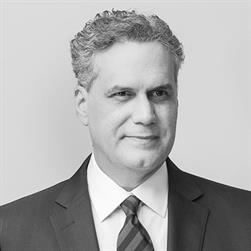
Dominican Finance and Economy Minister Magin Diaz has reasserted that the Dominican Republic is now a middle-class country, repeating assertions previously made by former national leaders despite economic data showing widespread social inequality. Speaking on Monday in response to questions about why citizens feel left behind by economic progress, Diaz said public policies and growth have driven rising living standards and changed consumer needs.
Official statistics on wages, employment, housing, and healthcare present a starkly different reality, showing that over half the workforce operates informally and most workers earn less than the cost of a basic family goods basket.
Diaz pointed to indicators such as increased access to travel, private vehicles, improved schooling, healthcare, and recreation to justify his position. He said that economic expansion has fundamentally altered what citizens require in their daily lives, making the transition to a middle-class nation incontestable.
Magin Diaz serves as the Minister of Finance and Economy in the Dominican Republic, a Caribbean nation of more than 11 million people that occupies the eastern two-thirds of the island of Hispaniola. The finance ministry oversees fiscal policy, revenue collection, and national budget allocation from its headquarters in the capital city of Santo Domingo.
The assertion that the Caribbean nation has achieved middle-class status forms part of a long-standing political debate in Santo Domingo. Former President Danilo Medina made a similar declaration on May 3, 2019, boasting that the Dominican Republic had become a middle-class country while citing a drop in official poverty rates from 42 percent to 21 percent alongside higher consumption of milk, beef, chicken, and rice.
In contrast, former President Leonel Fernandez deliberately avoided describing the country as middle class when he returned to power in 2004. Fernandez refrained from using the term because doing so would have understated the severe impact of major banking frauds and weakened his political charges against his predecessor, Hipolito Mejia, whom he accused of plunging the national economy into crisis.
Leonel Fernandez, Hipolito Mejia, and Danilo Medina are key figures in modern Dominican politics who have served as president since the early 2000s. The presidency represents the head of state and government in the Dominican Republic, leading an executive branch that manages a nation dependent on services, tourism, agriculture, and manufacturing.

Labor Market and Earnings Divide
Social scientists argue that using statistical consumption as an equalizing metric masks social realities by implying that urban middle-class buying habits represent the broader population. Figures up to last April show that informal employment in the Dominican Republic stood at 54.1 percent, leaving more than half of workers outside formal legal protections and structured benefits.
Income levels further underscore the divide between political claims and financial reality. More than 80 percent of salaried workers in the country currently earn less than 50,000 Dominican pesos per month, while the official price of the basic family shopping basket stands at 49,268 pesos.
The Dominican peso, denoted as DOP, is the official national currency issued by the Central Bank of the Dominican Republic. Economic analysts frequently measure living standards against the basic family basket, a standardized calculation representing the minimum monthly expenditure needed for food, housing, utilities, and essential household items.
Healthcare and Housing Limitations
Access to quality healthcare also remains restricted to a small fraction of the population. Out of 4.8 million citizens enrolled in the national contributory health insurance system, only between 1.3 million and 1.5 million hold a complementary insurance plan. This means that only 12 percent to 15 percent of subscribers can afford adequate medical services.
Housing availability presents a similar hurdle for average income earners. A report published on Thursday by national newspaper Diario Libre revealed that in the National District, purchasing a 100-square-meter home using the entirety of an average salary would require 26.4 years of continuous debt payments.
The National District, or Distrito Nacional, forms the central federal enclave surrounding Santo Domingo and accounts for 33.3 percent of all formal commercial enterprises in the Dominican Republic. Diario Libre is one of the country's major daily print and digital news publications, delivering reporting on domestic policy, business, and national social trends.
Educational Disparities and Schooling
Transportation statistics reveal that 88 percent of vehicles in the Dominican Republic are more than five years old. Educational figures show a parallel split, with 77.5 percent of students attending public primary and secondary schools, compared to 22.5 percent enrolled in private institutions across varying quality tiers.
The divide in schooling directly impacts long-term social mobility across economic classes. Official figures indicate that 28 percent of the poorest students fail to complete high school, whereas 90 percent of students from the wealthiest households successfully graduate from secondary education.
Critical analysis published in Santo Domingo concludes that rather than a middle-class society, the Dominican Republic remains a nation marked by deep economic inequalities. Addressing these disparities will require moving beyond political slogans and statistical rhetoric to tackle structural gaps in employment, education, and social protection.