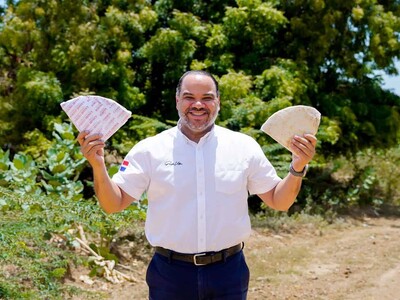
A small Dominican province has organised its economy around a three-municipality value chain that now supplies more than 85 percent of all cassava bread produced in the Dominican Republic, according to an analysis of the region's agricultural sector.
In Santiago Rodríguez province, Villa Los Almácigos grows bitter cassava, Monción converts it into cassava bread, and Sabaneta anchors the chain with a dairy cattle industry that diversifies rural income. Rather than competing to produce the same goods, each municipality specialises and complements the others.
Monción at the centre
Monción holds roughly 52 factories and 38 producer associations, with approximately 5,000 families linked directly or indirectly to cassava bread production. Companies such as Casabe La Ideal produce around 4,000 loaves a day and send about 70 percent of their output to international markets.
The scale illustrates what the analysis describes as the difference between growth and productivity. A root of cassava sold as raw material carries limited economic value. The same root turned into cassava bread incorporates processing, industrial employment, packaging, logistics, distribution and access to foreign buyers. Wealth increases not because more land is planted, but because each stage adds knowledge and value.
A supply shock exposes weakness
The chain's fragility became clear when a recent shortage of bitter cassava caused more than 80 percent of Monción's cassava bread factories to reduce or suspend operations. The episode illustrated that industrial transformation depends on a sufficient and planned agricultural supply, and that productivity also requires securing raw material, investing in research, improving yields and coordinating producers, industry and financing.
César, president of the province's Chamber of Commerce and Production, described the underlying problem. He said development had always arrived through the priorities of outside companies, because the province had not been able to shape what it wanted to become, owing to the absence of a plan capable of uniting its actors.
A history of reinvention
Santiago Rodríguez was officially established as a province in 1948, inheriting an economy rooted in livestock farming. Over the following decades the region moved through successive cycles: exploitation of precious timber, then peanuts and tobacco as commercial crops. None of those cycles proved permanent; each responded to markets and the opportunities of its era.
The dairy sector continues to play a strategic role alongside cassava. Milk production reduces dependence on a single product and creates linkages with transport, refrigeration, veterinary services, commerce and small processing industries. In economic terms, diversification reduces risk and strengthens a territory's resilience against price swings or changes in climate conditions.
The analysis argues that the next step for Dominican provincial development is for each province to build its own economic strategy, identify its competitive advantages and direct public and private investment toward a shared vision. It cites Article 218 of the constitution, which establishes that the state must promote balanced development and strengthen national productive capacity, and argues that task begins at the territorial level rather than in the capital.