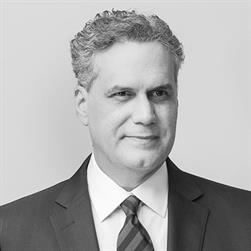
The Dominican Republic's private securities market now has RD$595 billion pesos in publicly offered securities in circulation, according to Ernesto Bournigal Read, the country's Superintendent of the Securities Market. The figure, he wrote in an opinion piece published in Diario Libre on September 10, 2026, excludes the far larger segment of the market made up of debt issued by the Dominican state and entities linked to it.

Bournigal Read said a deep and liquid public debt market is essential for national development, allowing the government to finance infrastructure, social programs and public investment without relying solely on banks or other funding sources. He said it also sets a reference yield curve, so that when the government issues ten-year debt, the resulting rate helps determine the price at which a private company can borrow over the same period.
He added that a transparent, disciplined sovereign debt market strengthens confidence among local and international investors, which matters for the country's pursuit of an investment-grade credit rating.
Private issuances and the real economy
Bournigal Read said his article focuses instead on the smaller slice of the market, private issuances, because they show most clearly how capital flows directly into the productive economy, turning into factories, power plants, hotels, logistics centers and jobs. He singled out pension fund administrators, known in the Dominican Republic as AFPs, as the market's most important institutional investors, saying pension savings have been a key driver of demand for securities.
Through investment funds and other private vehicles, he said, more than 280 projects are currently financed, spread across 15 economic activities and linked to more than 58,000 direct jobs, in addition to a multiplier effect on indirect employment in each sector.
Where the capital is going
Bournigal Read said capital raised through private issuances is not concentrated in one activity. Energy accounts for around 30% of the capital channeled and the financial sector for about 23%, followed by tourism, real estate, industry, infrastructure and construction, and commerce and services.
Geographically, he said, the Eastern region and Santo Domingo capture a significant share of these investments, but projects are also found in the North, the Central Cibao region and the South. He said capital has a geography, since investment in a province brings jobs, suppliers and infrastructure along with it.
Fund shares make up most instruments
Within the private segment, about 57% of instruments are shares in investment funds and 38% are private debt instruments, according to Bournigal Read. Public offering trusts and equities make up the remainder.
Confidence and the regulator's role
Bournigal Read described confidence as an essential factor that appears on no financial balance sheet, saying capital retreats without it and finds room to invest when it is present. He said the Superintendency's role is to regulate efficiently, supervise and promote a market that is increasingly transparent, reliable and competitive, so that confidence generates investment, investment generates development and development generates social wellbeing.
Tied to the Meta RD 2036 growth plan
Bournigal Read linked the market's expansion to Meta RD 2036, a government plan that aims to double the Dominican Republic's real Gross Domestic Product by 2036. The plan also seeks to eliminate extreme poverty, generate around 1.7 million new formal jobs, triple the average wage and achieve investment-grade status, he said.
He said growth of that scale cannot rest solely on public spending or bank credit, and that a specific capital markets and pensions committee has been set up within Meta RD 2036 because sectors such as energy, tourism, industry, infrastructure and agriculture will need long-term capital to carry out their own goals.
721 billion pesos still to be placed
Bournigal Read said total approved securities in the market reach 1,316 billion pesos. Of that amount, 595 billion pesos have already been placed, representing projects already financed and companies already part of the market, while 721 billion pesos have been approved but not yet placed, which he described as the market's current capacity to become new investment.
He said the next step is to turn that potential into growth and development opportunities for the country, adding that the market's task is to build confidence, support its own development and help more companies find financing through it.