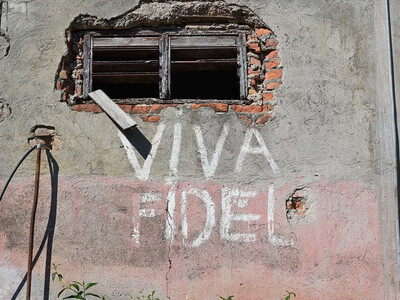
Cuban exiles living in the Dominican Republic have rejected planned celebrations marking the centenary of Fidel Castro's birth, calling instead for public focus on the victims of his political legacy.
The Cuban Association in the Dominican Republic, Inc., an exile organization based in Santo Domingo, issued a statement opposing events organized by political, academic, and ideological sectors across Latin America and the Dominican Republic to honor the late leader.
The association stated that Cubans living in a democratic society have a moral duty to speak out against the public exaltation of Castro. It said that his political inheritance is inextricably tied to the suppression of basic freedoms and the establishment of a single-party system that continues to deny those rights today.
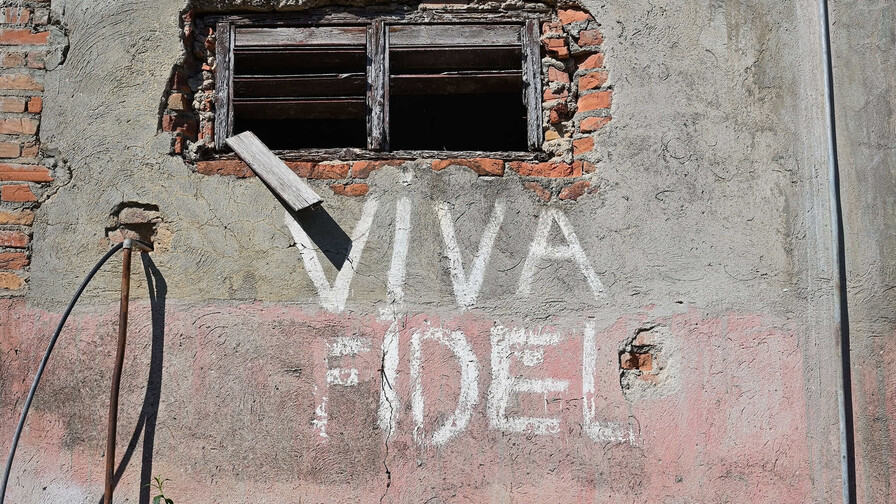
According to the exile group, Cuba remains trapped in the deepest crisis of its modern history 67 years after Castro took power in 1959. More than 1,200 political prisoners remain in Cuban jails, while millions of citizens have fled the island over recent decades.
The group highlighted that the Cuban economy has been devastated by the structural inefficiency of a single-party communist model. It noted that the population faces daily shortages of basic goods, frequent electricity blackouts, deteriorating public services, and widespread social despair.
The Human Impact of the Regime
The association described the ongoing situation in Cuba as a human tragedy marked by families divided by exile and generations denied the right to choose their political leaders. It said young Cubans increasingly seek to leave the country because they see no future at home, while political dissent has resulted in professional, social, and legal retaliation for decades.
Religious repression was also highlighted by the exile organization, which noted that thousands of believers faced discrimination, surveillance, and exclusion for practicing their faith. Catholic priests, monks, and nuns were harassed, imprisoned, or expelled from Cuba during various stages of the regime.
Many of those persecuted religious figures found refuge in neighboring countries, including the Dominican Republic, where they contributed to local spiritual and community life. The association emphasized that remembering this history is particularly meaningful in a country with strong Christian roots where religious freedom is recognized as a fundamental human right.
Unfulfilled Promises of Democracy
In its statement, the group accused Castro's supporters of presenting a selective view of history that exalts revolutionary ideals while ignoring prisoners of conscience and the destruction of democratic institutions. It pointed out that Castro broke his early promise to restore democracy following the overthrow of dictator Fulgencio Batista.
Rather than establishing a pluralistic republic, Castro built a single-party communist state that eliminated institutional checks and balances, banned political competition, and outlawed organized opposition. The association emphasized that Castro governed without political alternation for nearly half a century, replacing one dictatorship with a longer and more centralized personalist regime.
The group called on universities, think tanks, and educational institutions to promote complete historical truth rather than reducing more than six decades of authoritarian rule to a romantic narrative of revolution. It stressed that any serious academic discussion about Castro must address systemic repression, political imprisonment, and mass migration.
Remembering the Victims of the Regime
Instead of commemorating Castro's birth, the association urged international observers to remember those who suffered under his rule. These include individuals executed by firing squads in the early years of the revolution, those who died in political prisons, and citizens jailed for expressing their views.
The exile group also honored Cubans who died attempting to escape the island by sea, as well as those who faced dangerous land routes in recent years, including the perilous trek through the Darien Gap jungle. It further acknowledged families separated for decades by exile and activists who continue to demand political rights peacefully within Cuba.
The association concluded that genuine solidarity with Cuba requires supporting the population's aspirations for democracy, human rights, and political pluralism, rather than honoring the architect of an authoritarian system. Expressing hope for the future, the group stated that Cuba will eventually rebuild its institutions and recover its freedom, comparing the nation's potential rebirth to a phoenix rising from its ashes.