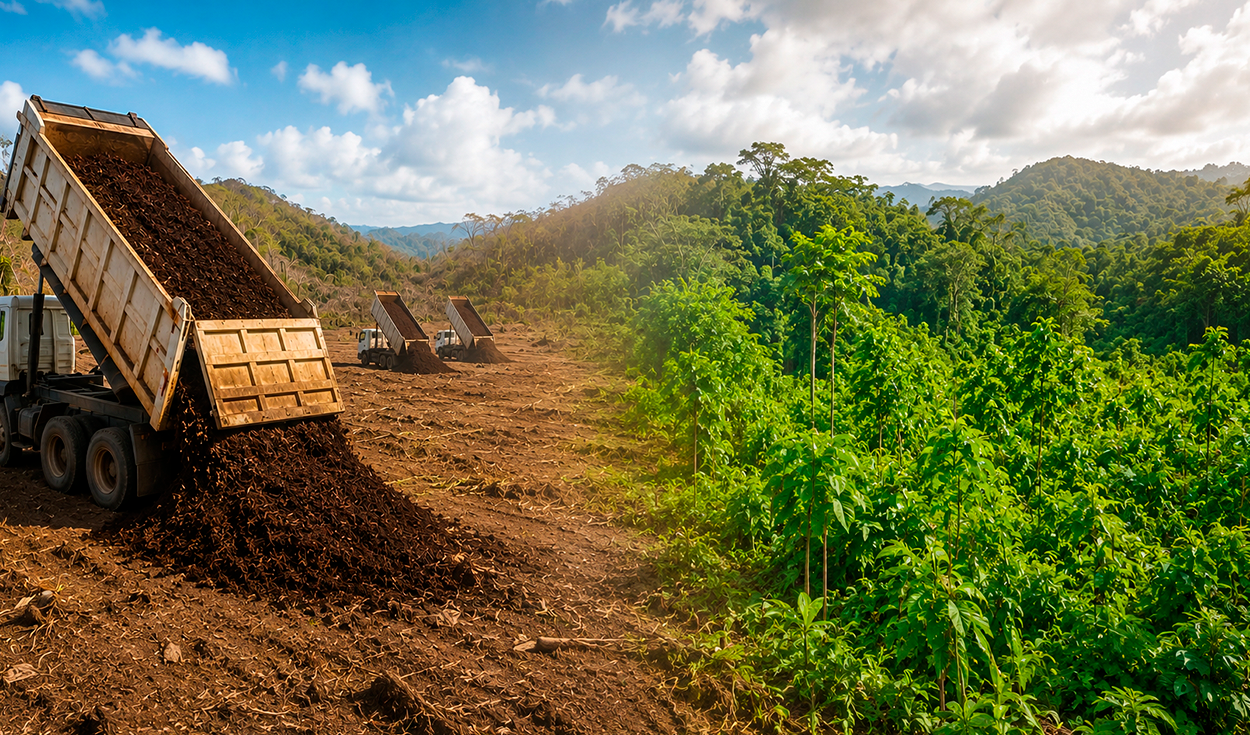
Scientists from the University of Hawaii dumped 30 truckloads of coffee pulp on degraded Costa Rican land, transforming the ecosystem within two years.
Researchers Rebecca J. Cole and Rakan A. Zahawi led the experiment in 2018, spreading roughly 360 cubic meters of agricultural waste across a former farm in southern Costa Rica. The findings were published in the scientific journal Ecological Solutions and Evidence.
In March 2018, the research team deposited the fresh coffee biomass over a 35 by 40 meter plot inside the Sabalito Biological Reserve. The material was spread to form an organic layer half a meter thick, while an adjacent untouched parcel was kept as a control plot to measure soil and vegetation changes over time.
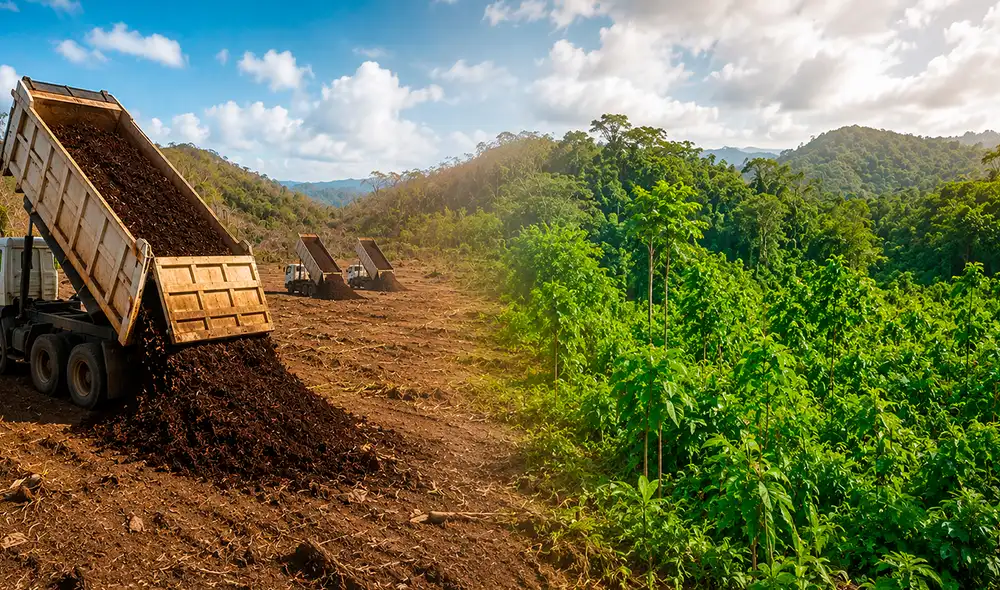
Costa Rica is a Central American nation known for its tropical rainforests and coffee production. Coto Brus, located in the southern part of the country near the border with Panama, is a key agricultural district where decades of cattle grazing and farming left large areas of land deforested and exhausted. Coffee pulp is an abundant byproduct of coffee processing, consisting of the fruit flesh and skin left behind after extracting the coffee bean.
Invasive grass choked out native seeds
The experiment targeted a primary obstacle to forest recovery on abandoned agricultural land, where aggressive invasive grasses block native seed germination for years. In the Coto Brus region, previous research identified dense weed growth as a critical barrier preventing natural forest development on former pastures.
Coffee pulp biomass naturally contains carbohydrates, proteins, and lignin. When spread over the degraded test plot, the thick organic layer suffocated the invasive pasture grass while supplying nutrients to the substrate as the agricultural waste decomposed.
Following 24 months of continuous monitoring, the treated soil showed substantial nutrient enrichment, multiplying its levels of carbon, nitrogen, and phosphorus. Blocking the harmful weeds enabled pioneer trees, native shrubs, and various herbaceous species to sprout spontaneously across the site.
Woody stems multiplied 20-fold
Final measurements collected after two years revealed a striking contrast between the coffee-treated plot and the untreated reference area. The plot covered with coffee pulp developed a woody stem density 20 times higher than the control site.
The treated plot also produced a vegetation canopy four times taller than the control area, alongside a basal area that was 30 times larger. Cole noted that the results were spectacular when presenting the findings from the monitoring project.
Ecological restoration focuses on assisting the recovery of degraded or destroyed ecosystems. In tropical regions, natural forest succession can take decades when soil nutrients are depleted and seed germination is inhibited by non-native grasses, making low-cost organic waste amendments an attractive strategy for conservationists.
Agricultural and industrial waste recycling
The coffee pulp strategy addresses two environmental challenges simultaneously by managing massive agro-industrial waste and restoring land with slow natural recovery rates. Untreated coffee waste often pollutes surrounding environments, making its agricultural reuse a cost-effective alternative to intensive land interventions.
Despite the positive findings, the research team stressed that further studies are needed before implementing the technique on a large scale. Scientists must determine optimal application quantities, evaluate potential environmental impacts, and identify specific locations where the method is suitable.
The project follows a direct precedent established in 1998 at the Guanacaste Conservation Area in northern Costa Rica. In that trial, researchers deposited 12,000 metric tons of orange peel waste over three hectares of degraded pasture, significantly accelerating tropical dry forest recovery compared to untreated land.
Restoration trials across global mining sites
Similar organic waste recycling methods have been evaluated in industrial and mining contexts worldwide. Field trials on coal mining land in New South Wales, Australia, demonstrated that municipal compost application favored the growth of native plant species.
In Missouri, in the United States, researchers applied biosolids and lime to improve soil fertility and water retention on disturbed land. Biosolids are nutrient-rich organic materials recovered from domestic wastewater treatment, commonly used in soil rehabilitation.
The researchers emphasized that these international applications confirm there is no universal solution for land rehabilitation. The specific organic material, dosage rate, existing contamination, and local ecosystem characteristics must be scientifically evaluated before deploying these strategies on a large scale.