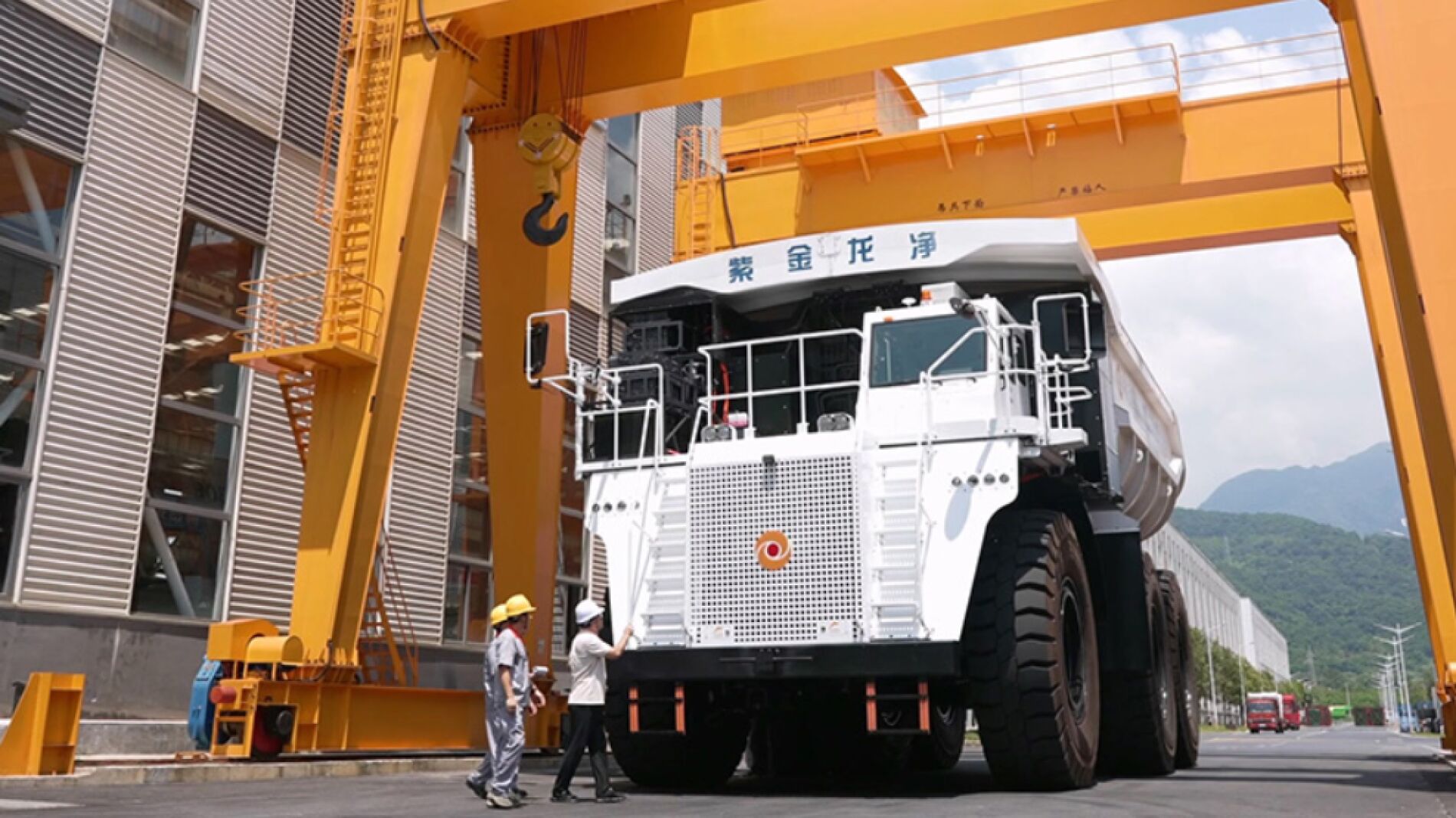
China has unveiled the ZL230E, a fully electric mining truck with a 230-tonne payload capacity designed for heavy open-pit mining operations.
The giant vehicle features a gross weight capacity of 350 tonnes and a cargo bed volume of 125 cubic metres, making it the largest electric mining truck presented to date.
According to official statements, the ZL230E is powered by a 1,400 kilowatt-hour battery capable of reaching a 90 percent charge in 25 minutes. That energy storage capacity is equivalent to what a standard passenger car would need to travel 8,000 kilometres without stopping to recharge.
Energy recovery in steep surface mining operations
The introduction of electric propulsion targets open-pit surface mines, which host some of the largest machinery ever constructed. These industrial vehicles feature wheels taller than an adult human and stand over eight metres high, operating continuously on steep inclines with cargo loads that far exceed the limits of conventional road transport.
Open-pit mining relies on heavy excavation and haulage to move thousands of tonnes of ore and overburden daily. Operators are replacing traditional diesel fleets with electric drive systems to lower fuel expenses, simplify routine maintenance, and capture energy that conventional braking systems waste during downhill runs.
During steep descents under heavy loads, conventional diesel trucks rely on friction brakes that transform kinetic energy into heat. Electric mining trucks utilize their drive motors as generators during deceleration, converting kinetic energy into electrical power that is returned to the battery pack through regenerative braking.
While regenerative braking provides minor efficiency gains in standard two-tonne passenger cars or three-tonne utility vehicles, heavy mining equipment operates at a vastly different scale. Large Chinese mining models routinely handle payloads of 200, 240, or 300 tonnes, which is equivalent to hauling 100 passenger SUVs at once.
System designers must ensure electric powertrains deliver immense continuous output while enduring rough terrain, steep grades, and demanding shift cycles. Although mechanical and electrical losses prevent trucks from recovering all the energy spent climbing, regenerative systems capture substantial power that would otherwise dissipate as thermal energy.
Autonomous fleets and Chinese haulage projects
The development of the ZL230E builds upon earlier heavy vehicle electrification initiatives across Chinese industrial sites. In 2025, China introduced a fleet of 100 autonomous electric mining trucks at the Yimin open-pit coal mine in Inner Mongolia.
The autonomous vehicles operating at the Yimin coal mine belong to the 90-tonne payload class and run on 568 kilowatt-hour battery packs. A battery of that size holds enough electrical energy to power an average passenger car across a distance of 3,000 kilometres without recharging.
Major Chinese mining corporation Zijin Mining has also deployed electric haul trucks extensively across its resource extraction projects. At its Xinjiang zinc mine, the company deployed 250 fully electric trucks that performed roughly 80 percent of the facility's total haulage work, according to corporate figures reported by International Mining.
Zijin Mining has progressed to engineering its own heavy transport equipment. The company's LK220E model incorporates a 776 kilowatt-hour swappable battery system and supports total vehicle weights up to 140 tonnes, while the firm has also begun commercializing higher-capacity models.
Rapid growth of zero-emissions transport
Zijin Mining is a multinational mineral exploration and mining group headquartered in Fujian, China, operating major gold, copper, and zinc assets worldwide. Transitioning heavy haulage from internal combustion engines to zero-emissions electric drive helps mining companies meet sustainability goals while reducing lifetime operating costs.
Official records highlight a rapid expansion in electric heavy transport across Chinese mining operations. In 2020, Zijin Mining operated just 13 electric trucks across its mining sites. The company now manages nearly 1,800 electric trucks across its global mining operations as zero-emissions heavy equipment replaces conventional diesel haulage.