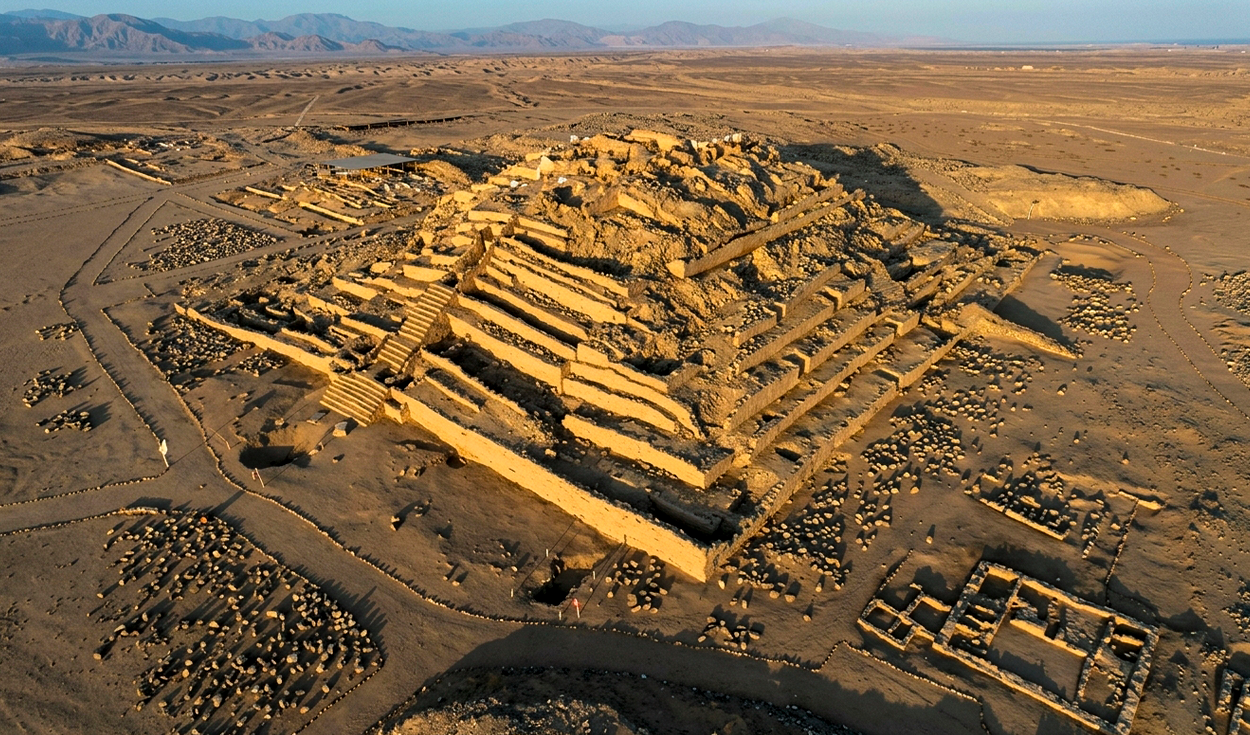
China has selected the Sacred City of Caral-Supe in Peru for its first official archaeological mission in South America.
The Institute of Archaeology at the Chinese Academy of Social Sciences finalized the alliance on August 21, partnering with Peru's Caral Archaeological Zone under the Ministry of Culture and the National University of San Marcos.
Official Chinese news agency Xinhua reported that the agreement marks the foundational entry of an institution from China into joint field research within South America.
The joint project brings together researchers from both countries to study the ancient urban center on Peru's central coast. The 5,000-year-old civilization emerged at the same time as the ancient empires of Egypt and Mesopotamia, according to the Chinese Academy of Social Sciences.
The site covers 626 hectares containing pyramids, sunken circular plazas, and complex social structures. UNESCO classifies the archaeological complex as the oldest center of civilization in the Americas, and scientific research at the site is expected to yield key insights into how early urbanism developed in the region without influence from other ancient cultures.
Fieldwork in the Supe and Chancay-Huaral Valleys
The initiative will encompass field surveys, excavations, and advanced scientific analysis, alongside heritage preservation and mutual professional training. Chinese Academy of Social Sciences spokesperson Jia Xiaobing told the South China Morning Post that activities will cover field research, technological archaeology, and expert instruction.
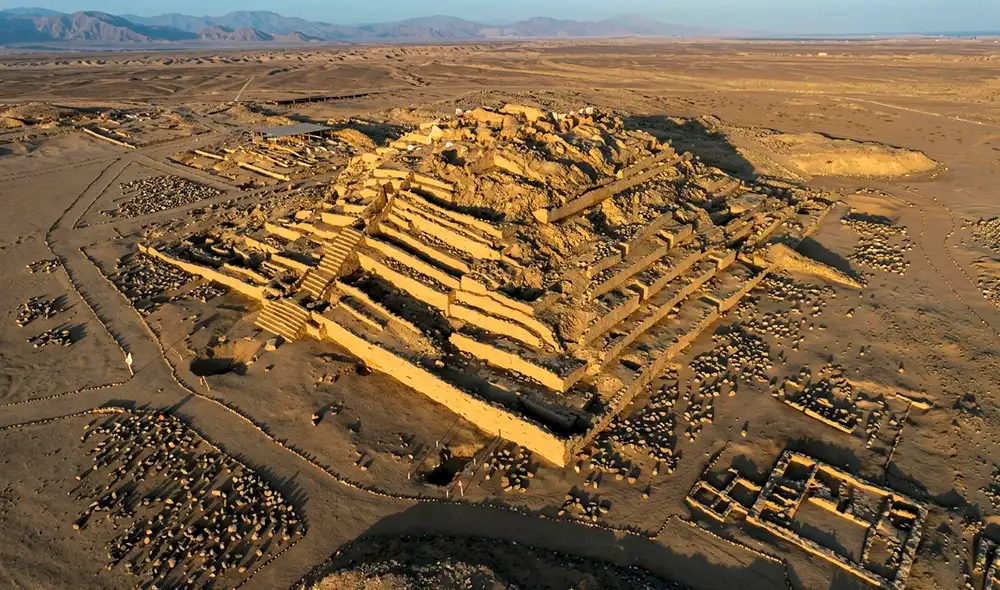
In the initial phase, the joint delegation will evaluate sites across the Supe and Chancay-Huaral valleys before establishing focused operations at the Sacred City of Caral-Supe and the coastal fishing settlement of Áspero. The Supe Valley lies along the desert coast of Peru, approximately 200 kilometers north of the capital, Lima.
According to the Chinese institution, the primary scientific objective is to examine connections between inland agricultural societies in the Andes and coastal groups that developed the early urban trading network.
Comparative Research with Ancient Chinese Cultures
The bilateral cooperation plan includes expanding research to Inca remains in the high Andean mountains. The Chinese government announced that this later stage aims to conduct comparative studies between ancient societies in China and South America.
Official statements did not specify which additional Peruvian sites will be examined, when work will begin, or whether famous landmarks such as Cusco or Machu Picchu will be included. Machu Picchu and Cusco served as major political and cultural centers for the Inca Empire, which dominated western South America prior to Spanish colonization in the 16th century.
Researchers plan to evaluate potential parallels in astronomical observation, religious rituals, community structures, and environmental adaptation. Scientists emphasized that these similarities do not indicate direct contact between the two ancient civilizations. Instead, the study aims to contrast field evidence showing how separate populations on opposite sides of the Pacific Ocean built complex societies to address environmental challenges.
China's Global Heritage Strategy Towards 2030
Official sources currently list no other South American countries for future excavation projects. Although the historical influence of the Inca Empire extended across modern-day Bolivia, Ecuador, Chile, Argentina, and Colombia, the present bilateral agreement remains strictly limited to Peruvian territory.
China's international cultural heritage strategy leading up to 2030 focuses on expanding archaeological partnerships along the Silk Road, trans-Himalayan regions, and Austronesian territories, with no additional South American field missions currently scheduled.