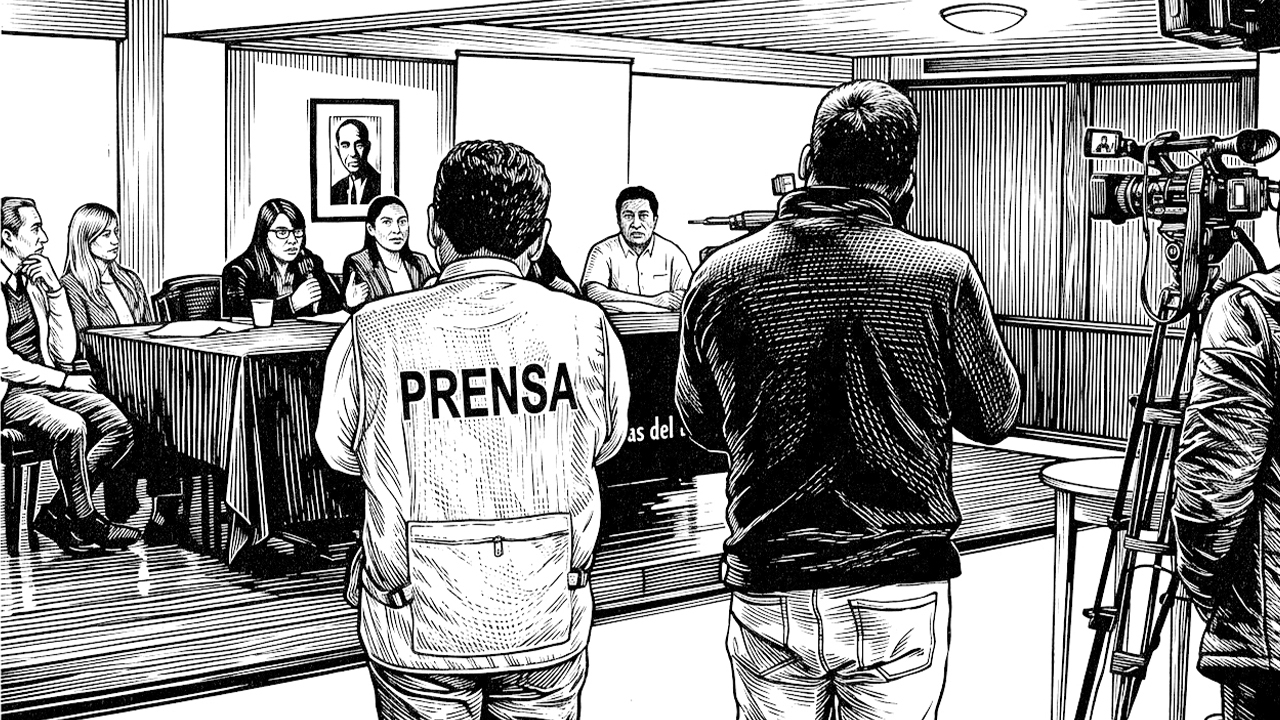
Demonstrators across Spain will march in support of Ceuta following accusations that Prime Minister Pedro Sánchez is allowing migration chaos to paralyze the enclave.
Rallies scheduled for Wednesday under slogans declaring that Ceuta is not for sale aim to assert Spanish sovereignty over the North African territory. Spain's opposition Popular Party has backed the nationwide demonstrations, while the ruling Spanish Socialist Workers' Party has instructed its members to boycott the events.
Ceuta is a Spanish autonomous city located on the North African coast, sharing a land border with Morocco across the Strait of Gibraltar. The enclave, along with neighboring Melilla, represents the only land border between the European Union and Africa. Control over the territory has long been a subject of diplomatic tension, as Morocco periodically asserts territorial claims over both enclaves.
Rising tension on the border
Critiques of the central government have intensified following a recent surge in border crossings that commentators say has left Ceuta in an unmanageable state. Local conditions have degraded rapidly, with city beaches overcrowded and covered in excrement as public infrastructure struggles to handle the influx.
Reports from the city detail groups armed with sticks, hoes, scissors, saws, and broken glass operating in public areas, alongside incidents of resident harassment, fights, and sexual assaults. Gangs have also targeted Spanish military personnel deployed to the region, attacking soldiers with stones.
Despite the violence, the central administration in Madrid faces intense criticism for extreme passivity following the initial influx. In response to local frustration, the head of Spain's Sole Command and the Minister of Health both accused Ceuta residents of displaying racism.
The handling of the crisis has sparked friction within the Spanish cabinet, driving a rift between the Ministry of Defence and the Ministry of Interior over security protocols. Prime Minister Sánchez has also faced scrutiny for ordering King Felipe VI to visit Ceuta, reversing previous instructions in which he had advised the monarch against traveling to the city.
Allegations of a co-sovereignty plan
Political commentator José Antonio Vera argued that the government's inaction stems either from severe administrative incompetence or from a strategy to allow conditions to deteriorate until major political changes can be justified. Vera noted that the administration has previously faced sharp criticism over its handling of major national emergencies, including the COVID-19 pandemic, the Valencia floods, regional wildfires, and power grid failures.
One theory circulating among government critics suggests that the administration may be seeking a joint sovereignty arrangement between Spain and Morocco to resolve the crisis. Under such a proposal, described as a peace-for-sovereignty formula, Ceuta could adopt a governance structure similar to Andorra, operating as an independent city with a dual head of state.
Andorra, situated in the Pyrenees between France and Spain, functions as a co-principality under the joint authority of the Bishop of Urgell and the President of France. Any similar governance shift for Ceuta would reportedly require formal backing from both the United States and the European Union.
Allegations of external involvement have also emerged from within Morocco. Nabila Mounib, a member of the Moroccan Parliament representing the Unified Socialist Party, claimed that non-governmental organizations funded by billionaire financier George Soros have actively contributed to escalating border friction to make a co-sovereignty outcome politically acceptable.
Constitutional powers and emergency states
Observers have also raised concerns that escalating instability could be used to trigger extraordinary constitutional powers in Madrid. Under Article 116 of the Spanish Constitution, the central government has the authority to declare three distinct levels of emergency: a state of alarm, a state of exception, or a state of siege.
Article 116 outlines statutory protections that prevent the dissolution of the Cortes Generales, Spain's parliament, while any emergency declaration remains in effect. Critics argue that failing to enact immediate border controls could allow the crisis to worsen, providing justification for an emergency declaration that would legally prevent early elections and preserve the current government's position.
Organizers of Wednesday's marches say the demonstrations will demand immediate federal intervention to restore public safety and reaffirm Spanish sovereignty. Further parliamentary debate is expected in Madrid as opposition leaders press the cabinet to clarify its border enforcement strategy and address internal ministerial divisions.