

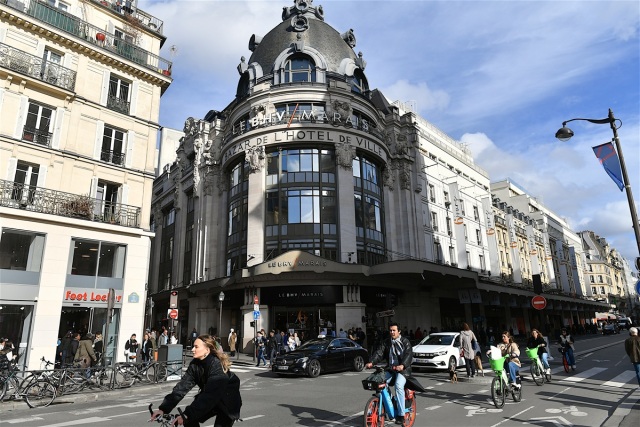
The historic Paris department store BHV was placed into judicial receivership on Monday following months of severe cash flow problems, according to a court document. The Commercial Court of Paris opened the reorganisation proceedings for SEGM BHV, the operating company behind the landmark business, Agence France-Presse reported.
The ruling covers both the flagship Bazar de l'Hôtel de Ville in the centre of Paris and the BHV Parly 2 store in the Yvelines department, located in the Île-de-France region. The retail business employs approximately 700 staff members, based on the most recent workforce figures recorded in September.
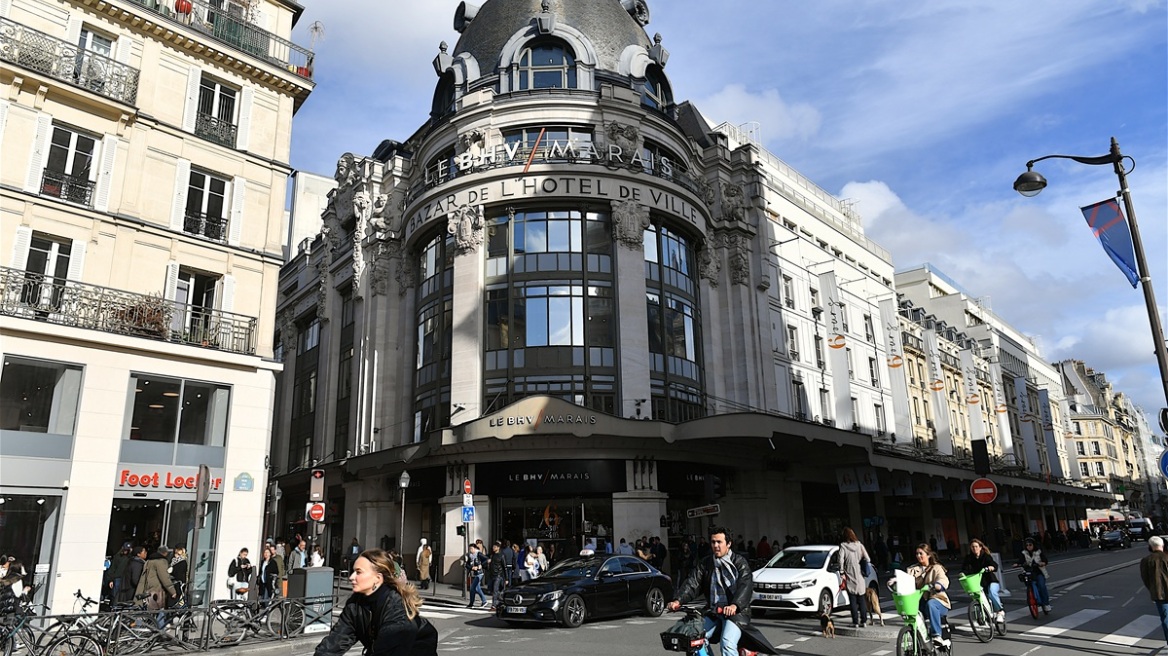
Under French insolvency rules, the court order does not trigger the immediate closure of the stores. Instead, the court granted an initial observation period of six months, which may be extended by another six months, to assess whether the business can become financially viable again.
At the end of this observation period, the commercial court can approve a continuation plan to keep the company operating, order a transfer of the business to a new buyer, or order judicial liquidation if no workable solution emerges.
Six-month court monitoring period
Management at BHV welcomed the court decision on Monday. Company executives stated that court protection will create the necessary conditions to address pending financial obligations and restructure operations.
In French business law, judicial reorganisation, known as redressement judiciaire, suspends previous debts while allowing a troubled enterprise to continue daily trading under court supervision. The legal mechanism is designed to preserve jobs, maintain commercial activity, and settle claims under the guidance of court-appointed administrators.
The flagship Bazar de l'Hôtel de Ville has operated on the Rue de Rivoli opposite the Paris City Hall for 170 years. Long regarded as an institution for home improvement, fashion, and leisure in the historic Marais district, the grand store is one of the most recognisable department stores in the French capital.
Dispute with Brookfield
Store management has blamed a substantial part of its financial difficulties on an ongoing dispute with Brookfield, the Canadian investment fund that owns the building where the Paris store operates. BHV said the disagreement involves financial obligations linked to agreements governing the commercial space.
Brookfield has rejected the claims made by BHV leadership. The Canadian property owner denied owing the amounts cited by the department store and disputed the retailer's account of the property arrangements.
Brookfield is one of the largest alternative asset management firms in the world, holding major portfolios in global property, infrastructure, and retail developments.
Failed turnaround and ownership changes
The financial problems facing BHV have worsened following months of acute cash shortages and repeated changes in ownership. In June, businessman Frédéric Merlin transferred the department store at a loss through his retail investment vehicle, the SGM group.
Following that sale, the incoming management attempted to execute a financial recovery strategy. Over the summer, company leaders presented a restructuring programme for BHV Marais to clean up the balance sheet and return the business to growth, but the plan collapsed when the firm ran out of available capital.
Supplier payment delays and Shein backlash
Commercial relationships at BHV have deteriorated in recent years amid persistent complaints over late payments to suppliers. The payment delays disrupted supply chains and created restocking difficulties, leaving parts of the store shelves empty.
Public relations suffered further damage after BHV entered an in-store commercial partnership with Shein, the Asian online fashion marketplace. The partnership provoked an intense backlash from local retailers, trade representatives, and customers who criticised Shein over its fast-fashion business practices.
Shein has faced widespread criticism across Europe regarding environmental sustainability, labour standards, and low-cost digital retail competition. For BHV, welcoming the fast-fashion brand into its historic retail halls alienated traditional shoppers who viewed the move as inconsistent with the heritage store's brand.
Both the Paris flagship and the Parly 2 store will continue to welcome customers while court administrators examine the accounts and determine the company's future.


