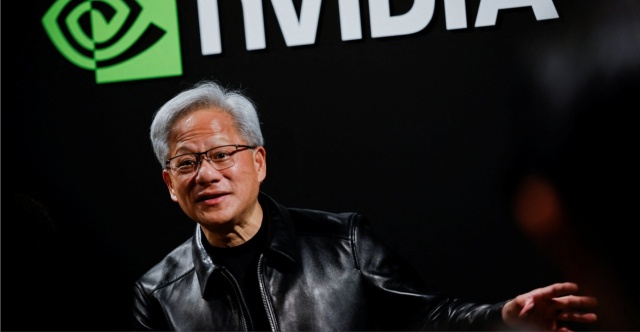
Nvidia shares plunged more than 8% in after-hours trading on Wednesday as the company board moved to consider removing long-standing chief executive Jensen Huang.
The sharp drop pushed the stock down to around $160 per share, reaching its lowest level in more than 12 months.
The sudden sell-off reversed gains made during the regular trading session, when the stock had closed up by roughly 2.9% as investors sought to take advantage of an earlier price dip.
The downturn brought Nvidia's three-day market value losses to approximately $600 billion, equivalent to about £451 billion, according to calculations reported by Sky News.
The Wall Street Journal reported that the semiconductor company's board of directors is preparing to review Huang's removal, while separate reports indicated that the business has already begun looking for potential successors.
Reuters also confirmed the sharp stock decline and the discussions regarding Huang's possible exit, reporting that the turmoil has raised serious concerns about executive continuity at the chip maker.
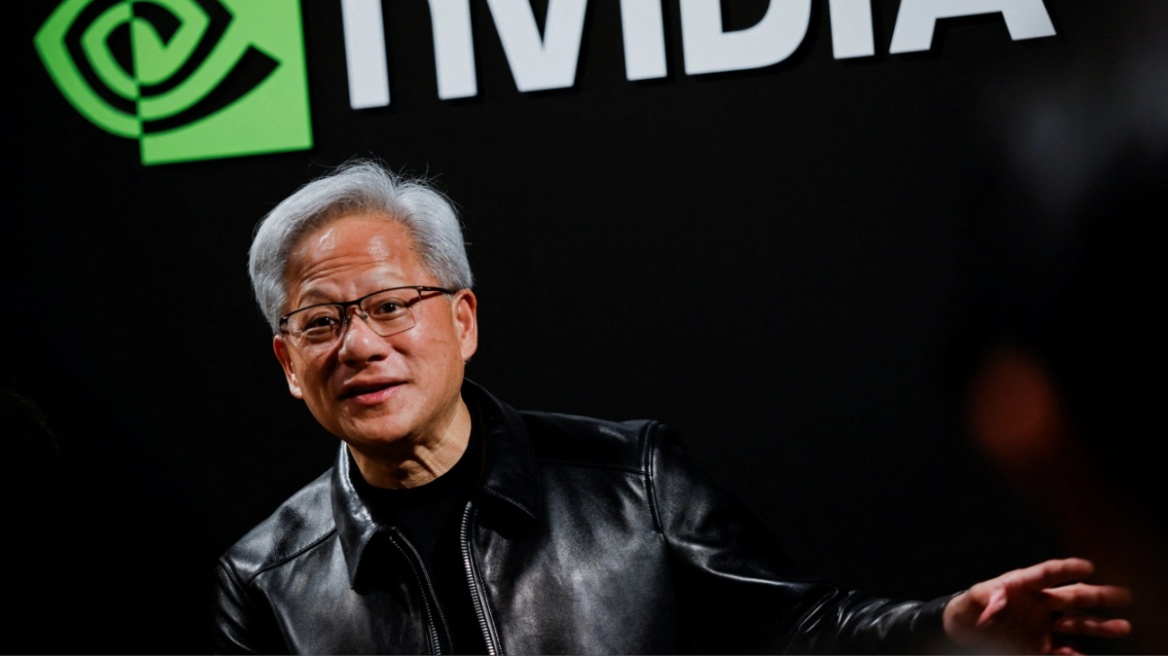
Headquartered in Santa Clara, California, Nvidia has grown under Huang from a niche designer of desktop graphics cards into the world's most valuable producer of the specialized processors powering artificial intelligence development.
Affair Allegations and Board Inquiry
The crisis erupted after reports revealed that Huang engaged in an extramarital relationship with Alice Huang, a former executive at data centre infrastructure firm Megaspeed International.
Alice Huang had reportedly drawn scrutiny from United States intelligence agencies over possible connections to Chinese espionage and the unauthorized transfer of advanced American semiconductor processors to China.
The 63-year-old chief executive admitted to being unfaithful to his wife, issuing an apology to his family and to Nvidia staff.
Fresh pressure mounted following a subsequent report by The New York Times, which revealed that Huang also had an intimate relationship with Kimberly Powell, Nvidia's vice president of healthcare, who reports directly to him.
The relationship with a subordinate triggered severe corporate governance concerns regarding potential violations of Nvidia's internal code of conduct, which explicitly requires personnel to avoid conflicts of interest stemming from personal relationships.
Nvidia's board of directors has commissioned an independent investigation to determine whether foreign intelligence agencies targeted Huang during these interactions.
The board stated that it currently has no evidence indicating any compromise of corporate trade secrets or any threat to United States national security.
Succession Plans and Leadership Candidates
Beyond the personal scandal, investors on Wall Street are focusing on the critical question of who could possibly replace the executive who has directed Nvidia since its founding in 1993.
Huang is widely recognized as the chief architect of Nvidia's transformation, steering its evolution into the dominant global provider of chips that underpin generative artificial intelligence models.
His hands-on management of engineering decisions, strategic investments, and client partnerships has created an unusually deep dependence on his personal leadership.
Nvidia does not have a publicly disclosed succession plan, intensifying market fears of an administrative vacuum if Huang is forced to step down.
According to reporting from Bloomberg, the company is working with an external executive search consultant to review and evaluate prospective candidates for the top post.
Colette Kress, who has served as Nvidia's chief financial officer for more than ten years, has emerged as a leading contender to take over as interim chief executive.
Armina Rosenberg, co-founder of the Australian hedge fund Minotaur Capital, said Kress is a natural candidate for an interim leadership role, pointing to her extensive track record and strong standing among institutional investors.
Rosenberg noted that while everyday financial management would remain steady, the greatest hurdle for any successor would be guiding Nvidia's long-term technological vision.
Bruce Zaro, a director at Granite Wealth Management, noted that Huang was the visionary who guided Nvidia through its historic expansion, questioning whether any corporate executive could realistically manage the business if Huang resigns or is ousted.
Wall Street Downgrades and Valuation Concerns
The corporate turmoil arrives at a delicate moment when technology investors are already questioning whether massive global spending on artificial intelligence infrastructure can be sustained.
Financial institutions responded quickly to the governance uncertainty, with investment bank Baird downgrading its recommendation on Nvidia shares to neutral.
Baird cited reduced visibility into data centre capital expenditures heading into 2027, the prospect of decelerating customer demand, and the leadership questions surrounding Huang's tenure.
Morgan Stanley also removed Nvidia from its list of top investment picks, reflecting broader market unease over whether the company can justify its premium valuation without its founding leader.
Market analysts noted that investor anxiety goes beyond the personal allegations against Huang, pointing to structural concerns about regulatory risks, supply chain stability, and ongoing executive turmoil.
Global Technology Alliances and Asian Trading
The shockwaves from Nvidia's slide spread across financial markets on Wednesday evening, with futures contracts tracking the Nasdaq 100 index falling by approximately 1%.
Asian stock markets showed a comparatively subdued response during Thursday morning trading, with South Korea's Kospi rising by up to 0.3% at the open.
Japan's Nikkei 225 index advanced 0.2%, while the broader MSCI Asia Pacific index also recorded a modest gain of about 0.2%.

The repercussions of Huang's potential departure extend across global industrial manufacturing, where the chief executive personally established critical commercial partnerships.
In Japan, Huang formed close relationships with leading robotics manufacturers, including Fanuc, Kawasaki Heavy Industries, and Yaskawa Electric, to integrate artificial intelligence software into heavy industrial automation.
In the United States, Nvidia has been a key supporter of federal efforts to expand domestic semiconductor manufacturing, helping back major commitments such as a $265 billion manufacturing expansion by Taiwan Semiconductor Manufacturing Company.
For global investors and industrial partners, the crisis now centers on whether Nvidia can preserve its strategic direction and commercial relationships at a defining moment for the artificial intelligence industry.