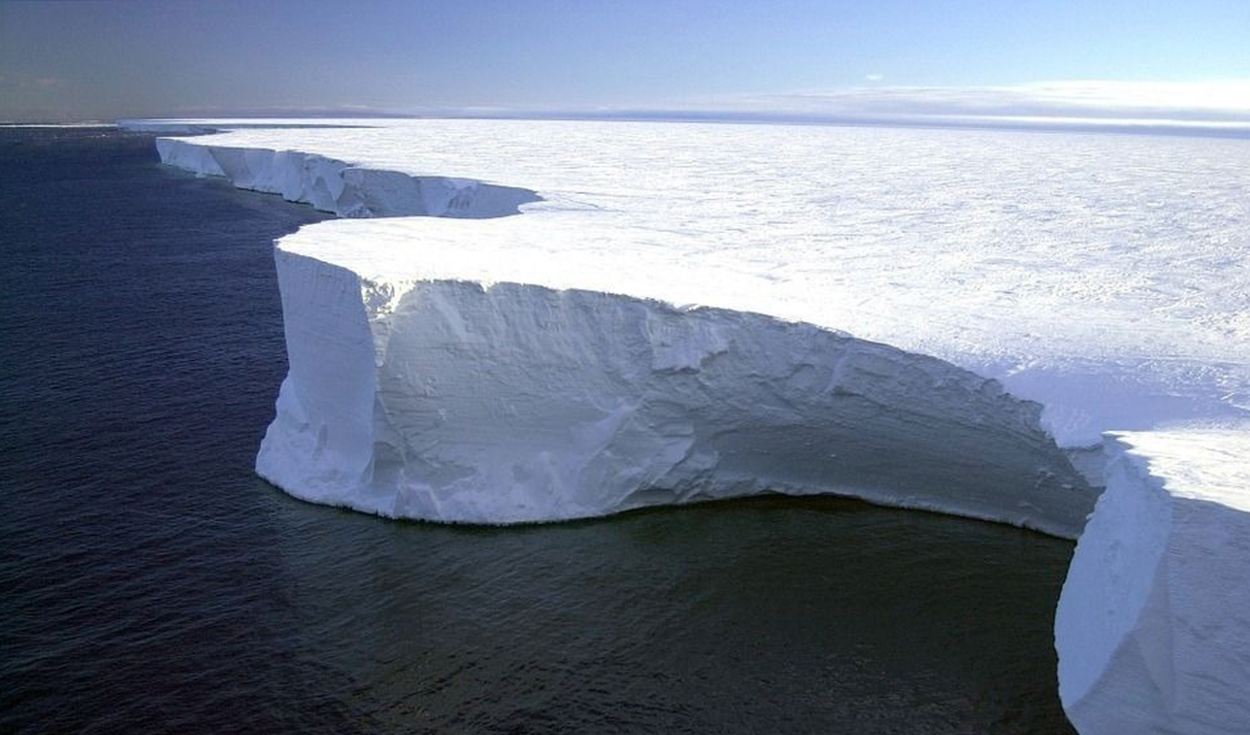
Antarctica's ice sheet gained roughly 695 billion tonnes of ice between 2021 and 2023, the largest increase ever recorded by satellite monitoring, according to a new study published in the journal Nature.
The gain was tracked by the GRACE satellite system, which measures changes in ice mass across the continent. Researchers say the jump was tied to an unusual period of heavy snowfall, triggered not by conditions in Antarctica itself but by ocean warming thousands of kilometers away.
The study was led by scientists at the Institute of Oceanology of the Chinese Academy of Sciences. The team analyzed satellite observations, ice cores, water vapor records and atmospheric circulation simulations to work out what caused the sudden buildup of ice.
Tropical warming linked to Antarctic snowfall
During 2021 to 2023, waters in a tropical zone between the western Pacific Ocean and the eastern Indian Ocean stayed unusually warm. That warming generated Rossby waves, large meanders in high-altitude wind patterns, which traveled toward the high southern latitudes and altered atmospheric circulation over East Antarctica.
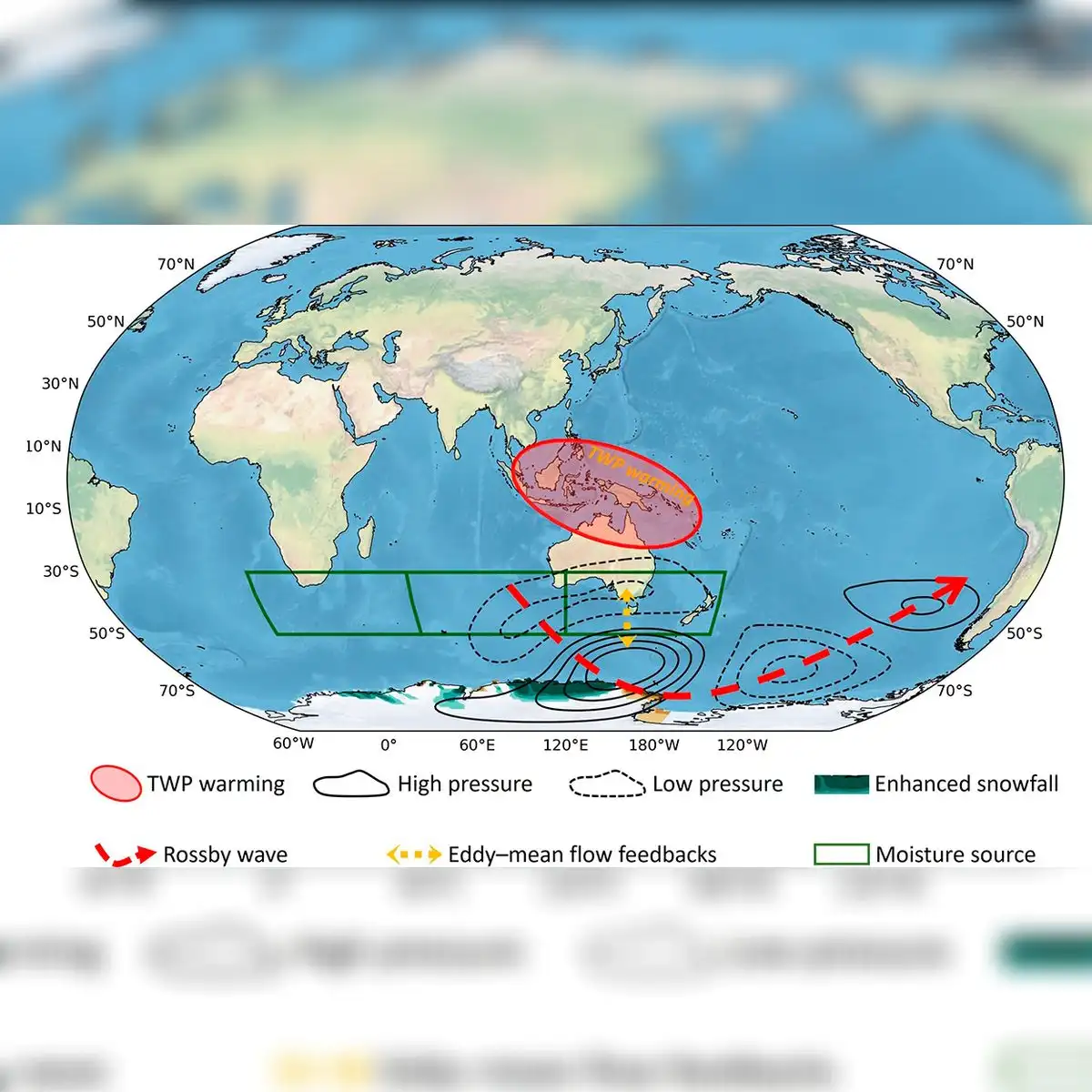
The shifted circulation pattern pulled moist air in from the Indian Ocean. That fed an increase in atmospheric rivers, narrow bands of concentrated water vapor, reaching the continent and dumping intense, sustained snow over the region between Queen Mary Land and Wilkes Land.
The simulations showed tropical warming was the main driver behind the atmospheric changes and the resulting snowfall increase. Human-caused climate activity accounted for only 9% of the anomaly recorded, the researchers found.
Yunhe Wang, a researcher at the Institute of Oceanology of the Chinese Academy of Sciences and the study's first author, said the team had identified a teleconnection pathway linking the tropical warm zone to the East Antarctic ice sheet that had previously gone unnoticed.
Why it is not a recovery
Despite the scale of the increase, the researchers caution it does not amount to a recovery of the Antarctic ice sheet. Over the past two decades, the continent has lost mass at an average rate of about 140.5 billion tonnes per year.
West Antarctica continues to record losses, while some outlet glaciers in East Antarctica face melting at the base of their ice shelves and accelerating flow driven by warm ocean water.
The study notes that similar episodes of sustained warming in tropical waters could occur roughly once a decade. That means events unfolding far from Antarctica can shape the continent's snowfall and ice accumulation for years afterward.
What comes next
Wang said the research provides a theoretical foundation for understanding changes in the Antarctic ice sheet's mass and for future studies of East Antarctica's climate.