


Russian scientists drilling beneath four kilometres of Antarctic ice at Vostok Station have breached Lake Vostok, reaching a vast aquatic ecosystem that has remained sealed from the atmosphere for 15 million years.
When the drill bit broke through the final layer of ice on February 5, 2012, water from the lake surged up the borehole under intense pressure and froze immediately. This rapid freezing created a natural ice plug that prevented kerosene and freon drilling fluids from penetrating deeper into the water.
However, scientific controversy continues over potential biological discoveries. Researchers from Russia's Arctic and Antarctic Research Institute have published no widely accepted confirmations of native microorganisms from Lake Vostok since 2012 due to persistent concerns about surface contamination.
Breakthrough at Vostok Station
Russian drilling campaigns at Vostok Station began in the 1970s and 1980s. Scientists launched the deep ice extraction project long before discovering that a massive lake stretched hundreds of metres beneath the polar ice sheet.
Vostok Station is a remote inland polar research outpost established in East Antarctica. The facility holds the record for the lowest surface temperature ever measured on Earth, reaching minus 89.2 degrees Celsius on July 21, 1983.
The expedition was conducted by team members from the Arctic and Antarctic Research Institute. Drilling advanced intermittently for more than twenty years before the drill finally reached the subglacial body of water.
To keep the deep borehole from collapsing under glacial pressure, workers used kerosene and subsequently freon. In deep ice core drilling, liquid hydrocarbons such as kerosene are combined with densifying agents like freon to act as drilling fluid, preventing narrow ice boreholes from closing under glaciological pressure.
Scale of the subglacial lake
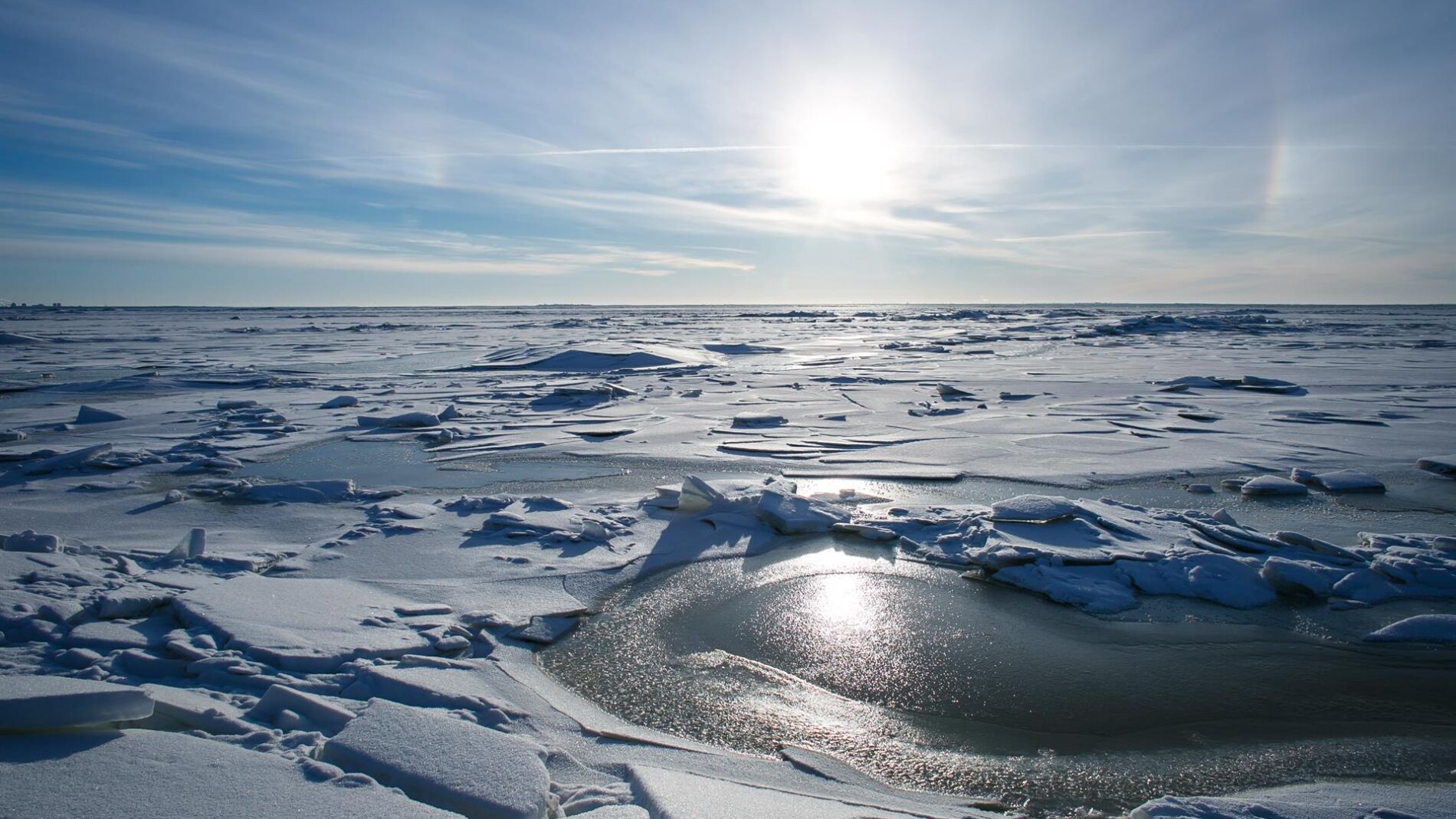
Lake Vostok is the largest of more than 400 subglacial lakes known across Antarctica. Trapped beneath four kilometres of solid ice, the lake extends to a maximum width of 50 kilometres and spans a total length of approximately 250 kilometres.
The hidden lake covers an estimated surface area between 12,500 and 14,000 square kilometres. It has an average depth of 432 metres and contains a volume of 5,400 cubic kilometres of water, forming a massive aquatic system invisible from the surface.
Subglacial lakes are liquid bodies of water sealed beneath glaciers or continental ice sheets. Isolated from atmospheric air and solar radiation, these underground reservoirs are maintained by geothermal heat from the bedrock below and the heavy thermal insulation of the ice above.
Contamination risks and biological search
According to Dutch media outlet Duurzaam Nieuws, the central scientific question was whether microorganisms adapted to total darkness, low nutrients, and extreme pressure could survive in the lake. However, the use of chemical drilling fluids made any potential biological finding immediately open to doubt.
The unexpected high-pressure water surge that froze inside the borehole created a tapon natural, or natural plug. This ice barrier prevented kerosene and freon from descending further into the pristine water column.
In an environment isolated for 15 million years, even a minimal amount of foreign matter can compromise the validity of any sample for years. Demonstrating that any detected life form originates from the lake itself rather than the drilling process remains a critical scientific challenge.
Microorganisms capable of living in conditions without sunlight or organic nutrients are known as extremophiles. Proving that such life exists in subglacial lakes requires strict sterile sampling protocols to distinguish native Antarctic microbes from surface contaminants.
Environmental controls and containment efforts
Contamination controls and environmental containment efforts in sensitive aquatic environments present severe technical challenges worldwide. In a separate effort to contain invasive species, authorities in Illinois poured more than 6,800 litres of rotenone into a canal to block Asian carp from reaching Lake Michigan, but recovered only a single fish specimen.
Rotenone is a naturally occurring chemical compound used as a broad-spectrum piscicide to eradicate unwanted fish populations. Asian carp are invasive fish species in North American waterways that threaten Great Lakes ecosystems, including Lake Michigan, which borders the state of Illinois.

Future research and sample validation
Uncertainty surrounding biological life inside Lake Vostok persists because ruling out contamination remains extremely difficult. The report by journalist Ignacio Gesteira Alcalde highlights that the more isolated an environment is, the more crucial it becomes to prove that life was not introduced accidentally.
Future laboratory analyses will only be accepted by the scientific community if researchers can prove conclusively that any recovered microorganisms originated in the lake water and not from the drilling equipment.
The Arctic and Antarctic Research Institute is Russia's primary scientific organization dedicated to polar studies. Based in Saint Petersburg, the institute oversees research stations across both polar regions and leads Russian interdisciplinary scientific expeditions to Antarctica.



