A court in Valletta has acquitted businessman Yorgen Fenech of organising the murder of investigative journalist Daphne Caruana Galizia in Malta nine years ago.
The jury returned an eight to one majority decision to clear the 44 year old of coordinating the fatal car bomb attack.
Three perpetrators who planted the explosive device in her vehicle have already been convicted, but the Maltese justice system has not yet established who ordered the assassination.
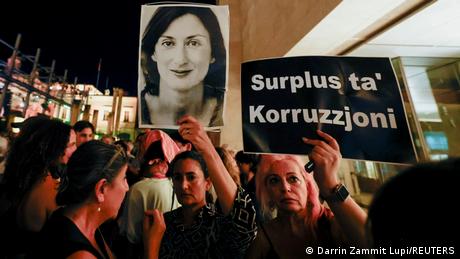
Caruana Galizia was a prominent reporter who spent decades exposing government corruption, money laundering and nepotism in the Mediterranean island nation.
Fenech is one of the wealthiest individuals in Malta. He served as the director of a power station consortium that Caruana Galizia had been investigating extensively prior to her death.
This business connection led to the entrepreneur becoming a central suspect in the murder inquiry.
Police arrested Fenech in November 2019 as he attempted to leave Valletta harbour aboard his yacht. The city is the capital of Malta and serves as a major commercial port.
The prosecution based its case on evidence provided by Melvin Theuma, who worked as a driver for Fenech.
Theuma confessed to acting as an intermediary for the killing and received a presidential pardon in return for his testimony.
The driver alleged that he served as a middleman between the assassins and Fenech, whom he described as the mastermind behind the attack.
Theuma told the court that Fenech had paid him 150,000 euros. He supported this claim by presenting text messages and audio recordings of the two men discussing the killers and the subsequent police investigation.
Fenech admitted that he was aware of the plot to kill the journalist, but he said his former friend Keith Schembri had attempted to frame him.
The businessman alleged that Schembri was the actual mastermind behind the car bomb.
Schembri was serving at the time as the chief of staff to Joseph Muscat, who was the prime minister of Malta.
Corruption and public protests
The arrest of the prominent businessman, combined with suspicions that senior government officials were involved in the assassination plot, led to nationwide demonstrations in December 2019.
Malta operates under a firm two party political system where public life is dominated by a small number of families, and corruption is widely perceived to be a significant problem.
Muscat, who led the governing Labour Party, faced accusations that he had attempted to protect his political allies and friends during the murder investigation. The prime minister resigned from office in January 2020.
An inquiry published in 2021 by colleagues of Caruana Galizia found that the government had fostered a climate of impunity for individuals who wanted to silence the 53 year old reporter.
Family demands justice
The family of Caruana Galizia expressed their disappointment with the Valletta court decision.
In a statement, her relatives said the verdict had denied the journalist the justice she was owed. The family said the day should have belonged to her.
They added that the institutional failures that had allowed the murder to take place remained unresolved in the country.
Occupy Justice, a Maltese human rights advocacy group, announced that it would continue campaigning until the entire chain of responsibility for the assassination was uncovered.
Journalists in Malta issued similar statements, asserting that they had a duty to proceed with their investigative reporting despite threats and obstacles from powerful interests.
Press freedom groups respond
Officials from two international media freedom organisations visited the newsroom of the Times of Malta newspaper on Thursday to demonstrate solidarity following the conclusion of the trial.
The Times of Malta is an English language daily publication and the oldest active newspaper in the country. It has covered the Caruana Galizia case extensively since the assassination.
Flutura Kusari, representing the European Centre for Press and Media Freedom, and Tom Gibson from the Committee to Protect Journalists held meetings with the newspaper staff.
The Committee to Protect Journalists is an independent non profit organisation based in New York that defends the right of reporters to work safely without fear of reprisal.
Kusari and Gibson told the journalists and editors that they supported the newsroom in its years of work to ensure the murder case was not forgotten.
Roberta Metsola, the Maltese politician who serves as the president of the European Parliament, also released a statement following the verdict.
The European Parliament is the directly elected legislative body of the European Union.
Addressing the late journalist, Metsola wrote that they would not surrender and would not back down.