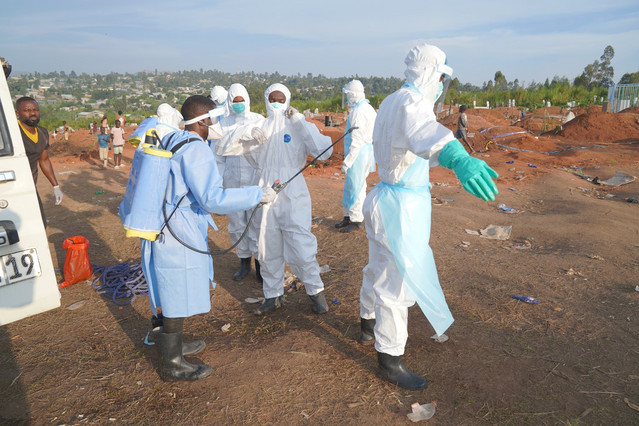
The World Health Organization (WHO) said on Monday that it had called on authorities in the Democratic Republic of Congo (DRC) to strengthen measures to contain an Ebola outbreak that has become the deadliest ever recorded in the country.
Among the interventions the agency proposed were limits on social contact and movement, along with tighter monitoring of the virus's spread. The WHO specifically suggested postponing large gatherings and restricting motorcycle taxi rides to a single passenger in areas where transmission has been recorded.
Ebola is a severe viral illness that spreads through contact with the bodily fluids of infected people or animals and has repeatedly caused deadly outbreaks in Central Africa.
Deadliest Outbreak on Record
The outbreak was officially declared on 15 May and has since spread to six provinces. It has already killed more than 2,500 people in the DRC, surpassing in just three months the toll of the epidemic that raged from 2018 to 2020 in the country's east, which had previously been considered the deadliest in the vast Central African nation's history.
The WHO's emergency committee met last week to review the epidemic's trajectory. On Monday evening, the organization published a new set of proposals drafted by its Director-General, Tedros Adhanom Ghebreyesus. Tedros has led the WHO since 2017 and previously served as Ethiopia's health and foreign minister.
The DRC has been asked to reinforce the resources it deploys against the epidemic, including surveillance, case management, control of movement and public gatherings, community mobilization and protection for health workers.
New Restrictions Proposed
The WHO issued a fresh set of recommendations covering what it described as social measures, gatherings and internal movement. It proposed postponing large gatherings or assemblies in areas with community transmission, reducing the number of people allowed into restaurants, bars and nightclubs, and limiting motorcycle rides to a single passenger.
It also recommended measures to safely reopen schools, round-the-clock road health checks seven days a week in transmission zones and areas considered at high risk of spread, and stepped-up surveillance of boats connecting affected areas with major urban centers, above all the capital, Kinshasa.
International Support and Investigations
For the first time, the WHO also asked the DRC to facilitate the deployment of international health teams and the import of equipment needed for the response, in particular by speeding up immigration and customs clearance procedures.
The agency further recommended investigating every death occurring outside treatment centers in order to trace contacts, and working to better understand community reluctance to accept safe and dignified burials.
It called for deeper investigation into how the virus is being transmitted, particularly where patients are treated at home or by traditional healers, as well as into the possibility of an animal source for the outbreak.
There is currently no vaccine or treatment for the Bundibugyo strain of the virus blamed for the current epidemic, though clinical trials are under way.