The United States Army has selected five defence companies to develop competing prototypes for a new precision strike missile capable of hitting targets from distances of 1,000 kilometres or more.
On September 29, the military awarded initial agreements to Anduril, Castelion, Lockheed Martin Missiles and Fire Control, Mach Industries and RTX for the Precision Strike Missile Increment 4 project.
The news was reported by Defence Blog, which noted the military used a faster contracting route designed for prototypes outside standard procurement rules.
The competing companies represent a mix of traditional aerospace contractors and emerging defence technology startups. Lockheed Martin and RTX are two of the largest established military manufacturers in the world. Firms like Anduril, Castelion and Mach Industries are newer entrants focused on rapid engineering practices.
Technical requirements
The US Army said future testing will concentrate on three primary requirements for the new weapon system.
The missile must achieve a flight range of at least 1,000 kilometres. It must also maintain compatibility with the M142 HIMARS launcher, while retaining the ability to integrate with other launch platforms at a later date.
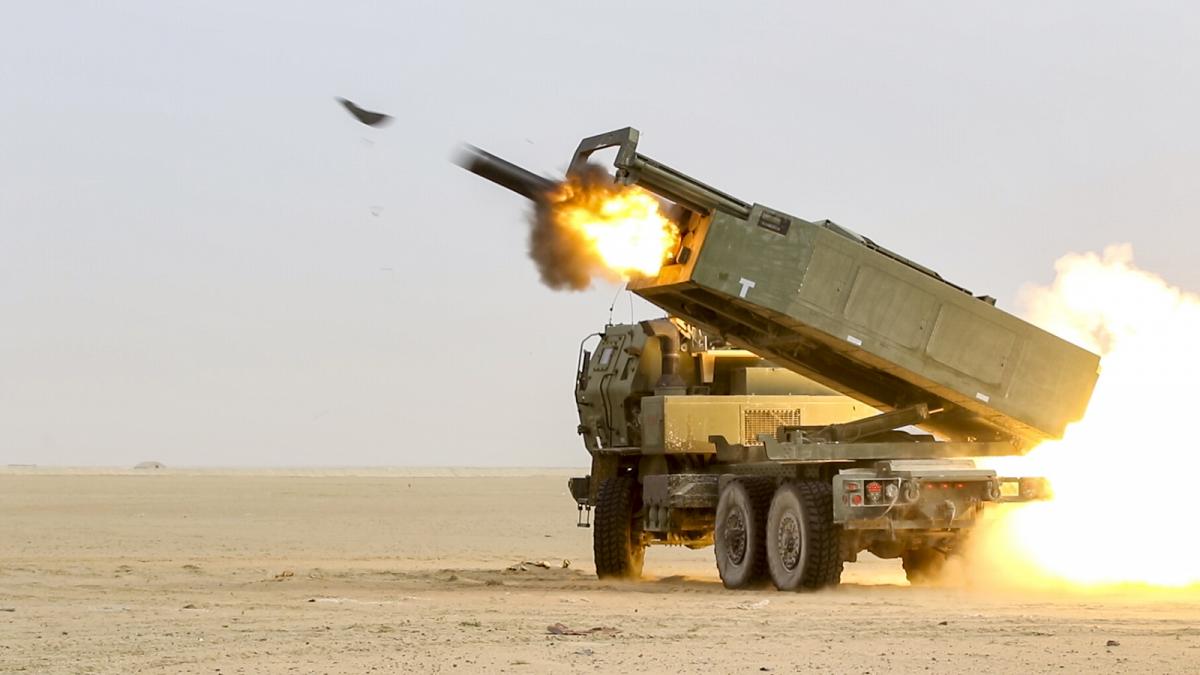
The M142 High Mobility Artillery Rocket System, commonly known as HIMARS, is a light multiple rocket launcher mounted on a standard army truck frame. The mobile platform allows forces to launch precision strikes and quickly relocate before enemy forces can retaliate.
Finally, the military requires the missile to be capable of striking moving maritime targets and mobile ground assets, specifically highlighting enemy missile launchers and air defence systems.
Phased modernisation
The Increment 4 project is the long range iteration of a phased modernisation programme for the Precision Strike Missile family.
The broader programme aims to replace the older Army Tactical Missile System, which has been in military service since the early 1990s. The Ukrainian news agency UNIAN reported that the earlier Increment 2 model has a range of nearly 500 kilometres.
Earlier stages introduced different capabilities to the weapon system. The Increment 2 version features a multi mode homing head designed to strike moving targets on land and ships at sea, while Increment 3 focuses on new warhead and payload options.
Ramjet engine design
Lockheed Martin stated that its Increment 4 design combines a standard rocket booster with an air breathing ramjet engine.
The company said this configuration doubles the flight range of the current missile while maintaining its original physical dimensions, ensuring it still fits existing HIMARS and M270 launch systems.
In June, Lockheed Martin and partner firm L3Harris completed ground testing of the transition phase from the booster to the ramjet engine. Lockheed Martin described this transition as the main technical hurdle it needed to clear before proceeding to flight tests.
Final selection
The five contractors will now compete against one another across two rounds of development.
The initial prototype work will conclude with a competitive selection in the 2027 fiscal year, which begins on October 1. The military will then reduce the number of participants.
The vendors whose designs prove to be the most advanced will be eligible for further agreements, advancing to a final selection phase in the 2028 fiscal year.