Autonomous robotaxis operated jointly by Uber and British technology startup Wayve have begun carrying passengers on the streets of London for the first time.
A fleet of 15 autonomous vehicles has been deployed across the British capital for a public trial period, allowing users to request a driverless ride through the standard Uber smartphone app.
Each vehicle carries a human safety driver sitting behind the wheel who can take manual control if an emergency arises. Government regulators are evaluating the trial results before determining whether to approve a broader commercial rollout.
Navigating London represents a major technical challenge for autonomous driving systems. Reporting by The New York Times highlighted how the capital's historic medieval road layout has created a dense, congested maze of narrow streets where motor vehicles, double-decker buses, scooter couriers, cyclists, and pedestrians constantly compete for space.
Drivers in the city must navigate a complex network of multi-lane roundabouts, bus lanes that end abruptly without warning, and tight single-lane roads where oncoming cars rely on informal driver etiquette to pass. The New York Times reported that more than half of all candidates fail their practical driving test in London.
A milestone for European autonomous vehicles
The launch of passenger trials in one of the largest metropolitan areas in Europe marks a significant milestone for the commercial autonomous vehicle industry. Driverless robotaxi services are already operating commercially in cities including San Francisco, Beijing, and Abu Dhabi.
Deployment across European cities has progressed at a slower pace due to stricter regulatory oversight and more intricate urban road layouts.
Alex Kendall, the chief executive officer of Wayve, spoke about the technology during an interview conducted from the back seat of one of his company's autonomous cars traveling through London traffic. Kendall said the launch represented just one milestone on a long journey that remained ongoing.
Wayve, founded in 2017 in the United Kingdom, develops artificial intelligence software designed to help self-driving vehicles navigate complex urban environments. Kendall declined to offer a specific timeline for when British authorities might grant permission for larger commercial fleets. However, industry analysts expect regulatory clearance for full commercial operation is unlikely before 2027 or 2028.
London becomes a global tech battleground
Despite regulatory hurdles, international technology companies are preparing for London to become a key competitive battleground. Greater London is recognized as one of the world's largest and most lucrative markets for ride-hailing and private vehicle booking services.
American, European, and Chinese tech firms are competing to establish a foothold in the British autonomous mobility sector. Waymo, the self-driving subsidiary owned by Google parent company Alphabet Inc., is currently running test vehicles on London roads, though it does not yet carry passengers. Chinese technology corporation Baidu is also conducting early-stage testing in partnership with Freenow, the European ride-hailing subsidiary of US firm Lyft.
For passengers in London, booking a driverless ride follows the standard Uber app workflow. When a user requests a journey, the system checks whether one of the 15 Wayve robotaxis is available nearby. If a vehicle is free, the app offers the rider an autonomous trip at approximately the same fare as a standard ride.
Passengers retain full choice over their transport. If a customer prefers not to ride in an autonomous car, they can decline the offer, and Uber will dispatch a conventional vehicle with a human driver.
Demonstrating self-driving tech in central London
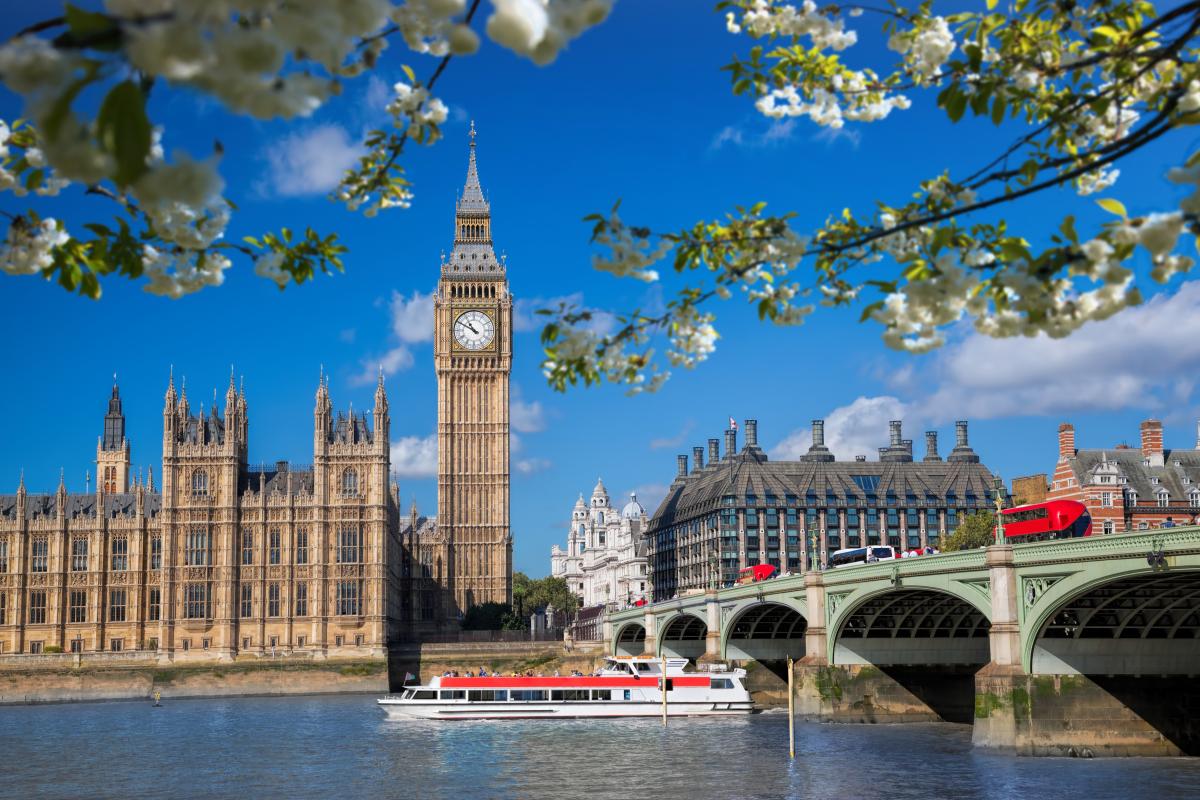
During a demonstration run on Tuesday, one of Wayve's modified Ford Mustang Mach-E electric vehicles navigated through dense central London traffic. The car drove past historic landmarks including Westminster Abbey, the Houses of Parliament, and the Big Ben clock tower.
As the vehicle navigated complex turns, signal-controlled pedestrian crossings, and active road construction zones, the safety driver kept their hands resting calmly on their lap while the steering wheel turned automatically.
Westminster Abbey and the Palace of Westminster, which houses the British Parliament, stand along the River Thames in central London. The surrounding roads are among the most congested traffic corridors in the capital, heavily populated by tourists, government officials, and commuter traffic.
Driver jobs and economic concerns
Industry experts emphasize that regulatory approval involves economic and political considerations alongside technical safety evaluations. Shihao Fu, a senior technology analyst at market research firm IDTechEx, noted that government regulators are taking a cautious approach due to safety risks and potential political pushback.
More than 120,000 licensed taxi drivers and private hire operators currently work in Greater London, carrying passengers on demand. Fu stated that widespread automation raises serious questions regarding the long-term impact on driver employment and livelihoods, adding that political factors could influence the adoption rate even if the underlying technology was ready.
Uber is expanding its commitments to autonomous vehicle technology while implementing cost reduction measures across its broader business. On Wednesday, the San Francisco-based ride-hailing company announced it was laying off approximately 3,300 employees, representing about 10 percent of its corporate workforce, to reallocate capital toward strategic priorities.
Uber aims to launch autonomous robotaxi services in 15 global cities by the end of the year. In expanding its driverless network, Uber faces direct competition from Waymo, electric vehicle manufacturer Tesla, and other autonomous tech developers.
Resistance from taxi drivers and public pushback
The introduction of passenger robotaxis comes amid broader public skepticism regarding artificial intelligence. In New York, Governor Kathy Hochul scaled back plans in February to expand robotaxi testing outside New York City following vocal protests from professional taxi driver unions.
Similar concerns are emerging among London cab drivers. Phil Farrelly, a driver of a traditional black cab parked near Westminster Abbey, said his personal encounters with autonomous test cars on London streets left him confident that automation would not replace human drivers anytime soon.
Drivers of London's iconic black taxicabs must complete a world-famous training program known as The Knowledge. Candidates spend years memorizing every street, landmark, and route within a six-mile radius of Charing Cross, covering over 100 square miles of urban terrain.
Farrelly described an incident two weeks ago near Tower Bridge, where two autonomous test vehicles encountered each other on a narrow single-lane road. Neither vehicle's software could determine how to yield or maneuver past the other, resulting in a gridlock traffic jam that required human safety drivers in both vehicles to intervene and take manual control.
Farrelly said he believed autonomous taxis might function on grid-based road networks in some major American cities, but he could not see them operating effectively in London, suggesting robotaxis would remain little more than a novelty.
Regulatory oversight and safety requirements
Political leadership in the United Kingdom has taken a measured stance on autonomous transport. Andy Burnham, the Prime Minister of the United Kingdom, has not publicly stated his position on autonomous taxis. Under his immediate predecessor in office, Keir Starmer, the British government actively supported the development of autonomous vehicle technology as part of national transport strategy.
Transport for London, the municipal government body that regulates taxi licensing and transport infrastructure across Greater London, issued a statement confirming it would closely monitor the trial. The regulator stated it would take immediate action to halt operations if passenger safety was put at risk.
Sarfraz Maredia, the global head of autonomous mobility at Uber, stated that robotaxis could become a fundamental component of future urban transportation networks. However, Maredia emphasized that public adoption would depend entirely on technology providers proving that autonomous vehicles are both safe and reliable.