

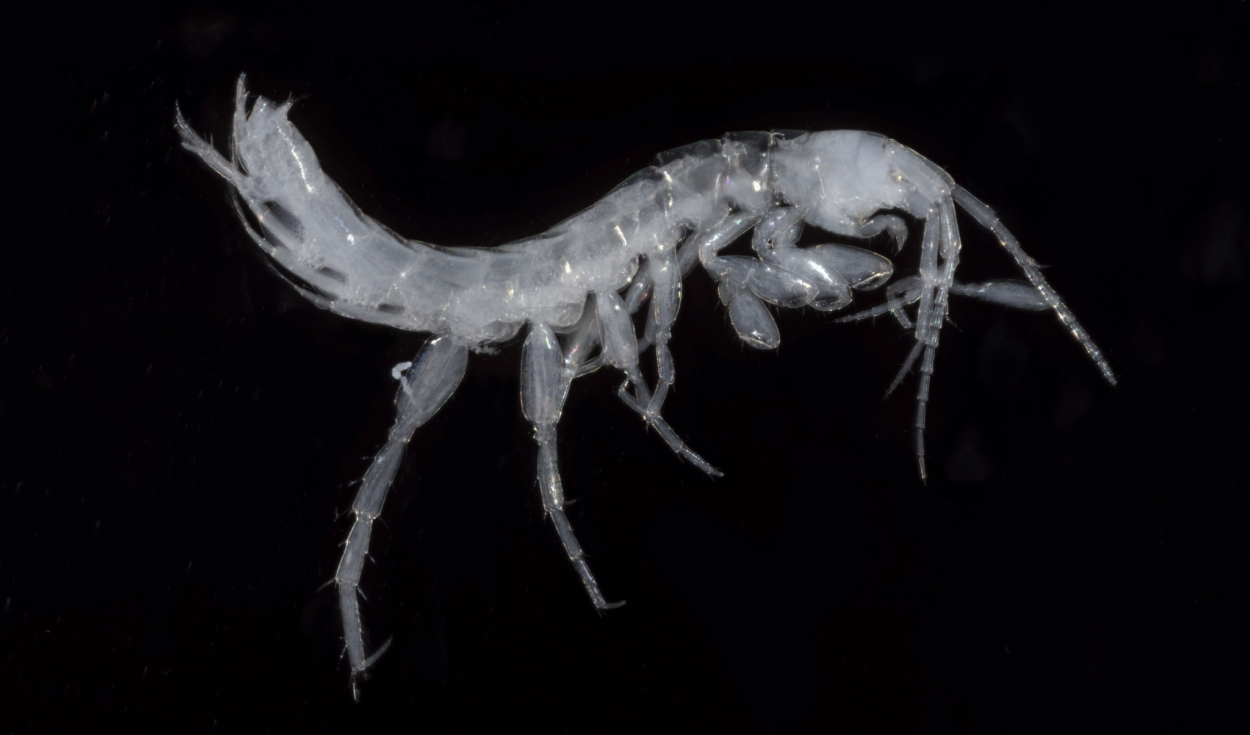
Hiroshima University researchers have discovered two new species of tiny eyeless crustaceans living in subterranean cave waters across Japan's subtropical Ryukyu Islands.
The newly identified creatures belong to the genus Bogidiella, a group of small amphipods resembling shrimp that inhabit underground aquatic environments. The study describing the discovery was published in the scientific taxonomy journal Zootaxa.
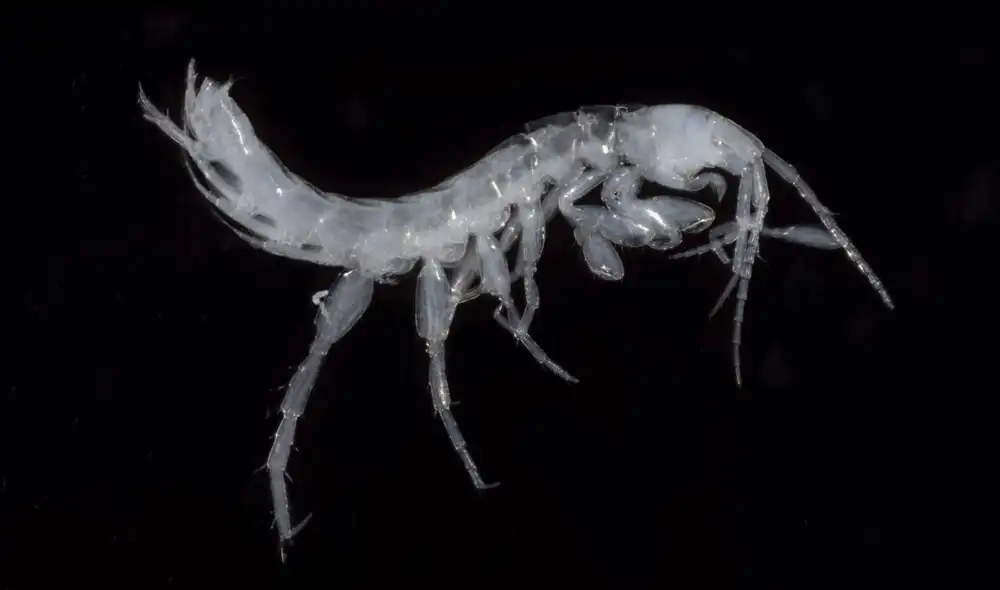
Scientists designated the two species Bogidiella isajii and Bogidiella painushima. Both animals display physical traits adapted to life in lightless environments, including a complete absence of eyes and body pigmentation.
Discovery of Bogidiella isajii on Minamidaito Island
Researchers retrieved specimens of Bogidiella isajii from an anchialine subterranean cave on Minamidaito Island. Minamidaito is an isolated coral island located in the Philippine Sea east of the main Okinawa island chain. Anchialine caves contain landlocked bodies of subterranean water with underground connections to the sea, creating unique aquatic ecosystems where fresh and salt water meet.
Adult specimens of B. isajii measure between 3.8 and 4.3 millimetres in length, making the creatures roughly the size of a single sesame seed. Anatomical examination revealed that the species lacks the inner branch of the pleopods, which are abdominal limbs typically used for propulsion.
The species also displays structural differences in its telson, the terminal segment at the end of the tail, along with distinct physical features in its uropods. Scientists named the species in honour of Yoshitaka Isajii, the individual who originally discovered the creature.
Identification of Bogidiella painushima on Ishigaki Island
The second species, Bogidiella painushima, was discovered inside a subterranean cave on Ishigaki Island, a major island within Japan's Yaeyama island chain in southwestern Okinawa Prefecture. Researchers collected individuals measuring between 1.4 and 3.2 millimetres in length.
The specific epithet painushima derives from 'Painu-shima', an Okinawan expression meaning 'southern island'. Although B. painushima shares the core characteristics of the Bogidiella genus, it displays marked structural variations in its head, antennae, telson, and gnathopods.
Gnathopods are specialized paired appendages on the thorax that function in capturing food, handling nutrients, and grooming body surfaces. These distinct anatomical features enabled researchers to clearly differentiate B. painushima from all previously described members of the Bogidiella genus.
Underground habitats and ecological threats
Crustaceans belonging to the family Bogidiellidae are adapted to subterranean aquatic habitats that frequently go unnoticed by humans. Their environments range from narrow trickling groundwater streams to extensive subterranean aquifers containing fresh water, brackish water, or coastal marine-influenced water.
Professor Ko Tomikawa of Hiroshima University, the lead author of the research paper, noted that human populations have long relied on subterranean groundwater as a primary source for drinking water and agricultural irrigation. He emphasized that the environmental conservation of groundwater systems has emerged as a major challenge in recent years.
During the field investigation, the research team gathered tissue samples from both species for genetic sequence analysis. The genetic data will support broader future studies aimed at understanding the full biological diversity of these hidden subterranean habitats and reconstructing the evolutionary lineage of their native species.
The findings highlight the critical necessity of preserving underground aquatic ecosystems, which face increasing threats of deterioration due to human activities across the region.



