A total solar eclipse will coincide with the peak of the Perseid meteor shower on Wednesday, a dual astronomical event that has not occurred in at least 5,000 years.
The moon will completely hide the sun over a strip of Spain on the afternoon of August 12. Just hours later, the Perseids will reach their maximum activity during the night of August 12 to 13.
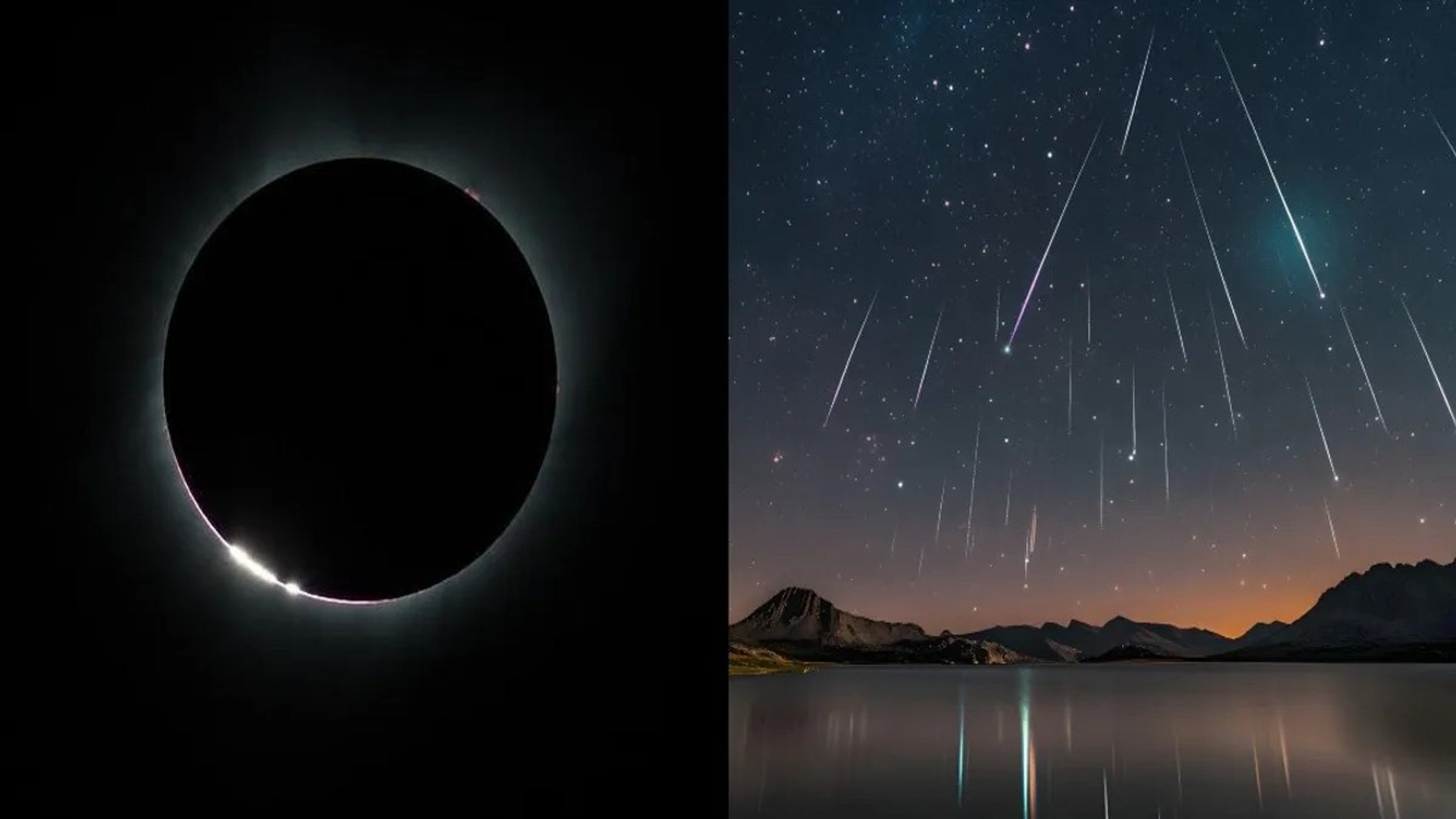
5,000 years of data
IFLScience cross-referenced a NASA database of 11,898 solar eclipses spanning from 1999 BC to the year 3000 with the peak dates of major meteor showers. Of those eclipses, 3,173 were total.
Researchers compared the total eclipses with the most active meteor showers, including the Geminids, Perseids, Quadrantids, Eta Aquariids and Daytime Arietids. They found no other instance of a total solar eclipse falling on the same day as a shower's maximum activity.
Two previous eclipses narrowly missed the Perseid peak by just 24 hours. In 1999, a solar eclipse occurred on August 11, and the meteor maximum arrived on August 12. In 1692, an eclipse fell on August 12, but the Perseids peaked between August 10 and 11.
The 1956 exception
A total eclipse on June 8, 1956, happened during the maximum activity period of the Daytime Arietids. However, available data does not confirm if that specific day was the exact peak.
Future total eclipses will fall on August 12 in 2045 and 2064. Because the peak of a meteor shower can shift slightly due to gravitational forces and the density of its debris cloud, the next potential exact coincidence will not happen until June 2290.
The two events on Wednesday will remain separate. Observers will not see meteors crossing a sky darkened by totality.
Viewing the events
Jess Lee, an astronomer at the Royal Observatory Greenwich, said the Perseids can reach between 100 and 150 meteors per hour during the maximum.
Lee said observers do not have to wait long before another shooting star crosses the sky, adding that the shower features bright meteors and occasional fireballs.
A strip of Spain will see the eclipse as total, while areas outside it will see a partial eclipse. In much of Europe, coverage will be between 80 and 90 percent.
Observers can track the shadow's path across Spain or use a free eclipse application from the IGN. Viewing location makes the difference, as staying outside the path of totality means the sun will not completely hide.
Lee said eclipse seasons return approximately every 173 days when the orbits of the Earth and moon align. She said if the slight tilt of the lunar orbit did not exist, there would be a solar and lunar eclipse every month.
This regularity does not apply to meteor showers, whose peaks can move slightly from year to year. Making a total eclipse coincide with the maximum of a major meteor shower is a rare event.