A survey of dozens of nationally recognized Dominican artists found that all of them describe their economic stability as unstable or moderately unstable, according to a column written by visual artist Luiggy Morales for the Dominican newspaper Diario Libre.
Morales spent a week surveying artists with careers spanning six to twenty years and analyzing the results. He said 100% of respondents placed their financial stability somewhere between unstable and moderately unstable, a finding he said raises concerns about whether these artists can keep producing work or will be pushed toward other, more profitable trades.
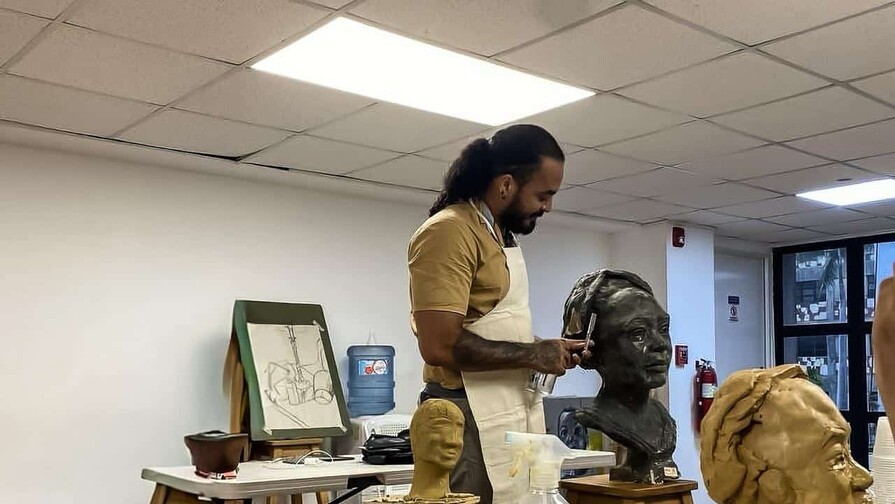
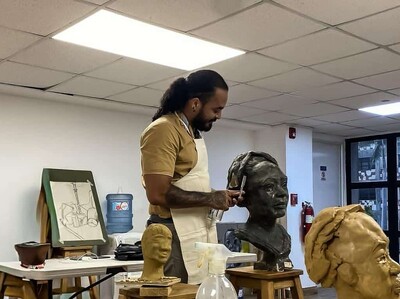
Morales is a visual artist, arts educator and cultural manager. He is a graduate of the Altos de Chavón School of Design and holds a postgraduate degree in Culture and Communication from the Latin American Faculty of Social Sciences, known as FLACSO. His professional work spans visual arts, photography, film, muralism and sculpture, and he now focuses part of his work on teaching.
Financial struggles by the numbers
The survey found that 63.6% of artists had between one and five months a year, and in some cases more than six months, in which income from their art did not cover their basic needs. Morales said this forces many artists to diversify into teaching, cultural management or jobs outside the arts sector just to get by.
Respondents identified three main obstacles: little or no access to financing, grants and public funds; a lack of public policy and real incentives to support the sector; and low prices and weak economic recognition for artwork in the local market.
How society sees Dominican artists
Morales wrote that Dominican society views artists in contradictory ways. On one hand, the public wants artists to serve as ambassadors of Dominican identity, representing the country's art at its best. On the other, artists are treated as merchants whose work is judged under a logic of quick consumption, with little value placed on the intellectual and manual labor behind it.
He said this creates a gap between public applause and institutional neglect.
Selling art without galleries
With no sustainable, profitable art market and few traditional galleries accessible to artists, Morales said many have had to find their own ways to show and sell their work. The survey found that the main channels for sales were not physical galleries but a mix of personal contacts, social media, direct commissions and international platforms.
Morales said this amounts to a forced digitalization of artists' work, as they adapt to an environment offering fewer and fewer opportunities.
Steps toward economic stability
The survey pointed to three priorities for improving the sector. All respondents agreed that artists most need training in business administration and finance, marketing and communication, sales and negotiation, and project management. One participant told Morales that cultural and project management should be taught as formal subjects so artists stop seeing money and commerce as opposed to art.
All respondents also rated institutional support as either "very important" or "essential," split evenly at 50% each. They called for municipal governments more open to inclusive mural programs, tax exemptions for artist entrepreneurs, and transparent grant funds that do not depend on political cycles or favoritism.
Morales said success stories shared in the survey show that making a living from art in the Dominican Republic is possible, but it requires a shift in approach. He said today's artist needs to combine visual art with teaching, design, project management and commercial or industrial work, while pursuing collective projects, partnerships and international market opportunities.
Art as social infrastructure
Morales closed his column by arguing that investing in art is not charity toward culture but a necessity for mental health, democracy, the economy and Dominican national identity. He pointed to South Korea and Japan as examples of countries that invested in their culture for years and are now seeing the results.
He argued that a country failing to guarantee decent conditions for its artists is destined to consume a hollow, sterile culture. The goal, he wrote, is to move from the isolated artist "fighting against the current" to an entrepreneur backed by stable laws, financial education, fair markets and consistent public policy.