
Obstetrician and gynaecologist Dr Steven Rabassa, medical director of the Procrear fertility clinic in Santo Domingo, has urged women to incorporate egg freezing into early reproductive plans.
Rabassa, who also serves as president of the Dominican Association of Reproductive Medicine (Adomere), explained that egg quality declines significantly after age 35, making early vitrification essential for preserving future pregnancy options.
While postponing motherhood has driven growing interest in egg preservation, Rabassa stressed that freezing eggs does not guarantee a future pregnancy, as success depends heavily on a woman's age and egg quality at the time of retrieval.

Ovarian reserve and recommended freezing age
Unlike men, who produce sperm continuously throughout their adult lives, women are born with a finite ovarian reserve of eggs that diminishes steadily from birth.
The ovarian reserve refers to the total capacity of the ovaries to supply egg cells capable of fertilization. Because natural cellular aging affects reproductive tissue, both the quantity and genetic quality of remaining eggs drop over time.
Rabassa noted that age 35 serves as a critical biological cutoff point in egg loss, after which the rate of decline accelerates markedly and cellular defects become more frequent.
To achieve the highest likelihood of future pregnancy, the specialist recommended that women undergo egg freezing between the ages of 24 and 34.
While women aged 35 and older can still complete the vitrification process, Rabassa cautioned that egg quality at that stage is no longer optimal, which can reduce success rates during subsequent fertility treatments.
Hormonal stimulation and surgical extraction
Egg freezing, medically known as vitrification, begins with a course of hormonal ovarian stimulation designed to mature multiple follicles during a single menstrual cycle.
In a standard natural menstrual cycle, a woman's body develops and releases only one mature egg. Hormonal stimulation encourages multiple ovarian follicles to grow simultaneously, increasing the number of viable eggs available for collection.
Once follicular maturation is achieved, the eggs are retrieved through a procedure called follicular aspiration, which is performed in an operating room under light intravenous sedation.
During the outpatient procedure, a doctor inserts a fine needle through the vagina into the ovaries, using ultrasound imaging for precise visual guidance.
The needle aspirates fluid from the mature follicles to collect the oocytes, which are immediately handed over to specialized laboratory embryologists for processing.
Laboratory vitrification and storage safety
In the laboratory, specialists identify and prepare the retrieved eggs before preserving them through vitrification, an ultrarapid freezing technique using liquid nitrogen.
Prior to submersion in liquid nitrogen, the eggs are treated with specialized chemical compounds known as cryoprotectants. These agents replace intracellular water to prevent destructive ice crystal formation and protect cellular membranes during freezing.
The vitrified eggs are stored in specialized liquid nitrogen tanks, where they remain frozen at subzero temperatures until the patient decides to use them in an assisted reproduction cycle.
Rabassa emphasized that nitrogen storage tanks do not require electrical power or artificial lighting to function, relying solely on adequate liquid nitrogen levels and daily inspection by trained laboratory staff.
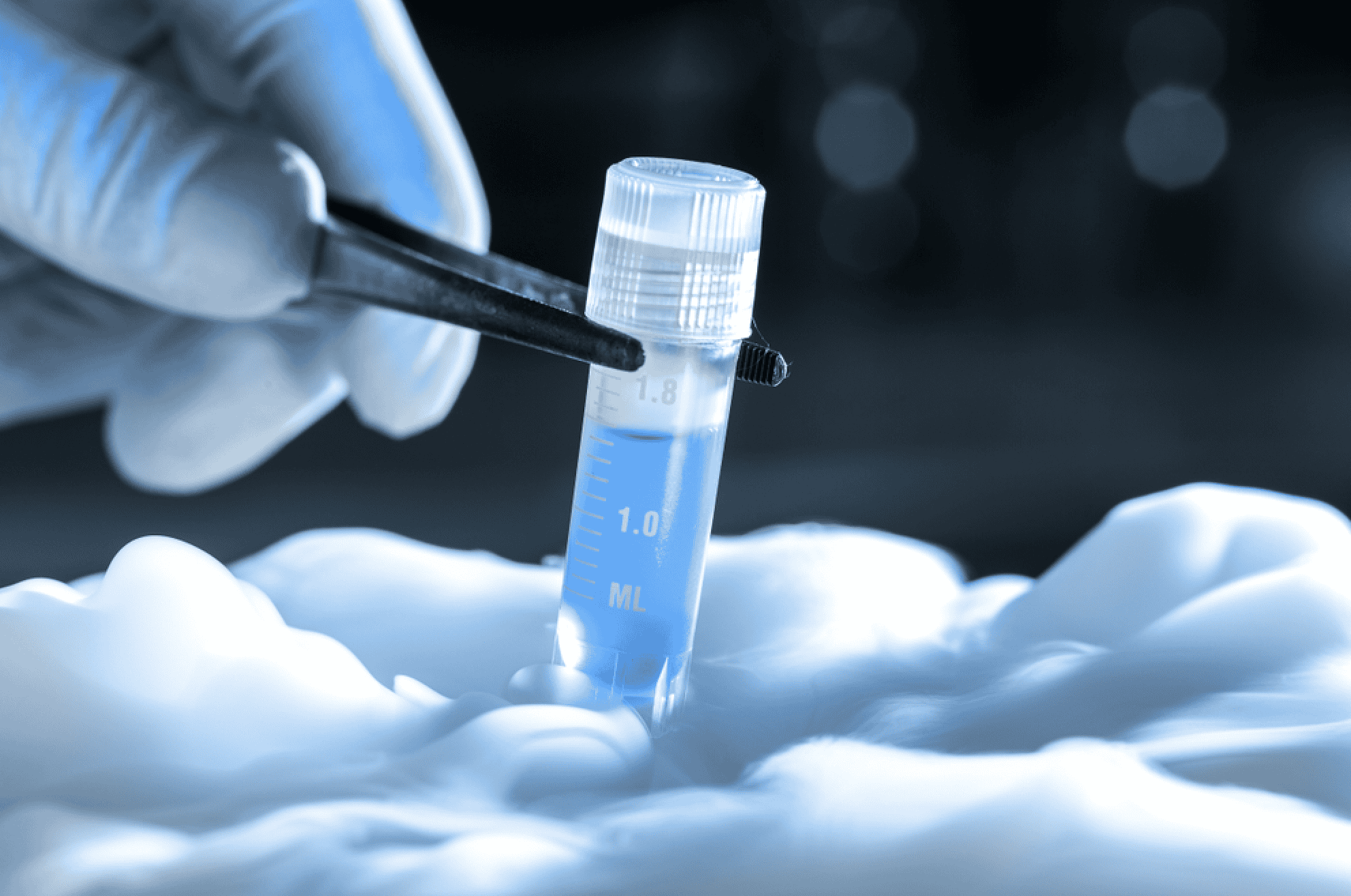
To eliminate any risk of sample confusion, certified reproductive laboratories utilize multiple patient identification and verification systems, with procedures cross checked by several qualified biologists.
Target egg yields and medical risk management
Regarding target quantities, Rabassa stated that medical teams typically aim to collect between six and eight mature eggs per extraction cycle.
Because individual ovarian response varies according to patient biology, some women may require more than one stimulation and retrieval cycle to reach the desired number of frozen eggs.
Although undergoing hormonal injections and surgical retrieval can cause patient anxiety, Rabassa noted that the procedure is manageable when medication doses are precisely tailored to the patient's age, body weight, and ovarian reserve.
When administered correctly, individualized hormonal dosing ensures a smooth process with minimal physical discomfort or side effects.
The primary medical risk associated with the procedure is ovarian hyperstimulation syndrome, a condition where ovaries respond excessively to fertility drugs, causing swelling and fluid accumulation in the abdomen.
Rabassa affirmed that potential hyperstimulation complications are effectively managed and controlled through close medical monitoring and adjusted clinical protocols.
Treatment costs and clinic accreditation in Dominican Republic
In the Dominican Republic, the cost of egg freezing currently ranges between 4,000 and 5,000 US dollars, depending on individual patient needs and the specific services included in the treatment package.
Rabassa observed that while assisted reproduction was historically prohibitively expensive when first introduced, costs have adjusted over time as medications, culture media, and laboratory technologies have advanced.
Women seeking fertility preservation in the Dominican Republic have access to approximately 17 specialized medical centers equipped to perform high-complexity assisted reproduction procedures.
To ensure high standards of care, Rabassa advised prospective patients to verify their doctor's professional credentials and institutional backing through Adomere, the official governing body for reproductive medicine in the country.
Patients can confirm medical endorsements directly by visiting the association's official website at adomere.com.do.
Incorporating reproductive planning into life goals
Beyond the technical aspect of the procedure, Rabassa advocated for integrating reproductive planning into a woman's overall personal planning alongside education, career, and marriage goals.
The specialist recommended that women ideally establish a reproductive plan between the ages of 23 and 24, allowing them to preserve eggs at peak quality for future decision making.
Rabassa concluded by emphasizing the need for broader public awareness campaigns to inform society and women about the biological clock and the importance of proactive fertility preservation.