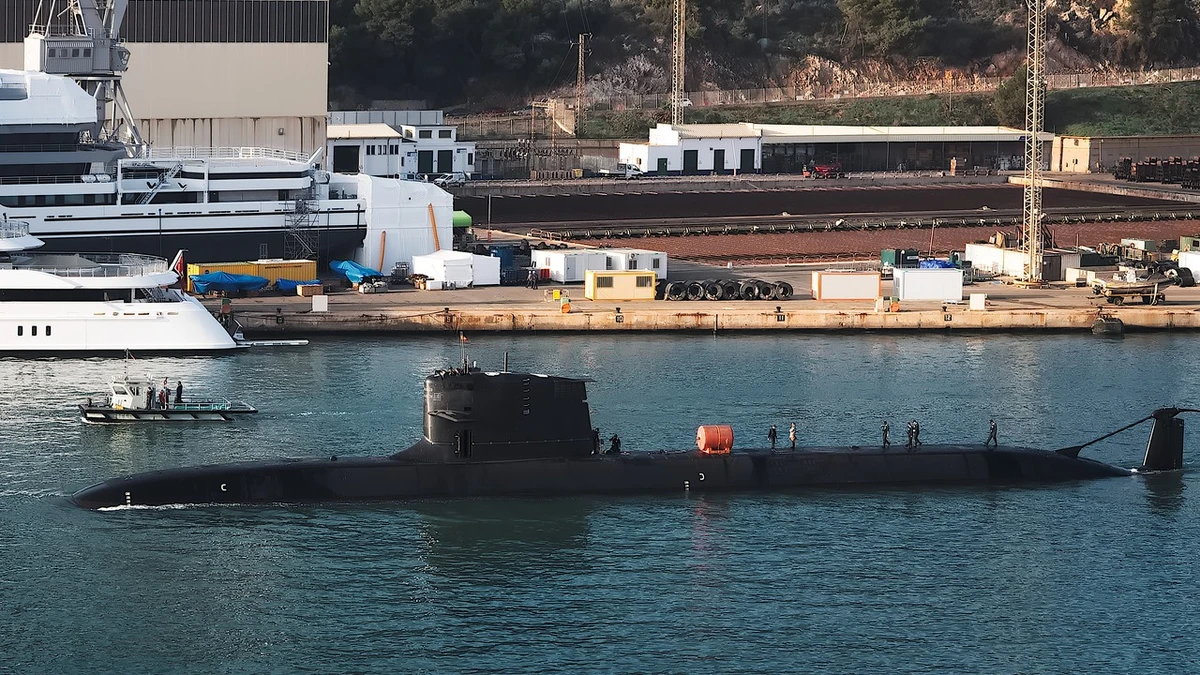
Spain has set out a technological modernisation plan for its S-80 submarines after the Official State Gazette identified severe obsolescence problems across 14 systems on the vessels.
Royal Decree 922/2026, published in the Boletin Oficial del Estado (BOE) on October 30, lists the specific equipment that must evolve to sustain the operational capabilities of the submarine series. The obsolescence issues across the 14 systems were detected jointly by the Spanish Navy, state-owned shipbuilder Navantia, and the S-80 programme office.
Following the publication of the decree, Spain's Council of Ministers authorised an execution order on November 10 covering the sustainment, modernisation, and evolutionary development of the submarines. According to the government's explanation, the technical complexity of the boats requires permanent adaptation to technological advances alongside routine maintenance to ensure their availability and reliability.
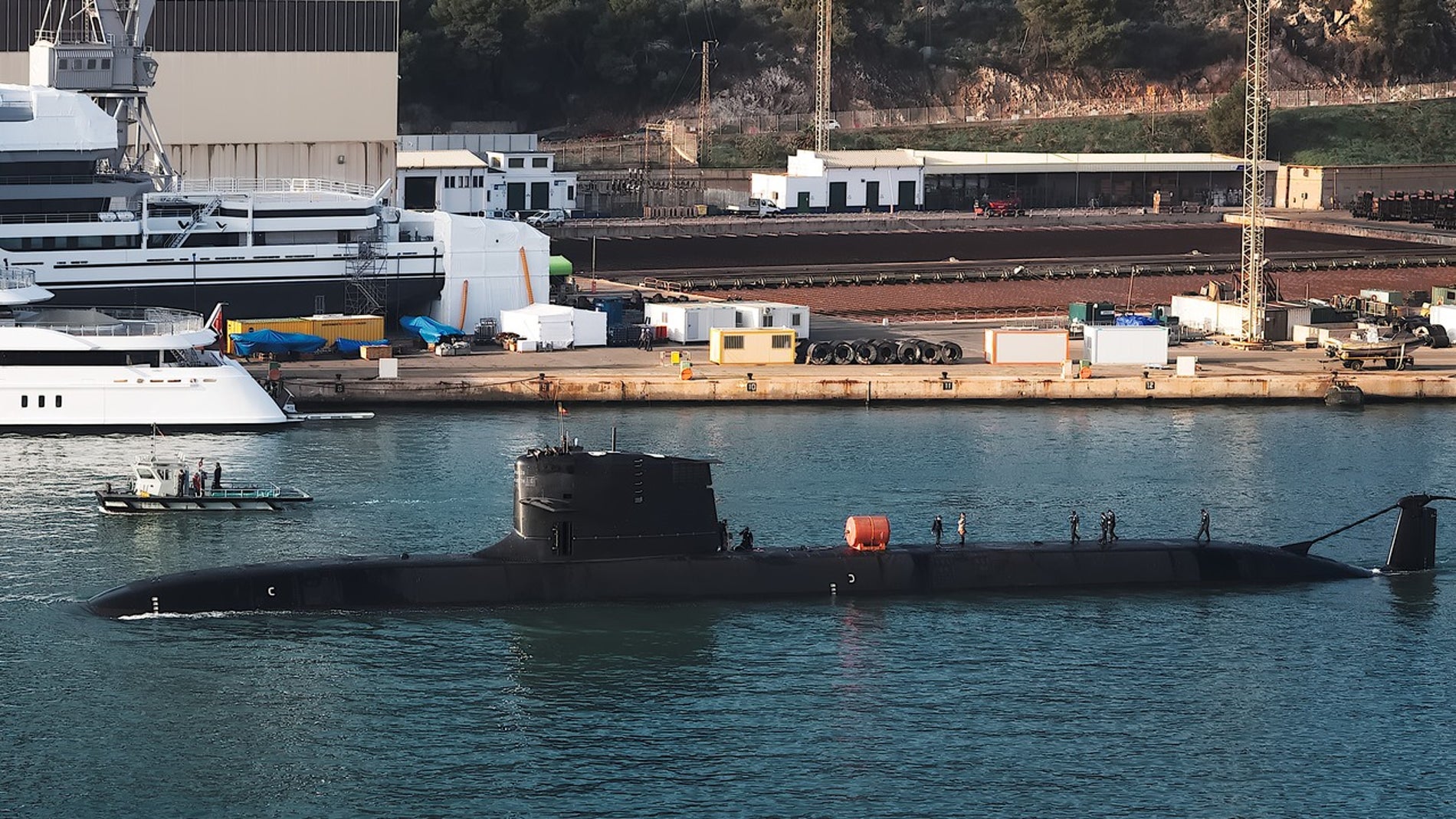
Scope of the S-80 submarine modernisation decree
The upgrade plan appears in a royal decree annex dedicated to the modernisation of fleet units. Its scope covers both ongoing sustainment and the first technological insertion across all four S-80 Series I submarines built for the Spanish Navy.
The decree's reference to obsolescence describes systems that require technological updates rather than active mechanical failures. It does not declare that the four vessels are out of service, nor does it report 14 simultaneous breakdowns across the fleet.
The Boletin Oficial del Estado serves as Spain's official state journal for royal decrees and public procurement orders. The non-nuclear S-80 Plus programme, constructed by Navantia at its shipyard in Cartagena, is Spain's first domestically designed and built class of conventional attack submarines, led by the S-81 Isaac Peral. Commenting on the Spanish S-80 submarine programme, Enrique Soto Martos noted that effective deterrence requires submarines operating at sea rather than sitting in a shipyard and said that the S-80 had arrived very late.
Combat system and sonar upgrade cycles
A major portion of the planned work focuses on how the submarines listen to underwater acoustics and process tactical information. Under the BOE plan, the core of the combat system and the sonar suite will be modernised in cycles lasting two to three years.
Each upgrade cycle will begin with validation testing in a laboratory before being deployed across the fleet. This rolling modernisation schedule will accompany the sea trials of the second submarine in the class, the S-82, as well as the broader development of the S-80 programme as a whole.
The decree also specifies improvements to the acoustic processing equipment, the towed array sonar, and the mine and obstacle detection sonar, known as MODS. In addition, the submarines will gain the capability to operate unmanned underwater vehicles using an encapsulated launch solution, bringing distinct technical interventions together under a single capability evolution programme.
Onboard equipment and crew training simulators
Beyond the sonar array and combat core, the list of 14 systems slated for modernisation includes acoustic countermeasures, periscopes, the steering system, platform control equipment, and integrated communications. These systems govern how a submerged crew navigates, manages onboard machinery, defends against acoustic tracking, and communicates with naval command.
The overhaul also reaches ashore to the SIMTAC and SIMPLA training simulators. Including these two simulator suites ensures that the shore-based training equipment used by submarine crews is updated alongside the hardware and software installed aboard the operational vessels.
Air-independent propulsion and domestic fuel cell plans
The royal decree establishes two distinct lines of work for the submarines' air-independent propulsion, or AIP, system. In the short term, the plan provides for updating the current power plant, while the long-term objective calls for developing a next-generation solution based on a fuel cell built with domestic Spanish technology.
That distinction is central to the domestic debate over fuel cell manufacturing. The decree frames full Spanish technological sovereignty in fuel cell production as a future goal rather than an immediate baseline capability.
Air-independent propulsion allows a non-nuclear submarine to generate power and remain submerged for extended periods without surfacing for atmospheric air. Navantia explained in June that its AIP system produces electricity while submerged using oxygen and bioethanol stored on board. On September 23, the shipbuilder announced it had completed trials of the AIP system installed in the hull section of the third boat, the S-83 Cosme Garcia, although those tests were conducted before joining the section to the hull and did not equate to the delivery of the submarine.

Electric propulsion upgrades and emerging technology budget
The propulsion plant will undergo additional interventions, including modernising the converter cabinets of the main electric motor and replacing the stern tube stuffing box, which seals the propeller shaft where it exits the hull. Both elements are essential for reliable and quiet electric drive operation underwater.
The plan also provides for incorporating the Intelligent Services System that is being deployed on the Spanish Navy's F-110 class frigates. Adopting the F-110 digital architecture reflects the growing importance of integrated digital systems in naval engineering and the wider technological transformation of the Spanish Navy.
To prepare for future requirements, the BOE reserves an allocation equal to 10 percent of the total programme cost for official change proposals. That funding is designated for incorporating emerging technologies over the service life of the platforms, leaving budgetary room for new operational needs that arise over the coming years alongside the 14 upgrades already identified.