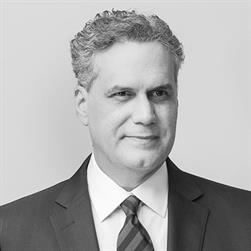
Former Spanish minister Jorge Fernández Díaz criticised Prime Minister Pedro Sánchez's government for failing to report to parliament after 80,000 people crossed into Ceuta from Morocco on July 30.
Twenty days after the mass maritime crossing into the Spanish territory, neither the Congress of Deputies nor the Senate has hosted any appearance by government officials to address the incident.
Writing in a commentary published on August 18, 2026, Fernández Díaz said an influx of 80,000 people could not have taken place without active cooperation or deliberate inaction by Moroccan authorities. He described the silence from the progressive coalition government as unacceptable in a parliamentary democracy.
Ceuta is a Spanish autonomous city located on the North African coast, sharing a land border with Morocco. Alongside Melilla, the enclave represents one of the European Union's two direct land borders with Africa.
Moroccan border control and previous warnings
Fernández Díaz highlighted that Moroccan security forces successfully blocked a second advertised border attempt on August 15. Authorities deployed personnel and concertina wire to seal the frontier with Ceuta.
The former minister stated that the August 15 deployment demonstrated that Moroccan authorities maintain full control over the border. He argued that Rabat retains the ability to permit crossings into Ceuta and Melilla whenever it chooses.
He added that a similar but smaller crossing in July 2021 involving thousands of undocumented migrants had served as an earlier warning of border vulnerabilities.
Fernández Díaz condemned the Spanish government for expressing gratitude to Moroccan authorities for their recent cooperation. He called the official thanks an insult to Spanish citizens who do not offer blind obedience to the administration.
Historical sovereignty claims and World Cup talks
Addressing ongoing territorial claims by Rabat, Fernández Díaz wrote that Ceuta and Melilla were part of Spain long before Morocco existed as a modern political nation. He noted that Melilla has been Spanish since 1497 and Ceuta since 1580, whereas Morocco gained independence in 1956.
He expressed criticism over the Spanish government negotiating the venue for the 2030 World Cup final with Morocco's Minister of Justice while Rabat asserted sovereignty over the two autonomous cities.
Geopolitical alliances and surveillance allegations
Fernández Díaz also pointed to shifting international dynamics, noting that Morocco is a key ally of the United States under Donald Trump and Israel under Benjamin Netanyahu.
He stated that Sánchez maintains a relationship of radical hostility toward both the American and Israeli leaders. Concluding his piece, Fernández Díaz declared that the shadow of Pegasus surveillance software remains very long over Spain's relations with Morocco.