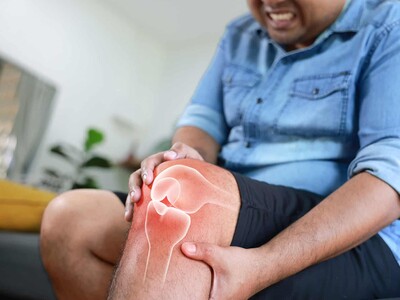
Erika Pérez Lara, a clinical nutritionist, said she sees a patient with obesity and knee pain almost every week who asks the same question: if they lose weight on semaglutide, will the pain go away?
Pérez Lara said the short answer is that it will probably improve. The longer answer, she said, has nuances worth understanding before anyone injects anything.
For decades, osteoarthritis was explained as a purely mechanical problem, caused by excess weight wearing down a joint, she said. That reading is now incomplete. Adipose tissue behaves as an endocrine organ that releases leptin, IL-6 and TNF-alpha, and that low-grade inflammatory environment degrades cartilage even in joints that carry no weight, such as those in the hands, Pérez Lara said. In many patients, she said, osteoarthritis is also a metabolic disease.
The STEP 9 trial
Pérez Lara pointed to the STEP 9 trial, published in the New England Journal of Medicine in 2024, which randomized 407 people with obesity and moderate to severe knee osteoarthritis to receive either 2.4 milligrams of semaglutide weekly or a placebo for 68 weeks.
The treated group lost about 13.7% of their body weight, compared with 3.2% in the placebo group, and their pain, measured on the WOMAC scale, improved roughly 14 points more than the placebo group's, according to Pérez Lara. She said the treated group also showed better physical function and used fewer anti-inflammatory drugs. She described this as a clinically relevant difference in a disease where almost nothing changes the course of illness.
Why weight loss may not explain everything
Pérez Lara said the more interesting question is why semaglutide works, something the STEP 9 trial was not designed to answer. Mechanical unloading of the joint explains much of the effect, she said, but GLP-1 receptors have been identified in articular cartilage, and animal studies suggest the drug class may have anti-inflammatory and cartilage-protective effects independent of weight loss. She cautioned that this remains a hypothesis.
She also noted that liraglutide, another GLP-1 receptor agonist, failed to outperform a placebo for knee pain in an earlier trial, suggesting the drug class is not uniform and that the amount of weight lost appears to matter.
Protecting the muscle that holds the joint
Pérez Lara said the knee is not supported by weight loss alone but by the quadriceps muscle. She cited a body-composition substudy of the STEP 1 trial, in which about 6.9 of the 15.3 kilograms lost by participants was lean mass, roughly 40% of everything lost.
That figure needs care, she said, because lean mass measured by DXA scanning is not the same as muscle. The category also includes body water, glycogen, internal organs and connective tissue, and in the early weeks of a calorie deficit much of what is lost is water and glycogen rather than muscle fiber. For that reason, she said, a drop in lean mass on a scale does not automatically mean a loss of skeletal muscle, which is why she also measures grip strength and functional performance, indicators that show whether the muscle is actually working.
Even so, she said the risk is real. In a 62-year-old patient with osteoarthritis and hidden sarcopenia, losing 15% of body weight without protecting muscle could ease pain in the short term while leaving the patient more frail, with less joint stability and a higher risk of falls over the medium term, she said.
What she prescribes alongside the drug
Pérez Lara said that when she prescribes a GLP-1 drug for this type of patient, the treatment is never just the injection. She said it comes with 1.2 to 1.6 grams of protein per kilogram of adjusted body weight, spread across meals; strength training two or three times a week, even if done seated; vitamin D; and an assessment of muscle mass at the start of treatment and again at six months.
The drug removes load from the joint, Pérez Lara said, but the muscle is what supports it. She said the evidence is promising and that, for the first time in years, doctors have something to offer patients with osteoarthritis beyond a painkiller.