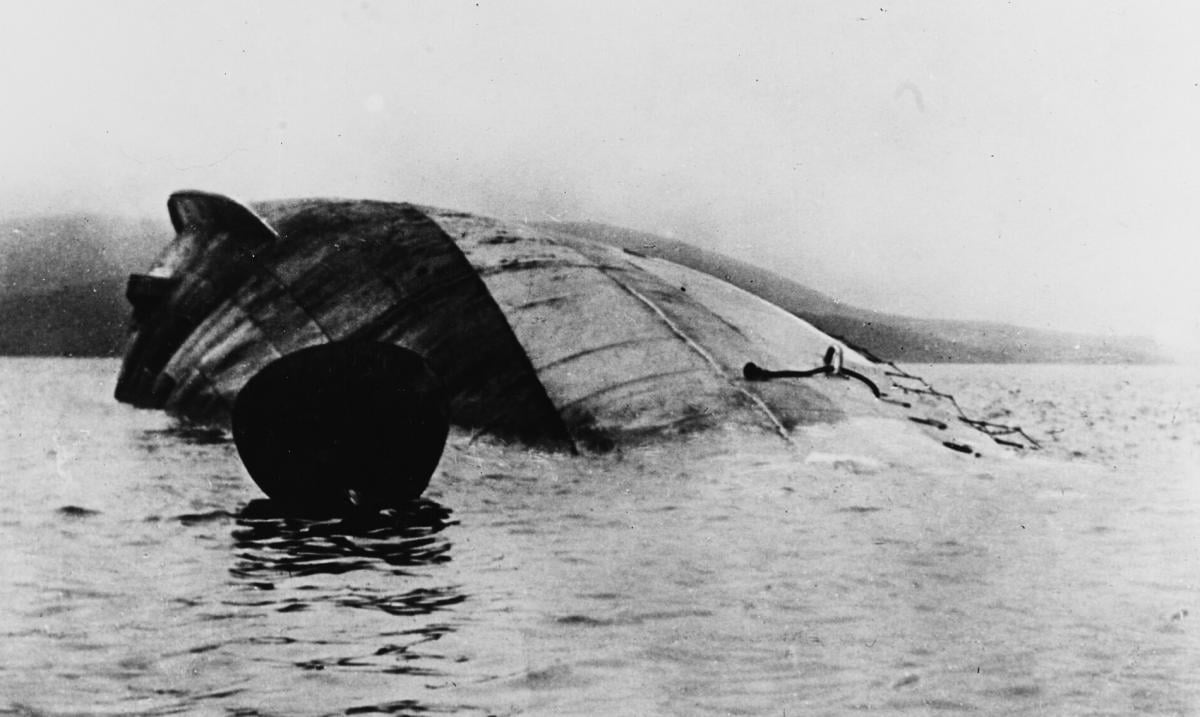
Steel recovered from German High Seas Fleet warships scuttled in Scapa Flow in 1919 has become highly valuable for sensitive scientific equipment.
The Economic Times reported that because the vessels were manufactured prior to the nuclear era, their steel escaped the atmospheric radiation contamination caused by atomic weapons testing. This radiation-free metal is now prized for specialized scientific and industrial instruments that demand extreme measurement precision.
Internment of the German Fleet
Following the end of World War I in November 1918, the German High Seas Fleet surrendered under the terms of the armistice. Allied powers ordered the ships interned while peace treaty negotiations took place in Europe.
A total of 74 German vessels were held at Scapa Flow, a sheltered body of water in the Orkney Islands off northern Scotland that previously served as a primary British naval base. The fleet comprised battleships, battlecruisers, cruisers, and torpedo boats, including modern warships that had represented the military strength of Imperial Germany.
German crews remained stationed aboard their ships under strict restrictions as negotiations over the Treaty of Versailles continued. Rear Admiral Ludwig von Reuter, who commanded the German forces at Scapa Flow, grew concerned that Allied nations would permanently confiscate the fleet once peace terms were finalized.
Fearing that outcome, von Reuter resolved to destroy the vessels rather than allow them to be surrendered to foreign powers.
Mass Scuttling at Scapa Flow
On June 21, 1919, von Reuter issued the command to scuttle the fleet. German sailors responded by opening sea valves and floodgates, allowing seawater to pour into the hulls until the ships lost buoyancy and sank.
British personnel attempted to intervene when they discovered the operation, but most of the fleet was already beyond saving. A few vessels were salvaged, but 52 of the 74 interned ships sank to the seabed by the end of the day.
The scuttling resulted in fatalities when British forces opened fire to halt the operation, killing nine German sailors. The surviving German crew members were taken into custody as prisoners of war.
The Economic Times described the event as one of the most notable mass scuttlings in naval history, noting that von Reuter sought to ensure the ships would never serve as military assets for another nation.
Pre-Nuclear Steel and Maritime Heritage
Although significant quantities of pre-1945 steel remain in existence worldwide, securing large volumes from single sources is challenging. Land-based historic structures and industrial machinery are frequently renovated, demolished, or recycled into modern metal blends.
Sunken warships offer a rare alternative by concentrating massive quantities of pre-nuclear steel within unified hull structures. This makes old shipwrecks a key source for scientists requiring radiation-free metal.
The remaining wrecks at Scapa Flow are now protected under Scottish law as historical monuments and underwater heritage sites. Frequently visited by recreational scuba divers, the sunken vessels are no longer treated as mere scrap metal.
Related Environmental and Historic Reports
In a separate report published by UNIAN, thousands of fish were rescued in England after a river vanished underground. Environmental specialists utilized electrofishing techniques to temporarily stun the fish in nets before transferring them to safer upstream waters.
UNIAN also highlighted the emergence of ancient bridge ruins in Rome linked to Emperor Nero. The structural remains resurfaced from beneath the water, though the precise cause and timing of the bridge's original destruction remain unknown.