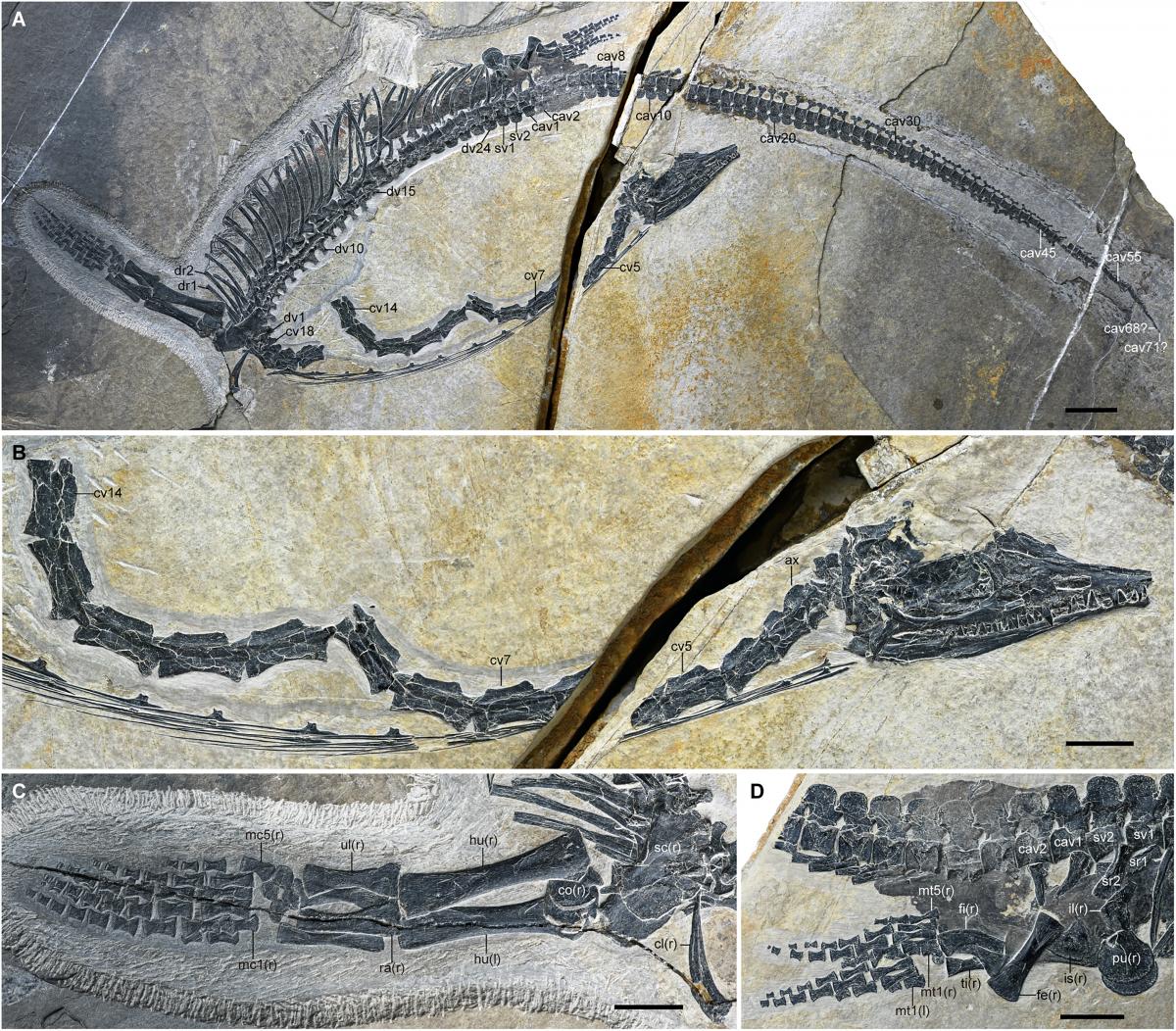
Scientists have found a nearly complete fossil of a 245-million-year-old marine reptile in China, preserving not only its skeleton but also much of its digestive system, according to a study published in the journal Science Advances and reported by Daily Galaxy.
The fossil belongs to Austronaga minuta, a small, long-necked reptile species, and measures about 60 centimeters long. Researchers say it is the oldest known reptile fossil with a nearly intact digestive tract, giving them a rare look at both the animal's outer anatomy and its internal organs.
The study involved scientists from China, Europe and the United States, including paleontologist Dr. Stephan Spiekman of the State Museum of Natural History Stuttgart and the University of Hohenheim. The researchers said the fossil not only documents the anatomy of a single animal but also helps explain how some reptiles adapted to ocean life after evolving on land.
Built for life in water
Despite its small size, Austronaga minuta had an unusually long neck and tail, giving it a distinctive look among Triassic-era marine reptiles. Its long tail powered movement through water, while its elongated, flipper-like forelimbs provided steering and stability. Its hind limbs were significantly reduced and contributed little to swimming.
Although its body shape resembles that of marine reptiles such as ichthyosaurs and mosasaurs, Austronaga belongs to a different branch of the reptile family tree. It is closely related to early archosaurs, the group that later gave rise to dinosaurs and crocodiles. Spiekman said scientists had generally believed early archosaurs showed only limited adaptation to marine environments, and that the discovery of Austronaga shows early members of this lineage had already developed complex ocean adaptations comparable to those of other, better-known marine reptile groups.
Preserved organs offer new clues
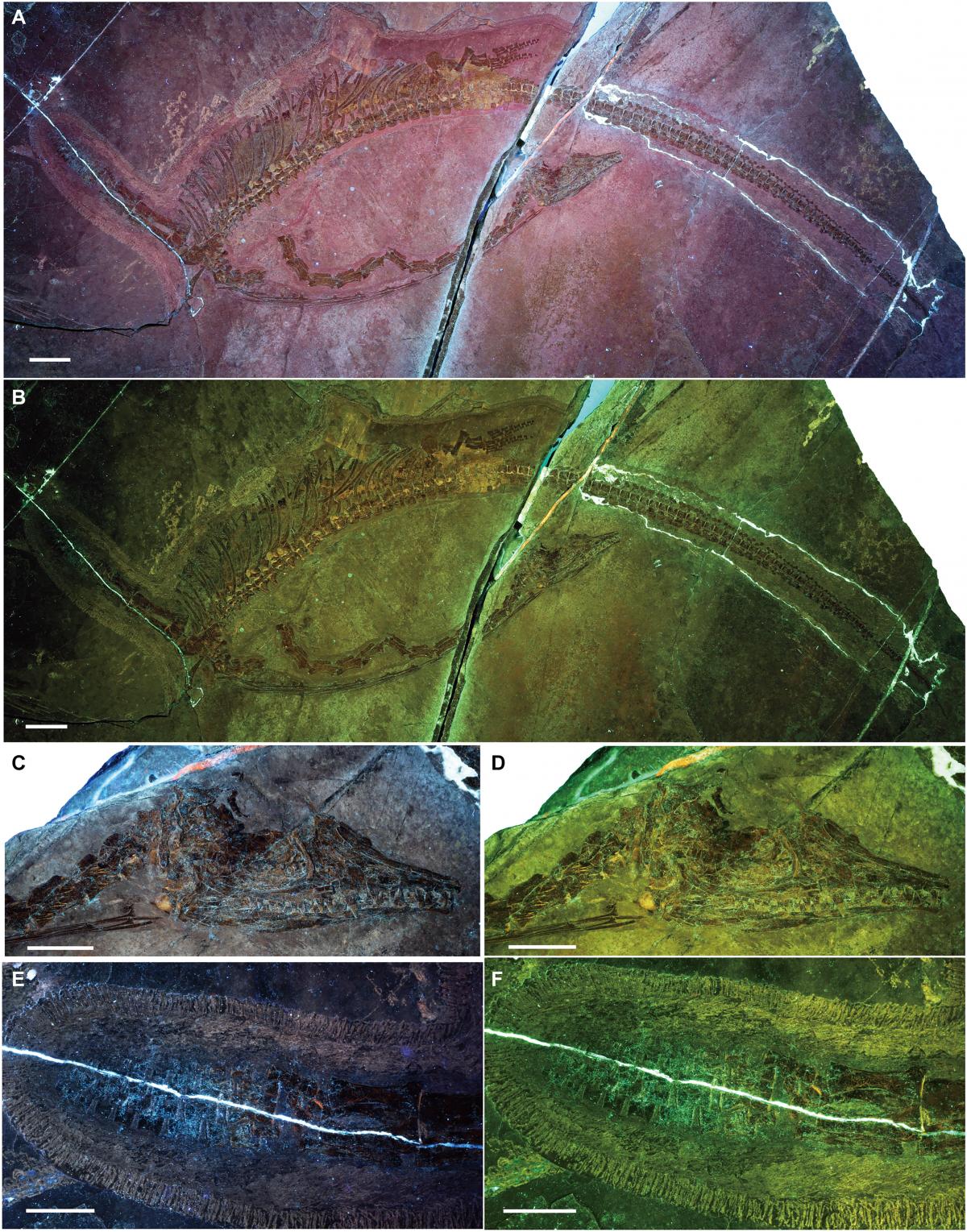
The fossil's most notable feature was a hidden section of its ribcage. Using ultraviolet photography and mass spectrometry, researchers identified a dark area between the ribs as the remains of a largely preserved digestive system, including a large sac-like stomach, a liver that still retained traces of hemoglobin, and a long digestive tube corresponding to the small and large intestines.
Lead study author Dr. Wei Wang of the Institute of Vertebrate Paleontology and Paleoanthropology in Beijing said the reptile's internal anatomy proved far less specialized than its skeleton. He said the digestive system was relatively simple in structure even though the body had clearly adapted for efficient swimming, calling the fossil the oldest known example of a nearly complete digestive system in a reptile.
A stomach that reshaped a family tree
The preserved organs also offer clues about archosaur evolution. Modern birds and crocodiles both have a stomach divided into two chambers, but Austronaga had only a single stomach compartment. Nick Fraser of National Museums Scotland said this suggests the earliest archosaurs likely had a much simpler stomach, with the more specialized two-chamber structure developing later. He noted that Austronaga had a short, simple digestive tract similar to those found in modern fish-eating reptiles.
The fossil is now held in Beijing, where it is contributing to ongoing research into the diversity of reptiles that inhabited Triassic seas.