Santo Domingo hit a historic average August temperature of 29.4 degrees Celsius last year, and a Super El Niño expected in 2026-27 could push the heat even higher, according to an analysis by economist Ellen Pérez Ducy.
Drawing on the European database Weather and Climate, Pérez Ducy traced temperatures in the Dominican capital from 1944. Between 1944 and 1956, the city's average ranged from 24.5 to 26.7 degrees Celsius, with a peak of 28.2 degrees in October 1947. From the 1960s, the trend turned steadily upward in three-to-four-year cycles, with brief coolings in 1983, 1991, and 1993 but ever-higher peak temperatures.
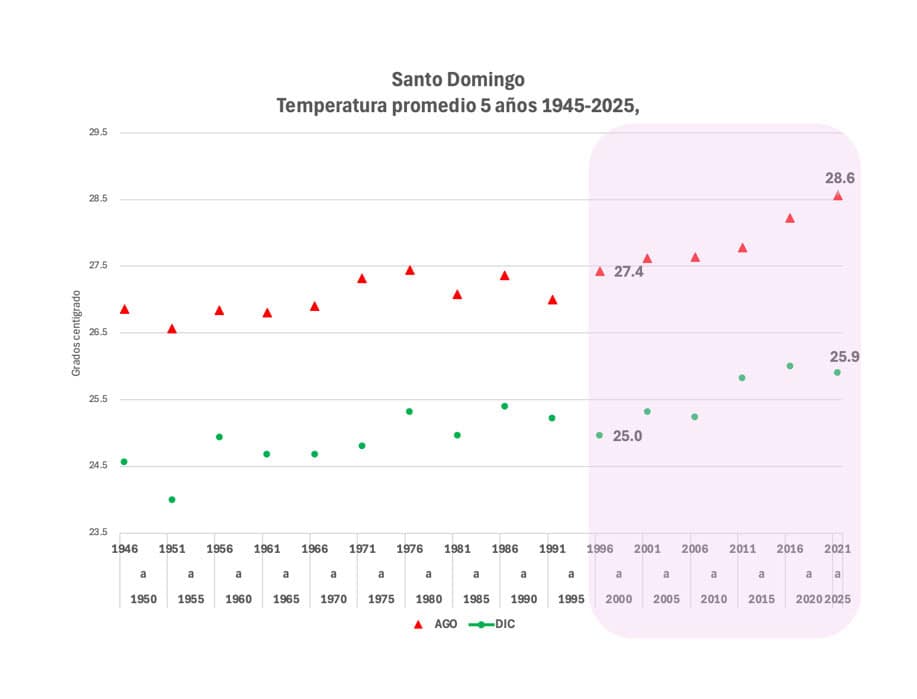
The gap between August and December temperatures now stands at 2.2 degrees Celsius and has been widening, she noted, meaning summer heat has intensified faster than winter warmth. She attributed the acceleration to rising emissions of CO2, methane, and other industrial pollutants, which have raised temperatures by 1.5 to 2.0 degrees Celsius in most of the world since 1940.
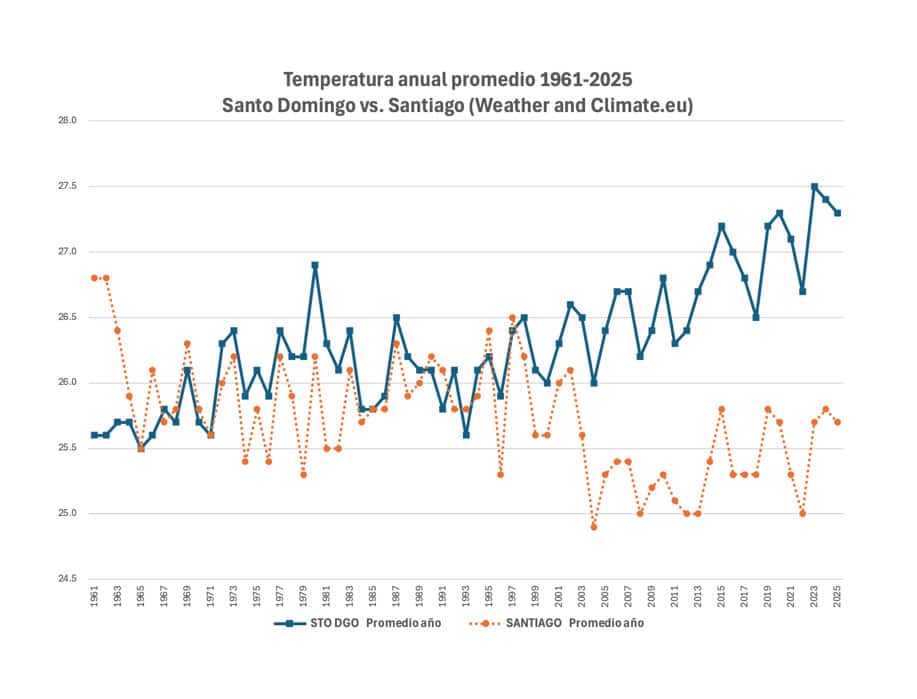
Not every city tells the same story. Since 1999, temperatures in Santiago, in the northern Dominican Republic, have diverged downward by about half a degree. Pérez Ducy found similar patterns in La Paz, Bolivia; Colonia, Uruguay; and Córdoba, Argentina. She suggested that tree cover and dispersed urban growth may explain the difference, noting that walking through a park in Santo Domingo already feels cooler than being inside a nearby house.
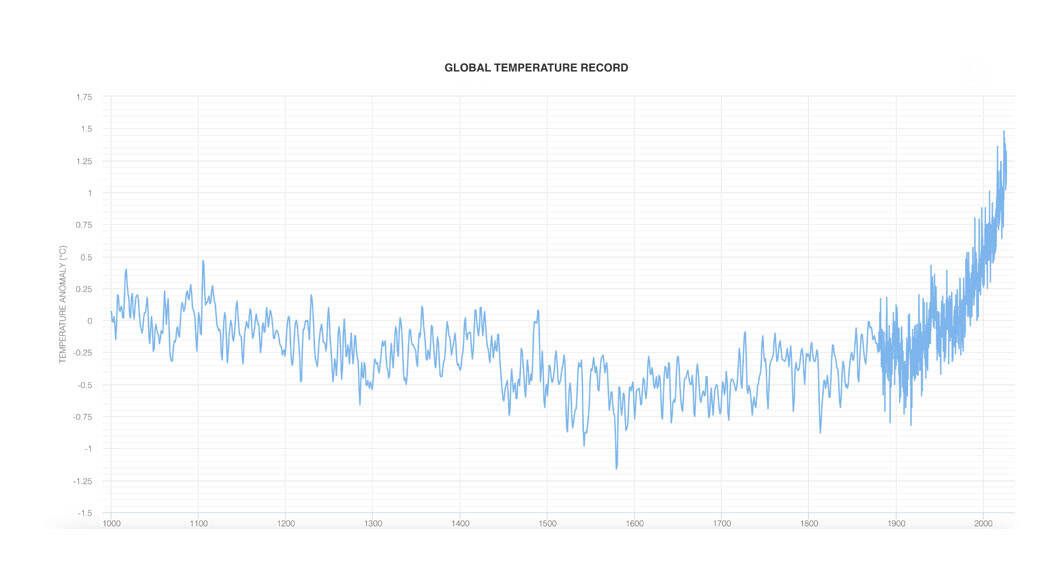
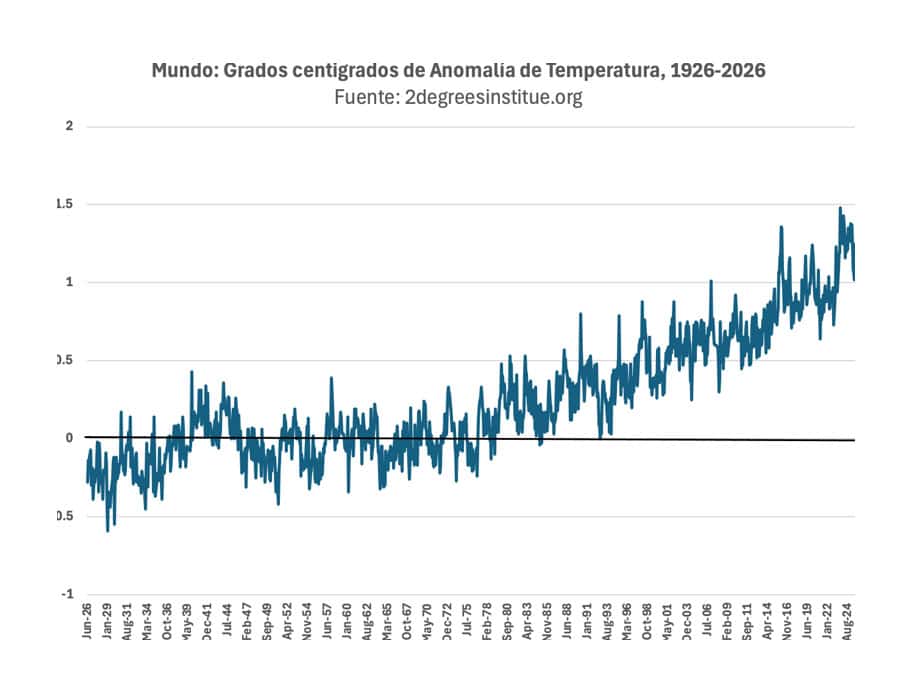
Santo Domingo has grown by sacrificing trees for concrete, Pérez Ducy argued. As a remedy, she proposed requiring tall buildings to provide one square metre of green space per additional floor, so a ten-storey building would carry nine square metres of frontage or side greenery.
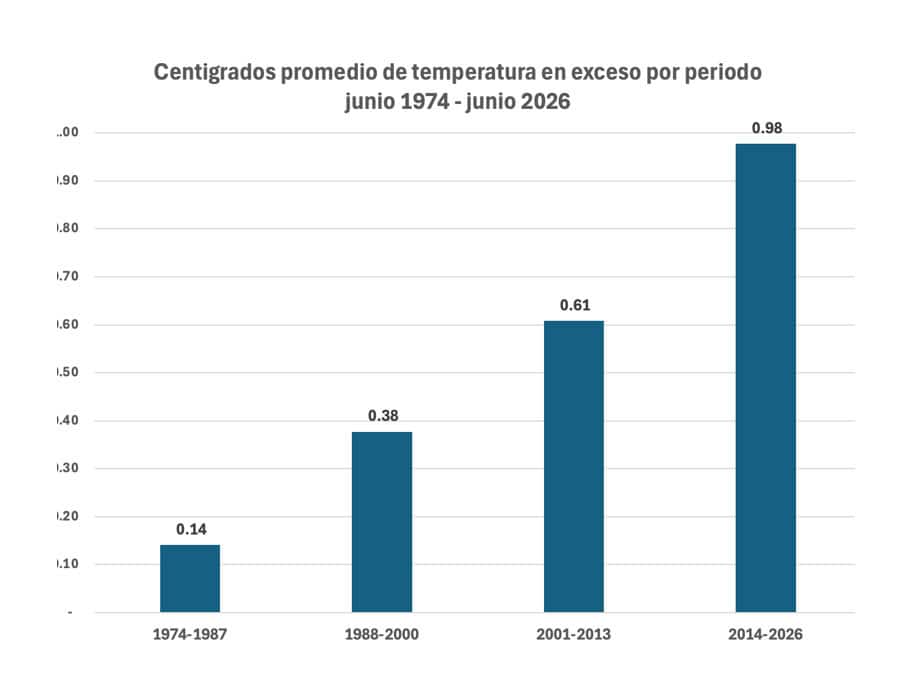
The anticipated Super El Niño of 2026-27 sharpens the concern. Previous episodes in 1972-73, 1982-83, 1997-98, and 2014-15 each brought higher temperature extremes, and the coming one could push global temperatures more than one degree Celsius above already elevated baselines, Pérez Ducy argued. Santo Domingo, with only three public fountains and few parks, would face an overwhelming season.
The disruption could also reach food markets. El Niño typically brings drought to India, the world's top rice producer and second-largest sugar producer, while delivering excess rain to Colombia and Peru. That combination would push major agricultural prices higher. The Dominican Republic, which imports many of those commodities, could face interest rate increases aimed at containing the resulting inflation. Argentina, with its normally dry pampas, might be the sole beneficiary.