


Santiago Abascal will use regional budget agreements negotiated with the Partido Popular to drive Vox's national election campaign ahead of Spain's general election on November 29.
Party officials at Vox's national headquarters on Bambú Street in Madrid confirmed that the party has shifted its electoral strategy to position Prime Minister Pedro Sánchez and his ruling Spanish Socialist Workers' Party as its sole political target.
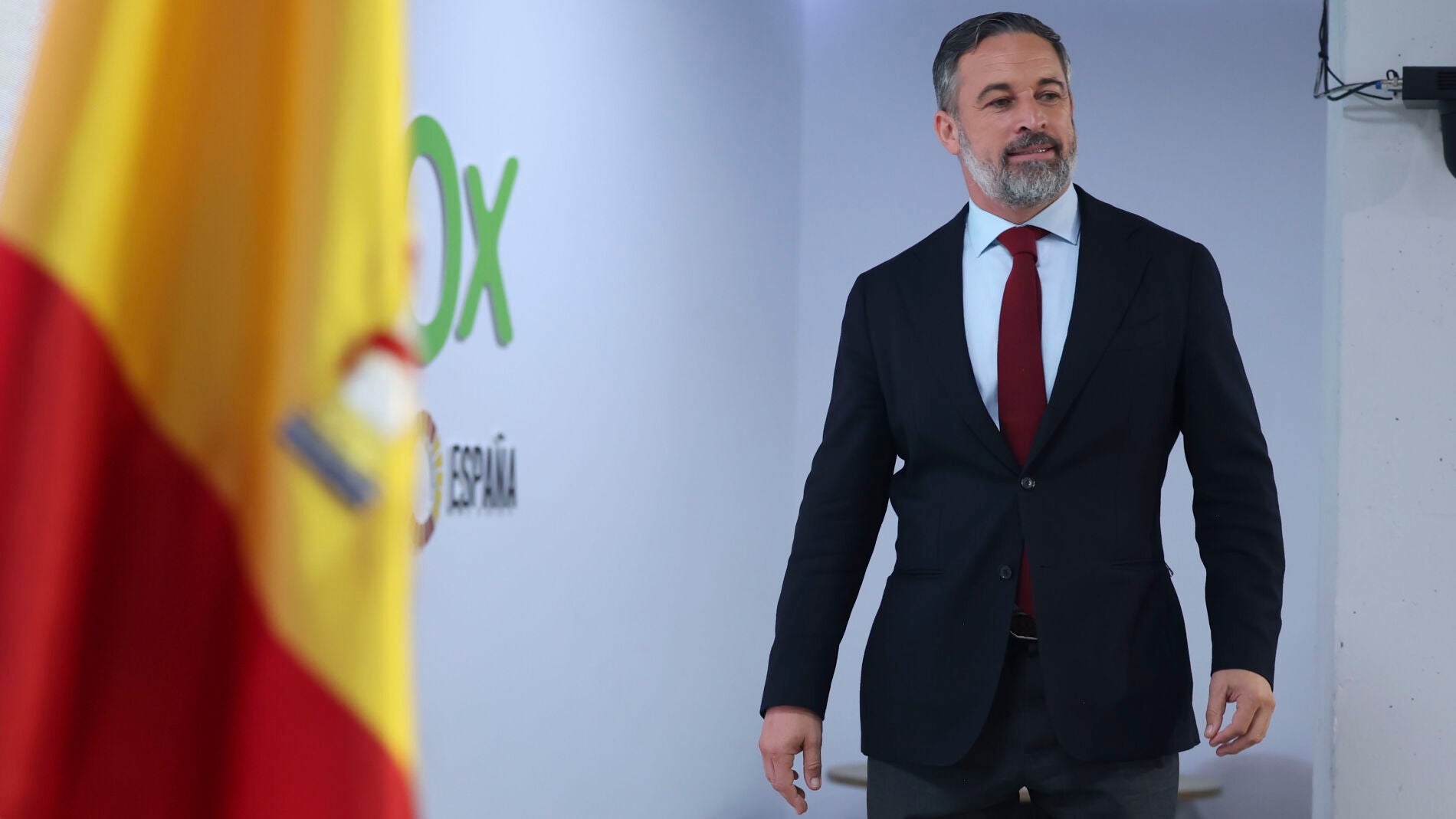
Vox enters the campaign with strong backing in opinion polls, solidly maintaining third place nationwide. Recent surveys indicate that Abascal's party could approach 20 percent of the vote, making its support indispensable for any future coalition government led by the center-right Partido Popular.
The political environment in Spain has favoured Vox over the past quarter, driven by public anger over political corruption scandals. Key issues dominating national debate, including border security in the autonomous city of Ceuta, immigration policy, and public safety, have expanded the party's voter base.
Regional Budget Deals and Electoral Truce
Despite potential pressure from newly emerging right-wing political groups returning to public institutions, Vox plans to turn its regional governance agreements into a campaign asset. The phrase national priority has featured prominently in political discussions since Vox and the Partido Popular signed their first reconciliation pact in the western region of Extremadura.
With the general election campaign coinciding with votes on regional budgets, Vox intends to highlight the specific policy concessions it extracted from the Partido Popular. Party leaders emphasized that their objective regarding the Partido Popular is simply to approve sound regional budgets that fully implement agreed terms.
Both parties have agreed to a tacit non-aggression pact to avoid internal conflict on the right. Senior Vox officials stated that their only target is Sánchez and the Spanish Socialist Workers' Party, while close aides to Partido Popular leader Alberto Núñez Feijóo confirmed that their campaign will focus on criticizing the prime minister rather than attacking Abascal.
Lessons from Previous Elections and Regional Coalitions
The Partido Popular is Spain's principal center-right opposition party, while Vox operates as a right-wing party advocating conservative and nationalist policies. Pedro Sánchez has served as Prime Minister of Spain since 2018 at the head of the left-wing Spanish Socialist Workers' Party.
The cooperative stance marks a significant shift from the 2023 general election, when the two right-wing parties spent weeks exchanging criticisms as the Partido Popular sought an absolute majority and Vox tried to force a formal coalition. Neither party achieved its goal; Feijóo failed to secure enough parliamentary seats to form a government, remaining in opposition, while Vox lost 19 seats in the Congress of Deputies.
Relations between the two parties began to mend after an early regional election in Extremadura threatened to force a repeat vote due to inter-party disputes. Feijóo intervened by publishing a national framework document establishing clear negotiation boundaries and directing all coalition talks from Madrid.
Although Vox initially resisted central control over regional negotiation strategy, the framework eventually led to coalition agreements in four autonomous communities: Extremadura, Aragón, Castilla y León, and Andalusia. In Aragón, regional elections had also been called early following disagreements between the right-wing parties.
Campaign Framing and Opposition Strategy
Heading into the November 29 vote, both parties share the goal of increasing their overall vote share and parliamentary representation to form a joint governing majority. Feijóo has accepted that Sánchez will continue to label the Partido Popular as far-right and frame the election as a choice between human rights and right-wing policies.
Vox strategists warned that four more years of the current left-wing government would lead to severe national decline. Party leaders stated that their campaign message will focus on offering voters hope and confidence in rebuilding Spain, while emphasizing that removing Sánchez from power requires absolute focus without complacency.
Vox plans to centerpiece its campaign around criticizing government policy, accusing the ruling administration of introducing fiscal strain, deteriorating public services, economic instability, and rising physical insecurity across the country.


