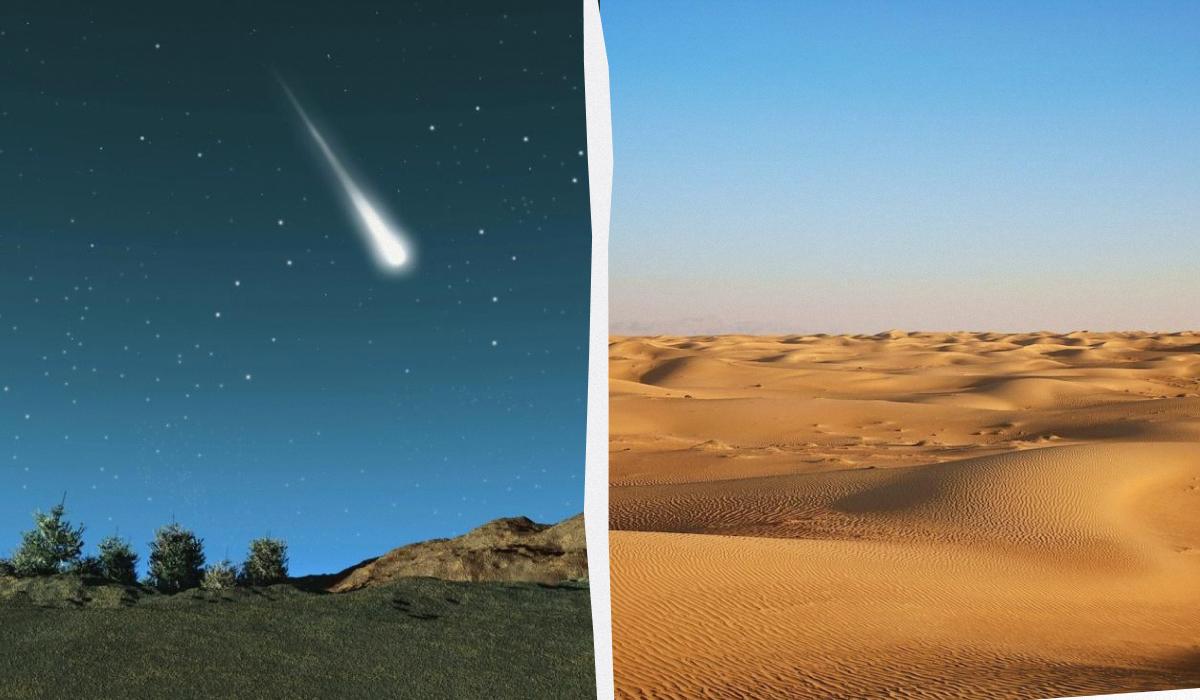
An extremely rare meteorite found in the Sahara Desert may be a fragment of an ancient protoplanet much larger than previously believed, according to research reported by the outlet Raketa.
The rock, named Northwest Africa 12774, belongs to a rare group of meteorites called angrites. Only a few dozen angrites are known to exist.
Scientists had previously thought angrites came from a relatively small asteroid. But the crystalline structure of Northwest Africa 12774 points to a very different origin.
Researchers found that the rock formed under far greater pressure than a small asteroid could have produced. According to their calculations, a body with a layered internal structure and a diameter of at least 2,000 kilometres would have been needed to create such a structure. Some estimates suggest the parent body could have been close to the size of the Moon.
Scientists believe the meteorite formed deep inside this body before reaching close to the surface relatively quickly through volcanic activity. A protoplanet is a large body that forms early in a solar system's history and can eventually grow into a full planet or be broken apart in collisions.
Traces of the early solar system
The find is especially valuable because the meteorite's crystals have barely lost their original structure. This allows researchers to study the conditions that existed during the earliest stages of planet formation.
The analysis also indicates that the parent body formed extremely quickly, within about four million years of the appearance of the first solid materials in the Solar System.
Challenging planet formation models
That finding could push scientists to rethink how quickly large planetary bodies were able to form. It poses a serious challenge to traditional models of planet formation, which assume such large bodies should not have existed so early.
According to the researchers, the discovery also fits with newer models suggesting planets could have formed much faster than scientists previously thought.