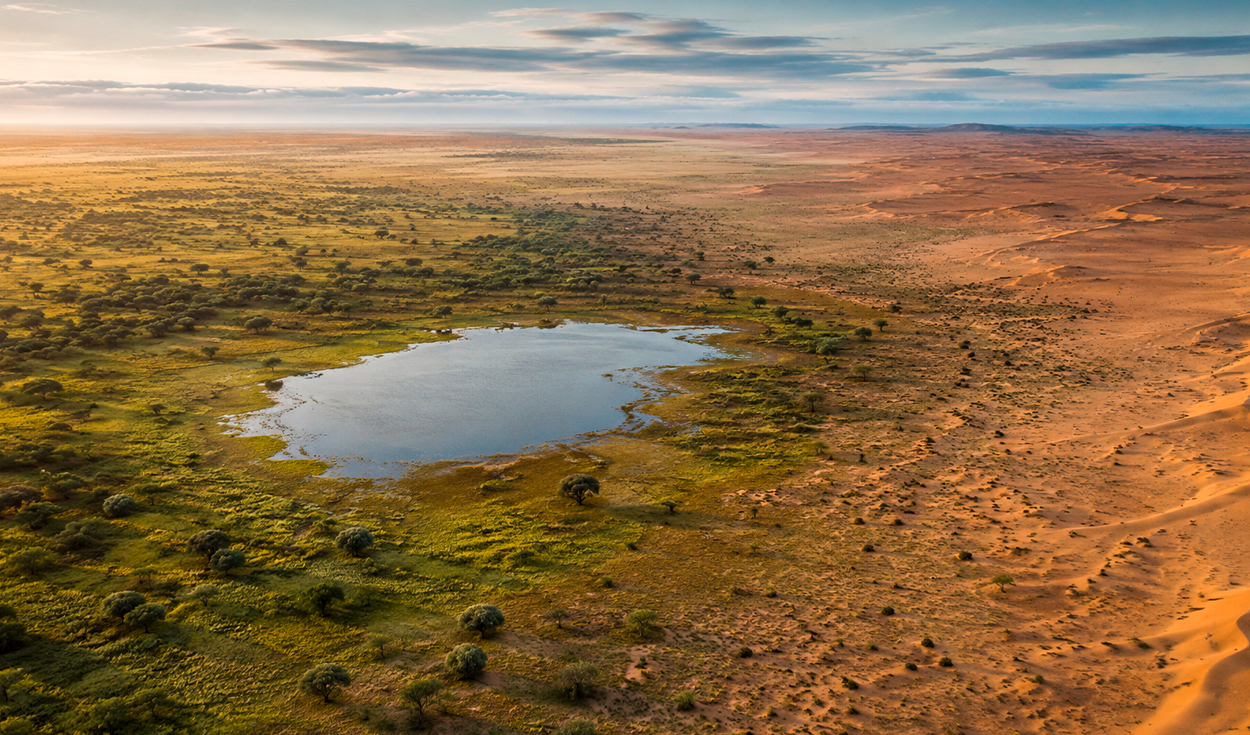
The rapid desertification of the Sahara 5,500 years ago was driven by sudden climate cooling thousands of kilometres away near Greenland, international scientists found.
Before transforming into the third largest desert in the world, the region received 20 times more rainfall than it does today and was dotted with expansive lakes.
While natural changes in the orbit of Earth initiated the initial drying trend, an international research team determined that orbital factors alone were insufficient to explain the extraordinary speed of the collapse recorded in paleoclimate records.
According to a 2017 study published in the scientific journal Nature Communications, evidence preserved in marine sediments reveals that a sharp thermal decline in high northern latitudes provided the decisive push.
To unravel the phenomenon, researchers analyzed leaf waxes preserved within deep-sea marine sediments collected from the Gulf of Guinea, off the western coast of Africa.
By studying hydrogen isotopes in those fossilized plant remains, the team reconstructed historical rainfall patterns that impacted Cameroon and the central Sahel-Sahara region.
The evidence confirmed a vertiginous decline in precipitation occurring between 5,800 and 4,800 years ago, a trend that hit in synchrony with other regions across the African continent.
Sudden temperature drops in the Arctic
Climate indicators gathered from Greenland, the Norwegian Sea, and the Fram Strait revealed a severe summer temperature drop occurring between 6,000 and 5,000 years ago.
That northern climate change, combined with a major expansion of Arctic sea ice, destabilized the North African Humid Period that had sustained green landscapes for millennia.
Computer models demonstrated that the northern summer cooling weakened the tropical easterly jet, a high-altitude atmospheric wind stream that previously stimulated rainfall over Africa.
At the same time, the cooling intensified the African easterly jet, an atmospheric wind current responsible for driving moisture out of the Sahel region.
James Collins, the lead researcher of the study at the German Research Centre for Geosciences (GFZ) in Potsdam, explained that the northern cooling directly reduced precipitation over Africa.
Compounding environmental collapse
The northern cooling event did not act in isolation. Lower summer solar radiation caused by long-term orbital variations was already weakening the regional monsoon system.
Once rainfall began to drop, secondary environmental feedbacks accelerated the drying process across North Africa.
The loss of vegetation, rising dust levels, soil dryness, and the rapid disappearance of lakes amplified the environmental decline.
Researchers noted that the cold impulse from the Nordic region delivered the final push to a highly vulnerable ecosystem.
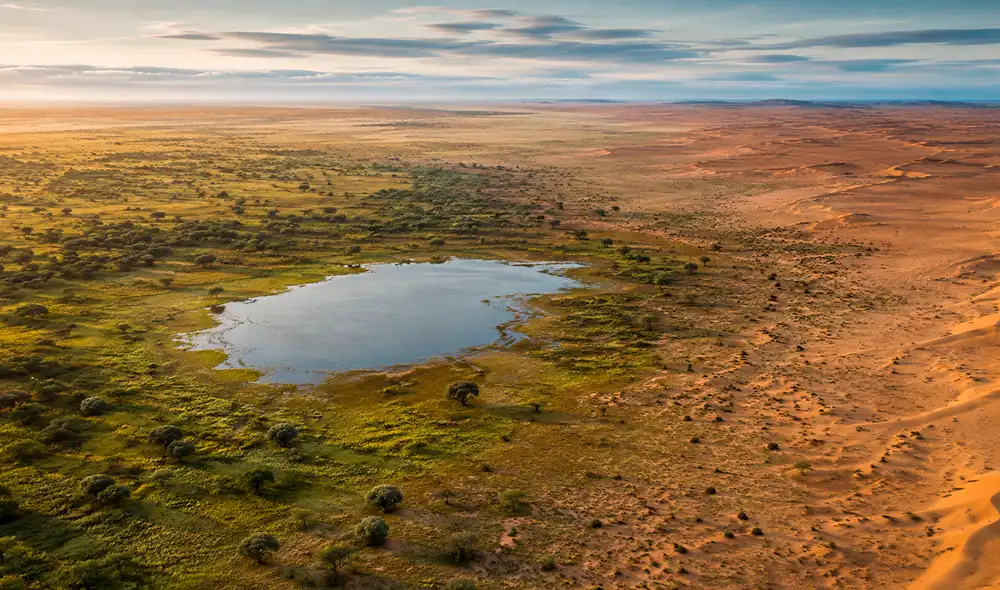
Broader research published in the journal Nature shows that the Sahara undergoes green phases on a regular cycle roughly every 21,000 years, driven by the wobble and changing orientation of Earth's rotational axis.
Life in the fertile Green Sahara
During the North African Humid Period, which spanned from 11,500 to 5,500 years ago, the monsoon belt shifted significantly to the north.
That shift transformed what is now a barren desert into a fertile environment of lush savannas, grasslands, flowing rivers, and wetlands.
According to the scientific journal Climate of the Past, the abundant water supply supported thriving plant life and allowed human communities to settle in areas that are today completely inhospitable.
The wealth of water favored large mammal populations, including elephants, giraffes, and hippopotamuses, alongside thriving fish populations and crocodiles.
Prehistoric rock art featuring scenes of hunting, livestock herding, and swimming, together with fossil discoveries, bone fishhooks, and lakebed deposits, confirms that human populations relied on these rich aquatic resources to survive and travel across northern Africa.
Large scale atmospheric impacts
The investigation noted that the transition toward extreme aridity occurred at varying speeds depending on local land relief and regional vegetation cover.
Despite these regional variations, researchers emphasized that matching paleoclimate signals stretching from the Sahel to eastern Africa support the existence of a single, large-scale atmospheric mechanism.
The authors concluded that the findings demonstrate how minor climate shifts at high northern latitudes can trigger profound, far-reaching environmental consequences thousands of kilometres away.