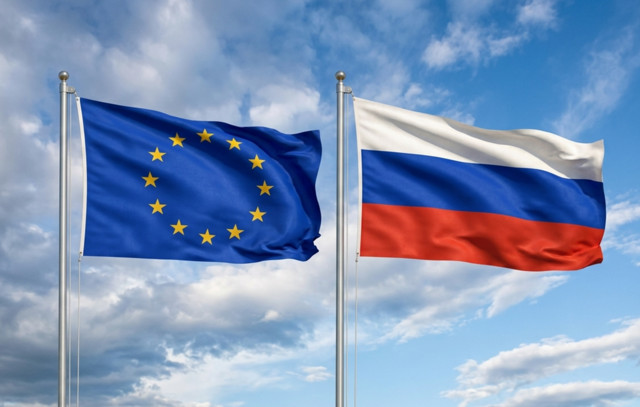
Europe is facing a new kind of confrontation with Russia, one fought not with tanks and missiles but with sabotage, cyberattacks, influence operations and strikes on critical infrastructure, according to an analysis by the New York Times.
European governments and security services believe Moscow has intensified operations that stay below the threshold of open military conflict, in an effort to pressure Ukraine's allies and test the resolve of NATO, the North Atlantic Treaty Organization, the analysis found.
The strategy is often described as "hybrid warfare." It allows Russia to cause disruption without giving the alliance a clear pretext for a direct military response.
From Ukraine's front lines to European infrastructure
Since Russia's invasion of Ukraine in 2022, European authorities have recorded a series of incidents they describe as suspicious, ranging from arson attacks and attempted sabotage at factories and rail networks to cyberattacks and interference with GPS navigation systems.
Recent concern has centred on fears that Russia is trying to undermine European military support for Kyiv by targeting facilities linked to the production or transport of equipment.
Germany has seen growing concern after incidents affecting energy and transport infrastructure, with authorities examining whether they amount to organised destabilisation efforts.
The goal: creating uncertainty
Western security services believe Moscow is not necessarily seeking spectacular attacks with heavy casualties, but smaller operations that generate fear, economic cost and political pressure.
The thinking behind these operations, according to the analysis, is that Russia can test the West's limits without triggering NATO's collective defence clause.
European security officials said the objective is not always destruction, but rather the sense that no one is completely safe, according to assessments carried by the international press.
Attacks without a declaration of war
The biggest problem facing European governments is attribution.
In a conventional war, an attack by one state is unambiguous. In hybrid warfare, however, perpetrators often rely on intermediaries, local accomplices or online recruitment networks, allowing Moscow to maintain deniability.
That leaves NATO with a difficult dilemma: how to respond to attacks it believes originate from an adversary when there is no clear military strike to point to.
Europe strengthens infrastructure defences
European countries are now investing more heavily in protecting critical networks, from power grids and ports to undersea communications cables.
The concern focuses particularly on infrastructure that could directly affect the daily lives of millions of citizens, including energy, telecommunications, transport and military supply chains.
Several countries are also pushing for tougher measures against Russian influence networks, greater oversight of intelligence services and closer cooperation between European states.
The new Russia-West confrontation
The standoff between Russia and the West has shifted to a space where the line between peace and war is increasingly blurred.
Moscow argues that the West is waging economic and political war against it, while European governments believe Russia is using destabilisation operations to weaken support for Ukraine.
The question now facing European capitals is whether these operations will remain confined to the "grey zone" or eventually trigger a direct crisis between Russia and NATO.
Security officials warn that the danger in modern warfare lies not only in the weapons used, but in actions that can be carried out without anyone ever officially claiming responsibility.