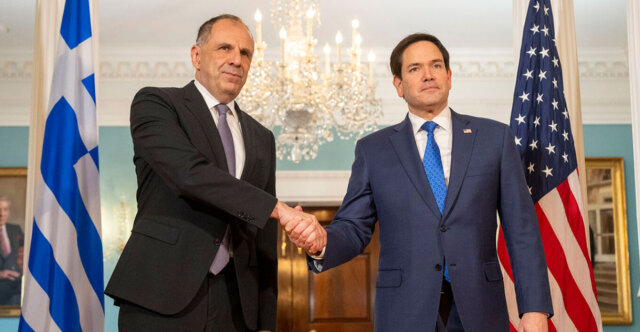
Former Russian Prosecutor General Yuri Skuratov and Akhmat special forces commander Apti Alaudinov have called for reinstating the death penalty in Russia. Their statements have renewed national debate over whether the country should end its decades-long moratorium on capital punishment.
Skuratov raised the issue on August 5 during a broadcast on Komsomolskaya Pravda radio. He stated that capital punishment should be reintroduced under current conditions for narrow categories of cases, primarily those involving terrorism and crimes against peace and humanity. Skuratov noted that the issue has long concerned law enforcement officials, legal theorists, and criminologists. He emphasized that Russian law never formally abolished the death penalty, but merely suspended its execution.
Skuratov argued that severe crimes causing mass casualties undermine statehood and warrant execution. He criticized life imprisonment as disproportionate for terrorists, stating that it is unfair for prisoners to receive regular meals and outdoor exercise while ordinary working citizens lack time for lunch. He acknowledged that the primary argument against capital punishment is the risk of judicial errors, pointing to the case of Soviet serial killer Andrei Chikatilo, where an innocent person was executed.
Alaudinov, who is also deputy head of the Main Military-Political Directorate of the Russian Defense Ministry, continued the discussion in an August 6 interview with TASS. He proposed restoring capital punishment for upcoming trials of Ukrainian military personnel, which he said should mirror the post-war Nuremberg trials. Lieutenant General Alaudinov stated that convicted Ukrainian soldiers should specifically face execution by hanging, adding that no other form of execution should be used.
The renewed calls contrast with official statements from Russian President Vladimir Putin. During a December 10, 2024 meeting of the Human Rights Council, human rights activist Eva Merkacheva asked about expanding jury trials under current conditions. Putin responded that Russia has not reintroduced capital punishment even during the special military operation in Ukraine, noting that the state continues to humanize justice despite ongoing requests from citizens and politicians to restore executions.
Historical Capital Punishment in Russia
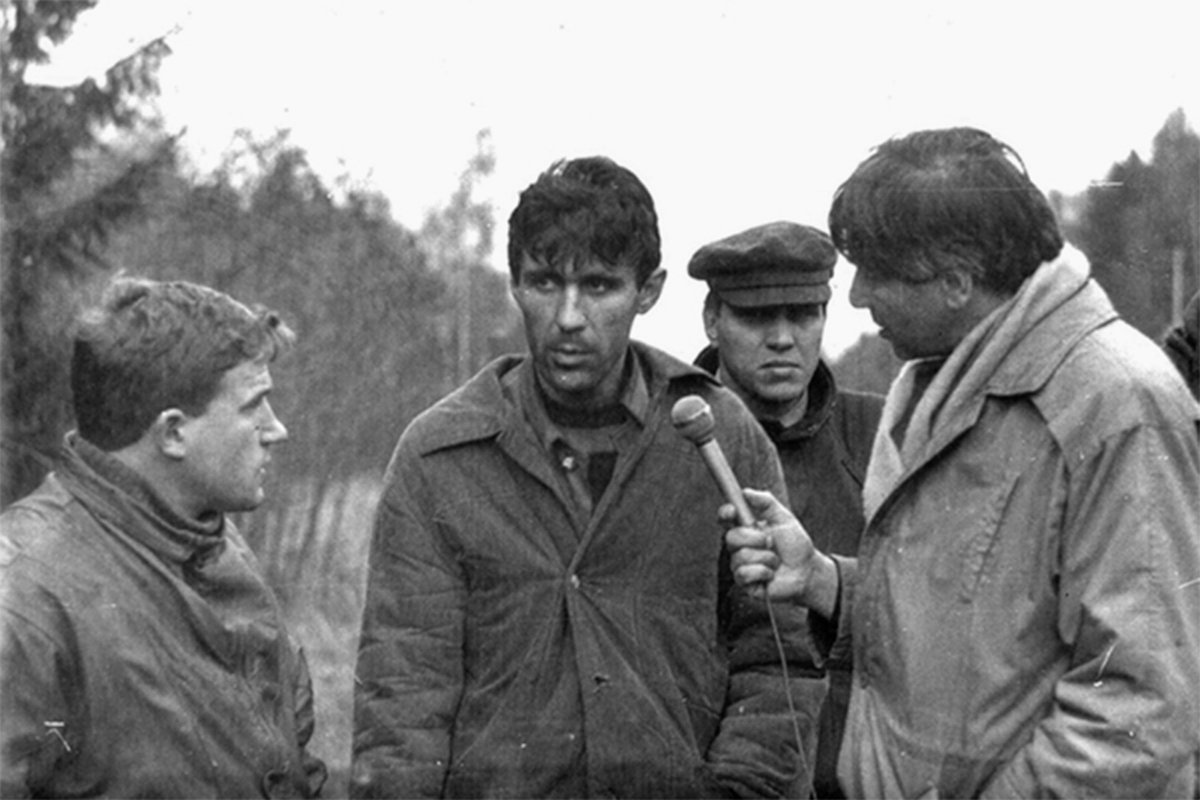
Russia executed its last convict 30 years ago in August 1996, when serial killer Sergei Golovkin, known as Fisher, was shot at Moscow's Butyrka detention center for the murders of 11 teenage boys. Following his execution, Russia introduced a moratorium that remains in force today. The country's legal history with capital punishment includes multiple periods of abolition and restoration.
In Ancient Rus, capital punishment was rare, with courts relying on monetary fines called vira and blood feuds, reserving execution primarily for treason and rebellion. Capital punishment expanded significantly under Tsar Peter the Great, reaching 123 capital offenses. Historians estimate thousands were executed during his 43-year reign. In 1721, Peter ordered Siberian Governor Prince Matvey Gagarin hanged for bribery, leaving his body displayed in St. Petersburg in front of the government building for nearly a year.
Empress Elizabeth Petrovna signed a decree in 1744 attempting an unofficial moratorium. Senators delayed implementation for years, arguing mercy threatened public order. On June 29, 1753, a decree retained capital punishment in law but suspended executions, replacing them with political death, public display on the block, whipping, and permanent exile to Siberia.
Executions remained rare in the 18th and 19th centuries. Under Empress Catherine the Great, about 50 people were executed over 34 years, mostly participants in the Pugachev rebellion. Between 1805 and 1905, approximately 300 people were executed, with executions virtually ceasing after 1891. However, political turmoil led to about 3,700 executions between 1906 and 1910.
Soviet Executions and Moratorium Path
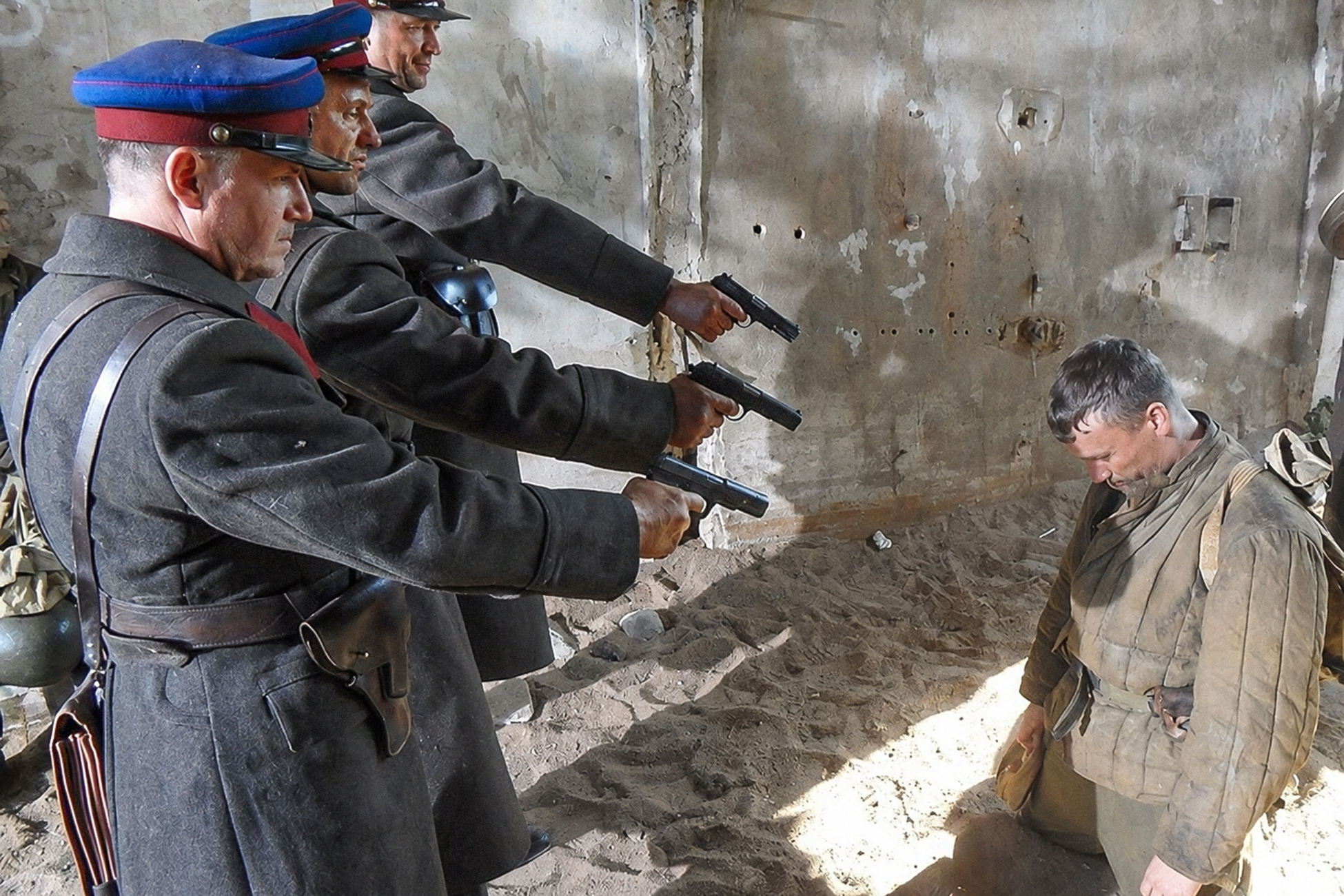
Following the 1917 revolution, the Bolsheviks abolished capital punishment in November 1917, but reinstated it in mid-1918 during the Russian Civil War and Red Terror. Executions were carried out by courts and extrajudicial bodies such as the All-Russian Extraordinary Commission, or VChK. After a brief repeal in 1920, courts sentenced over 6,500 people to death that year, and 2,103 people in Petrograd alone following the 1921 Kronstadt rebellion.
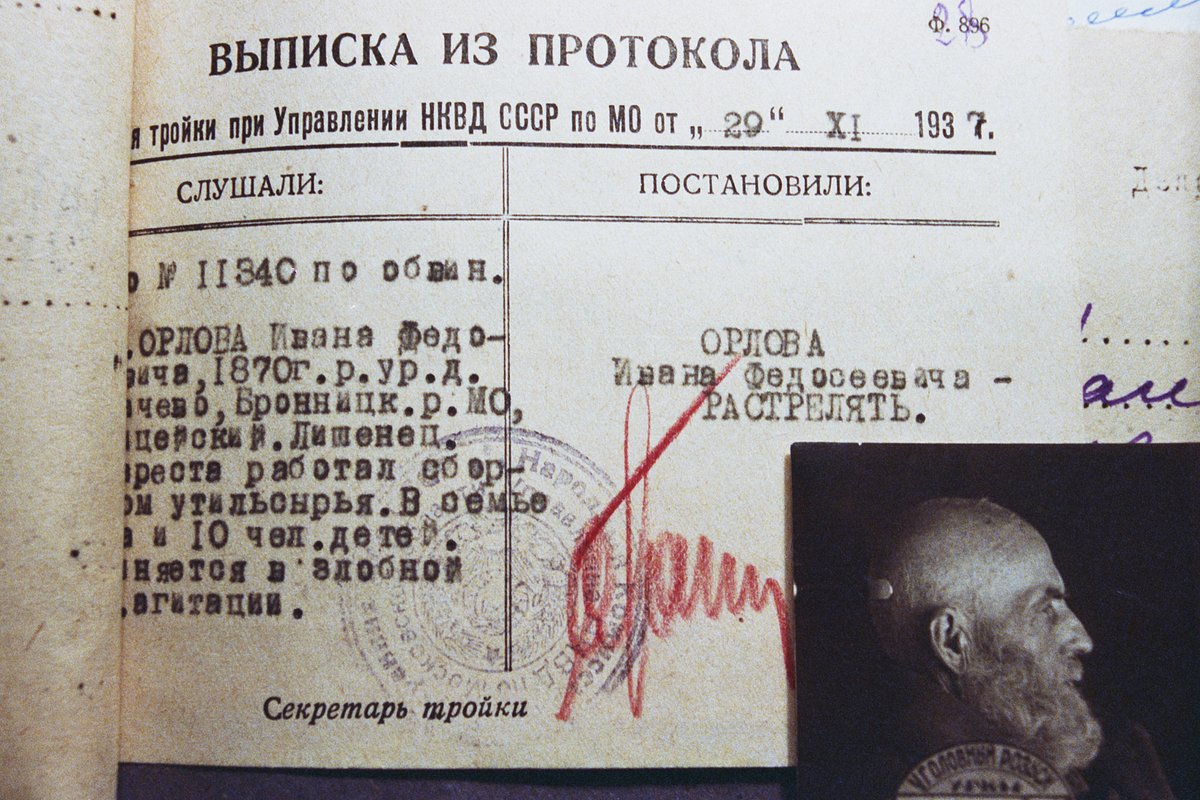
The application of capital punishment peaked during the Great Terror of 1937 and 1938, when extrajudicial NKVD troikas issued more than 681,000 death sentences. Convicts were shot secretly and buried in unmarked graves.
During World War II, military tribunals executed between 30,000 and 40,000 service members in the second half of 1941 for cowardice, desertion, and spreading panic. Total executions by military tribunals and courts exceeded 150,000 between 1941 and 1945.
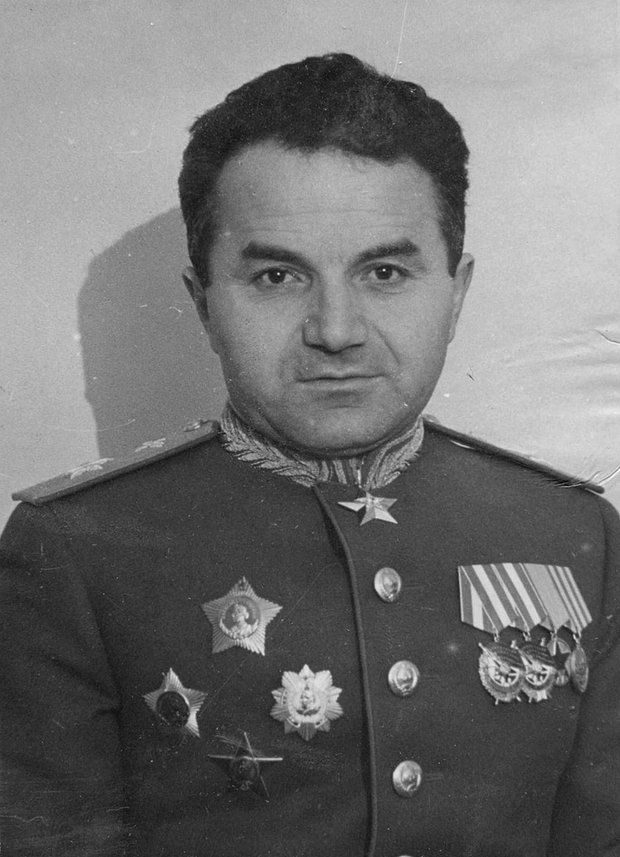
The Presidium of the USSR Supreme Soviet abolished the death penalty in 1947 to preserve manpower for post-war reconstruction. However, a decree on January 12, 1950 reinstated execution for treason, espionage, and sabotage. Marshal of Aviation Sergei Khudyakov became the first executed under the decree on April 18, 1950. Between August 18 and August 30, 1950, courts sentenced 20 generals and one marshal to death in the fabricated Leningrad case.
The 1960 Criminal Code reduced capital offenses but retained execution for high treason, murder, terrorism, and large-scale state property theft. Historians estimate that approximately 22,000 death sentences were executed between 1961 and 1990. Executions declined in the late 1980s, and the 1993 Russian Constitution restricted capital punishment to severe crimes against life subject to jury trials. Russia recorded 157 death sentences in 1993, 160 in 1994, and 141 in 1995.
Russia joined the Council of Europe in 1996 and signed Protocol No. 6 to the European Convention on Human Rights in 1997. Although the State Duma did not ratify the protocol, Russia established a moratorium. In 1999, the Constitutional Court suspended death sentences until jury trials were established nationwide, and in 2009, the court ruled that the ban is permanent.
Legal Status and Expert Views
Capital punishment remains in Article 59 of the Russian Criminal Code as an exceptional penalty for five crimes: aggravated murder under Article 105, attempts on the life of a state or public figure under Article 277, attempts on the life of a judicial or investigative official under Article 295, attempts on the life of a law enforcement officer under Article 317, and genocide under Article 357. Women, minors, and men aged 65 or older at sentencing are exempt.
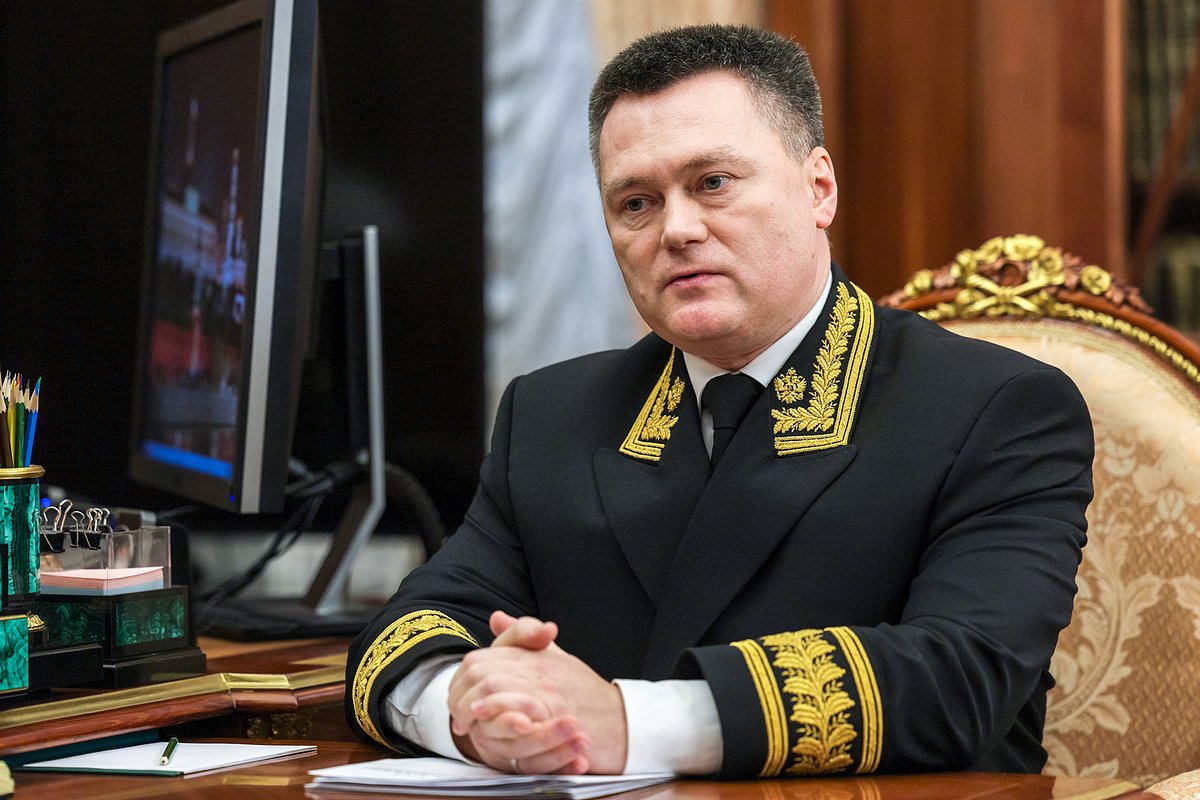
Supreme Court Chairman Igor Krasnov told the Senate Committee on Constitutional Legislation and State Building on September 23, 2025, that the state position against capital punishment is final based on Constitutional Court rulings.
Retired federal judge Sergei Pashin told Lenta.ru that Constitutional Court rulings initiated an irreversible abolition process. Pashin stated that supporters of reinstating executions are seeking political ratings rather than solving crime, noting that global statistics show no link between capital punishment and lower crime rates.
Presidential Human Rights Council member Kirill Kabanov, who chairs the National Anti-Corruption Committee, stated that talks of reinstating capital punishment are emotional demagoguery without practical prospects. Kabanov noted that returning capital punishment would require a constitutional referendum or martial law, warning that investigative errors, such as wrongful executions in the Chikatilo case, risk taking innocent lives.
Lawyer Dmitry Agranovsky expressed a contrasting view, stating that Russia's exit from the Council of Europe eliminated key international obstacles. Agranovsky argued that the Constitutional Court, Supreme Court, or State Duma could confirm that prior international commitments no longer apply. He advocated restricted capital punishment for wartime terrorism and murder, while clarifying that any restored death penalty could not apply retroactively to current life prisoners.