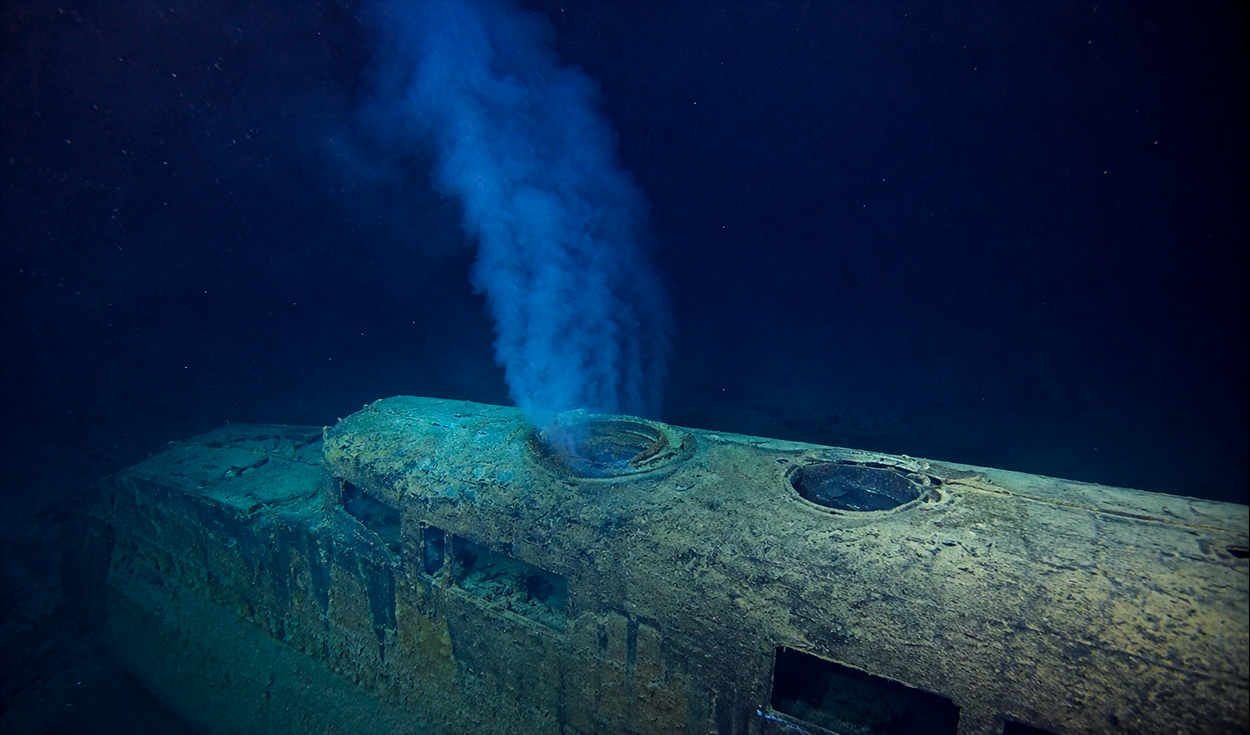
A sunken Russian nuclear submarine sitting 1,680 metres deep in the North Atlantic Ocean is releasing radioactive material from its reactor, scientists have revealed.
Researchers monitoring the wreck of the K-278 Komsomolets in the Norwegian Sea detected intermittent leaks of radioactive isotopes from a ventilation duct, according to findings published by the Proceedings of the National Academy of Sciences.
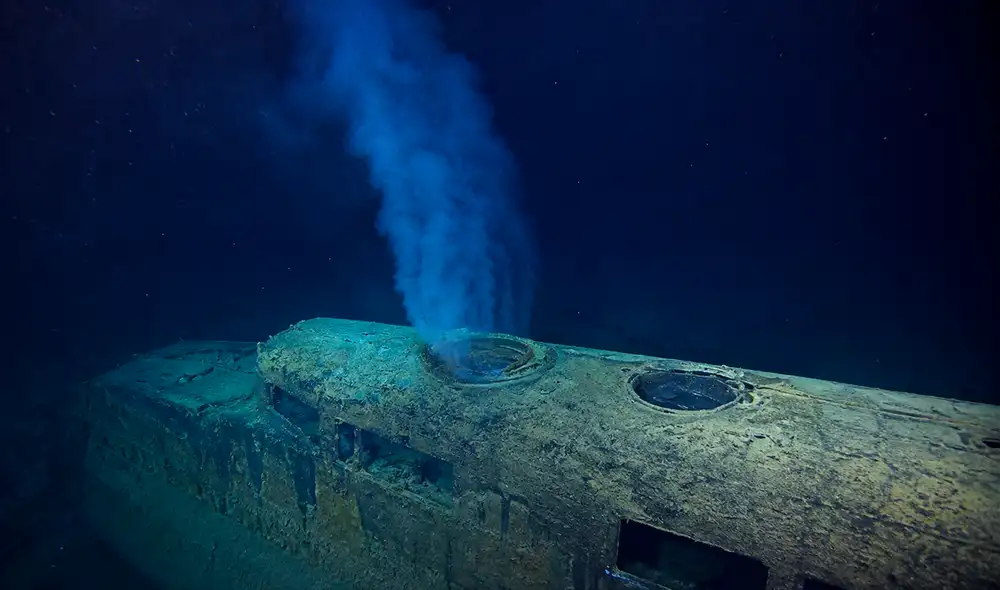
The study, published in March 2026, confirmed that emissions continue to escape periodically from the vessel, which sank in 1989 following a fatal fire on board. Analysis carried out using the remotely operated vehicle Ægir 6000 recorded concentrations of strontium-90 and caesium-137 up to 800,000 times higher than normal background levels in the surrounding waters.
Radionuclide contamination and warhead analysis
In addition to strontium and caesium, the degradation of atomic fuel near the submarine structure has led to the dispersion of plutonium-239, plutonium-240 and uranium-236. However, testing conducted on seawater and seabed sediment samples ruled out any leakage from the two nuclear torpedo warheads located in the vessel's bow.
Justin Gwynn, who led the research, told Spanish newspaper El Pais that scientists found no trace of weapons-grade plutonium in sea water and sediment samples collected directly alongside the submarine hull. The findings align with measurements recorded during earlier expeditions in 2019, which first documented temporal fluctuations in the vessel's emissions.
The K-278 Komsomolets was a Soviet nuclear-powered attack submarine that sank in the Norwegian Sea, southwest of Bear Island, in 1989. A fire started in the stern compartment while the vessel was submerged, prompting an emergency thermal system shutdown. Flames quickly spread through the hull, causing the ship to sink with 69 crew members on board, killing 42 sailors while 27 survived.
Environmental impact and health risks
Despite the high radiation spikes recorded at the leak vents, scientific evaluations indicate that the emissions do not pose an immediate threat to human health or marine ecosystems. Research published in PNAS showed low overall accumulation of radionuclides over three decades, as ocean currents rapidly dilute and disperse radioactive particles.
Following its monitoring mission, the Institute of Marine Research of Norway confirmed that the detected leak did not represent a danger to people or marine life in the region. Marine authorities emphasize that the ocean volume surrounding the wreck absorbs the intermittent discharges before radioactive material can build up to harmful levels.
The Norwegian Radiation and Nuclear Safety Authority, known as the DSA, serves as Norway's national regulatory body overseeing nuclear safety and environmental monitoring in Arctic waters. Strontium-90 and caesium-137 are radioactive fission products commonly generated inside nuclear reactors, requiring routine surveillance when submerged underwater.
Long-term monitoring and containment strategy
The main concern for oceanographers and nuclear engineers centers on the long-term structural integrity of the hull under extreme abyssal pressure and exposure to corrosive salt water. Scientists stress that continuous inspections are vital to evaluate how the nuclear fuel deteriorates over time and to track the fluid dynamics of future leaks.
A comprehensive report compiled by the DSA evaluated multiple potential contamination scenarios to calculate future environmental risks. Because raising a submarine from a depth of 1.7 kilometres remains technically impractical, international strategy prioritises underwater containment and robotic surveillance.
Previous salvage and containment missions successfully sealed torpedo tubes and covered major structural cracks on the hull. Recent analyses confirm that these physical barriers remain fully intact. Joint scientific teams plan to continue using the Ægir 6000 ROV for direct hull sampling, as experts expect reactor emissions to persist indefinitely.