Russian armed forces launched a massive missile strike on Kyiv, according to the Telegram channel "Operation Z: War Correspondents of Russian Spring" (RusVesna).
RusVesna reported that twelve hypersonic Zircon missiles struck the Ukrainian capital, with launches continuing. The Telegram channel Insider claimed cluster missiles were also used in the attack.
Kyiv Mayor Vitali Klitschko confirmed the missile strike and warned that air defense systems were operating in the city.
The likely target was the MLP-Chaika logistics center, where drones, components and foreign weapons are stored, according to reports. Citing the Mash Telegram channel, at least 35 missiles had hit the capital by that point.

Fires break out across the city
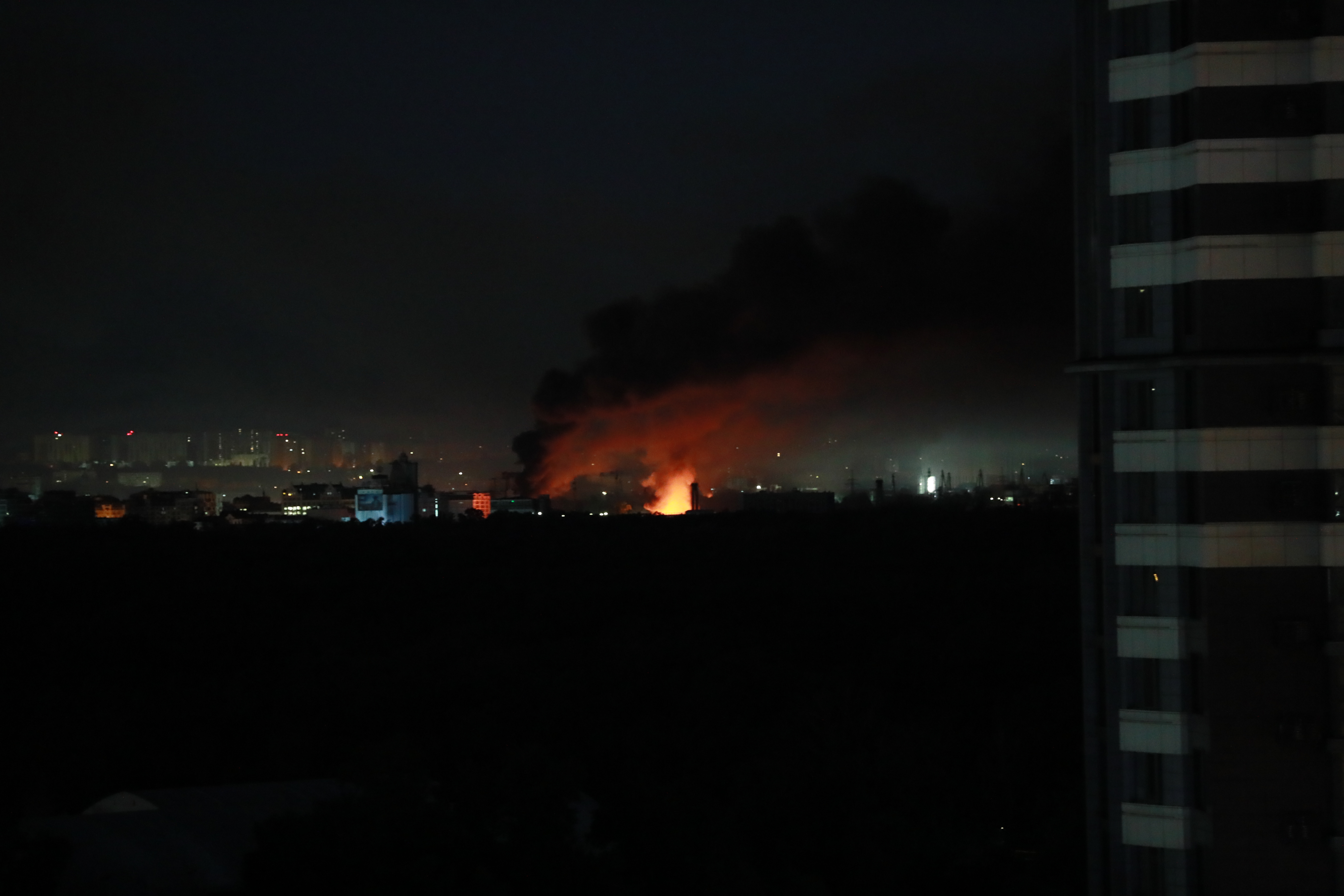
Fires broke out in Kyiv following the Russian strikes. Klitschko said warehouses caught fire in the Obolonsky and Desnyansky districts, and he reported a powerful fire in the Kyiv-Sviatoshynsky district where non-residential buildings were burning. Emergency services arrived at the scenes.
An industrial zone in Brovary was also reported damaged. Smoke was seen rising over Kyiv, and video of the strikes on the city appeared online.
Ammonia leak reported
An ammonia leak occurred in Kyiv's Holosiivskyi district amid the attack. Klitschko said emergency services were heading to the strike sites and urged residents of the capital to close their windows immediately and stay indoors if possible.
On the night of July 1, Russian forces attacked Kyiv with Iskander and Zircon missiles, reportedly hitting the Artem defense plant, which produces missiles and aircraft equipment, as well as the TETs-5 power plant. Russian forces earlier struck a drone manufacturing plant in Kyiv with a ballistic missile; the plant reportedly belongs to the American company Terminal Autonomy, registered in Delaware.